Wildlife & land conservation

Horses running

Wild horses return to Spain’s Iberian highlands after 10,000 years

A groundbreaking ecological project is underway in Spain’s Iberian Highlands, where wild horses are now roaming a landscape they haven’t inhabited in millennia. This collaborative effort, led by the Rewilding Europe Foundation, the International Union for Conservation of Nature, and Rewilding Spain, is a strategic move to restore the natural ecosystem. The project aims to reduce wildfire risk and promote biodiversity by reintroducing large herbivores, which act as “natural engineers” for the environment.

Oil rig at sunset

Guatemala closes massive oil field

Guatemala has permanently closed the Xan oil field in Laguna del Tigre National Park, marking a major shift from fossil fuel extraction to forest protection. The site, once responsible for nearly 90% of the country’s oil production, will now serve as a security base to curb illegal logging, ranching, and trafficking in the Maya Biosphere Reserve. Conservation groups and local communities have welcomed the move, while the government is also investing in renewable energy and new conservation funds. The closure signals hope for safeguarding biodiversity, cultural heritage, and community resilience across Central America’s largest tropical forest.

Forest scene

Washington State to conserve 77,000 acres of “legacy forests” on state lands

Washington has announced a landmark step in forest conservation, protecting 77,000 acres of legacy forests across the state. These ecologically rich areas provide critical wildlife habitat, store carbon, and build wildfire resilience. By conserving legacy forests while supporting rural economies, Washington is charting a path toward sustainable forestry and climate resilience.

Rainforest

Guatemala, Mexico, and Belize to protect 14 million acres of Mayan forest

Leaders from Mexico, Guatemala, and Belize have unveiled formal plans to establish the Great Mayan Jungle Biocultural Corridor, a transnational conservation initiative spanning over 14 million acres of tropical forest. This corridor will become the second-largest protected area in the Americas, following only the Amazon. The initiative aims to combat deforestation, illegal logging, and organized crime by integrating strong security measures with community-led conservation efforts. A governing council comprising environmental and Indigenous representatives will oversee development projects within the reserve, ensuring they align with ecological and cultural preservation goals.

Herd of elk

Colorado is building the ‘world’s largest’ wildlife overpass

Colorado is building one of the world’s largest wildlife overpasses across Interstate 25 between Denver and Colorado Springs. The $15 million Greenland Wildlife Overpass will be 200 feet wide and 209 feet long, giving elk, mule deer, and pronghorn a safe route across six lanes of highway. Designed with natural vegetation and sloped entrances, the structure is expected to cut vehicle-animal collisions by up to 90% while reconnecting 39,000 acres of habitat to Pike National Forest. Scheduled for completion in late 2025, the project shows how infrastructure can reduce accidents and restore ecological connectivity.

Amur leopard

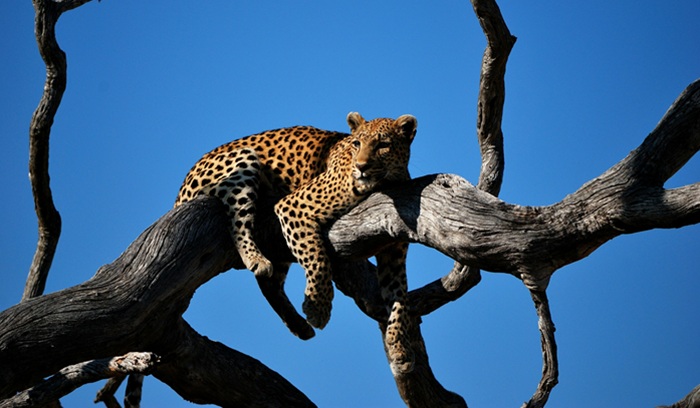
Amur leopards, once nearly extinct, are making a comeback in Far East Asia

In the 20th century, poaching for its spotted fur, forest fires and conversion of land for farming caused the wildcat’s population to plummet to roughly 25 individuals in the wild. Today, there are approximately 130 in Russia alone, according to a recent Wildlife Conservation Society report. Efforts to save the species date back decades. Collaboration between conservationists and Russian government agencies helped establish protected areas in the Primorsky Krai region since 1979, which halted the leopard’s rapid decline, according to WWF.

Northern lights over teepees

New partnership funds Indigenous-led protection of Canadian lands twice the size of Florida

In Canada’s Northwest Territories, a landmark pact is uniting federal, territorial, and 21 Indigenous governments to protect nature on an unprecedented scale. Covering current preserves plus 75,000 square miles of new conserved lands — twice Florida’s size and more than 2% of Canada’s landmass — the agreement will channel over $300 million to Indigenous-led stewardship, conservation, and ecotourism.

Yangtze River

China removes more than 300 dams along Yangtze River tributary to restore biodiversity

China has claimed to dismantle 300 dams and decommission more than 90% of small hydropower stations along the Chishui River since 2020. The move is seen as one of the world’s largest state-led efforts to restore aquatic biodiversity, reversing decades of hydro-infrastructure development that critically endangered native fish species, the South China Morning Post reported. The Yangtze sturgeon, declared extinct in the wild by the International Union for Conservation of Nature in 2022, has now shown signs of recovery.

South Africa flag

South Africa to ban highly toxic pesticide Terbufos

In a decision welcomed by advocacy groups and researchers, South Africa’s Cabinet has approved a ban on the import of Terbufos, a highly toxic pesticide linked to the deaths of six children in a South African township in October 2024. The South African Human Rights Commission (SAHRC) called the decision “a historic milestone in the realization of critical socio-economic rights, including the right to health, clean water, a safe environment, and adequate food.”

Crowned gray crane

Rwanda’s endangered crowned crane population has tripled since 2017

Just 10 years ago, Rwanda’s gray crowned cranes were vanishing. Once a familiar sight in wetlands across East Africa, their numbers in Rwanda had collapsed, driven by habitat loss and capture for the exotic pet trade. That grim picture has now changed dramatically, thanks largely to the work of Olivier Nsengimana, a veterinarian and founder of the Rwanda Wildlife Conservation Association, which has led a national campaign to rescue, rehabilitate, and eventually reintroduce captive cranes to the wild.