Poverty alleviation

This archive tracks real progress on poverty alleviation — from policy wins and cash-transfer programs to community-led initiatives that are lifting incomes and expanding opportunity. Across 156 articles, you’ll find evidence that poverty is not intractable. These stories document what works, where it’s working, and who is making it happen.

Australian university graduates at a graduation ceremony for an article about Australia student debt relief

Australia wipes 20% of student debt for more than 3 million borrowers

Australian student debt relief arrived automatically this week for more than 3 million borrowers, as the federal government erased 20% of outstanding balances — wiping nearly A6 billion without requiring a single application. The Australian Taxation Office applied reductions directly to accounts, making this the largest single student debt reduction in Australian history. The policy also raises the repayment income threshold from A4,435 to A7,000, giving lower-earning graduates immediate breathing room. What makes this especially significant is its automatic delivery model, offering a compelling case study for nations where debt relief efforts routinely collapse under administrative complexity.
A woman reading a letter at a kitchen table for an article about Arizona medical debt relief

Arizona erases 29 million in medical debt for 352,000 residents

Arizona medical debt relief made headlines as Governor Katie Hobbs canceled 29 million in unpaid medical bills for more than 352,000 residents, requiring nothing from recipients except opening a letter. The state partnered with nonprofit Undue Medical Debt, turning a 0 million investment into roughly 43 dollars of relief for every dollar spent. Medical debt disproportionately burdens lower-income households and people of color, triggering credit damage, housing instability, and delayed care. This cancellation represents one of the largest state-led debt relief efforts in U.S. history and signals a replicable model for states seeking meaningful financial relief within existing constraints.

Workers walking through a German city street for an article about Germany minimum wage increase

Germany’s minimum wage will rise to €14.60 an hour by 2027

Germany’s minimum wage is rising in two steps, from €12.82 per hour today to €13.90 in January 2026, then to €14.60 by January 2027, a combined increase of nearly 14%. The decision, made by a commission of trade union and employer representatives, will push full-time monthly earnings close to €2,500, making Germany second only to Luxembourg for minimum wage levels in the EU. The increase benefits roughly four million workers and is anchored to the EU’s Minimum Wage Directive, which defines adequate pay as at least 60% of median wages. Germany’s experience since introducing its first statutory minimum wage in 2015 suggests employment disruption will be minimal.

A school cafeteria serving hot lunch to children for an article about free school meals expansion — 12 words

England to extend free school meals to 500,000 more children from low-income families

Free school meals expansion in England will reach 500,000 additional children starting September 2026, the U.K. government has announced. The change scraps the existing £7,400 income cap for Universal Credit households, meaning any family receiving the benefit qualifies regardless of earnings. This matters because the old threshold excluded hundreds of thousands of working families who earned just enough to be locked out but not enough to pay comfortably. The expansion is projected to lift around 100,000 children out of poverty and save eligible families approximately £500 per year.

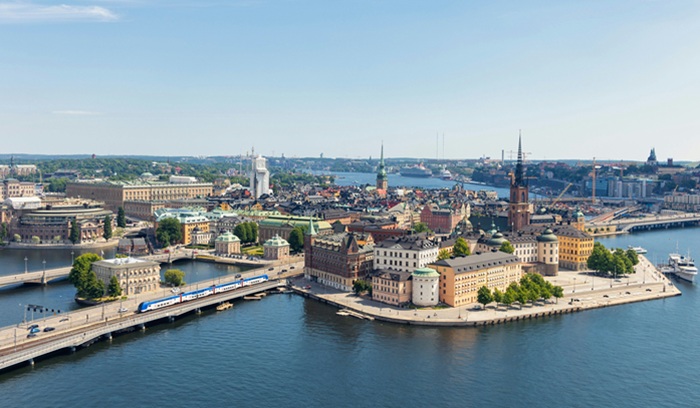
Residential apartment buildings in Helsinki for an article about Finland Housing First

Finland cut homelessness by 75% — and the rest of the world is watching

Finland Housing First policy stands as one of the most remarkable social policy achievements of the modern era, reducing the country’s homeless population by roughly 75% since 2008. Rather than requiring sobriety or employment before offering shelter, Finland gives people housing unconditionally, letting support services follow once residents have a stable foundation. The results are concrete: long-term homelessness fell 68% between 2008 and 2022, and housing a formerly homeless person saves Finnish society approximately 15,000 euros annually in emergency costs. The program proves chronic homelessness is solvable, not inevitable, though recent government cuts offer a sobering reminder that even exceptional systems depend on sustained political will.

Lit light bulb

In the last 30 years, almost everybody in Bangladesh gained access to basic electricity

In 1991, fewer than 15% of people in Bangladesh had access to electricity. Thirty years later, access was almost universal. Over 100 million Bangladeshis have gained access to electricity during this time. This enables them to light their homes, use household appliances, or stay connected through phones and the internet. The U.N. has set a target to achieve universal access to electricity by 2030. Currently, about 9 in 10 people worldwide have basic access to electricity.

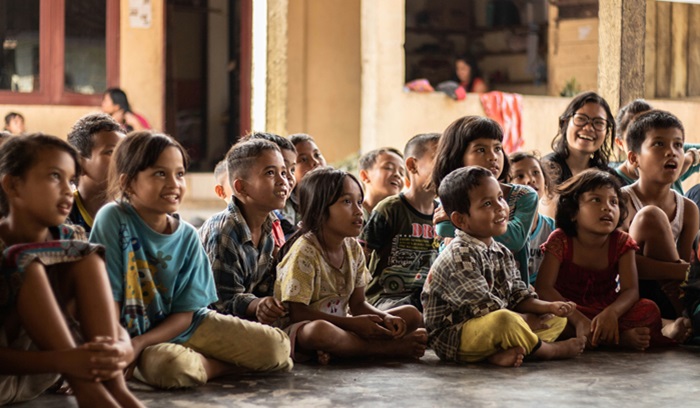
Indonesian children smiling

Indonesia launches free meals program to feed millions of children and pregnant women

The Free Nutritious Meal program delivers on a campaign promise by President Prabowo Subianto, who was elected last year to lead the nation of more than 282 million people and Southeast Asia’s largest economy. It aims to fight the stunting of growth that afflicts 21.5% of Indonesian children younger than 5 and help raise income for the nation’s farmers. The government’s target is to reach an initial 19.5 million schoolchildren and pregnant women in 2025 with a budget of $4.3 billion USD, and more than 80 million people at a cost of $28 billion USD by 2029.

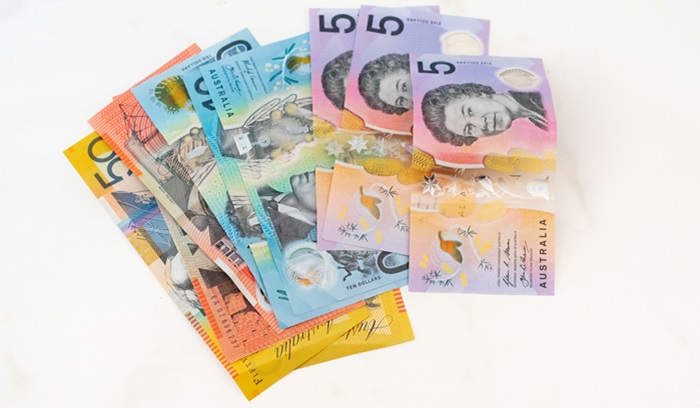
Australian money, for article on student debt relief

Australia to slash $10 billion off student debt amid cost of living pressures

Australia just wiped roughly A$16 billion in student debt off the books, cutting loan balances by 20% for three million graduates in a single stroke. A typical borrower carrying the average A$27,600 loan will see A$5,520 vanish automatically, with no paperwork required. The law also lifts the income threshold for repayments to A$67,000, giving lower-paid workers in fields like early childhood education and the arts real breathing room. Prime Minister Anthony Albanese made it the first bill of his new term, a clear nod to younger voters who showed up in record numbers. As similar income-based loan systems strain graduates in the UK and New Zealand, Australia’s move offers a glimpse of what’s possible when a generation’s frustration finally finds the ballot box.

Doctor with Red Ribbon for December World Aids Day

Biden administration adds injectable PrEP requirement for insurance providers

The Biden-Harris administration has announced a new requirement for insurance providers to cover injectable PrEP in their policies without a co-payment for consumers. The new rule, built on previous guidance for the Affordable Care Act, also applies to increased choice in contraception. The Biden-Harris administration announced Monday a new requirement for insurance providers to cover injectable PrEP in their policies without a co-payment for consumers. PrEP, or pre-exposure prophylaxis, was first approved by the FDA in 2012 to prevent people exposed to HIV from becoming infected with the virus. Truvada in pill form was the first prescriptive PrEP to hit the market, followed by Descovy. The injectable PrEP Apretude was approved in 2021.

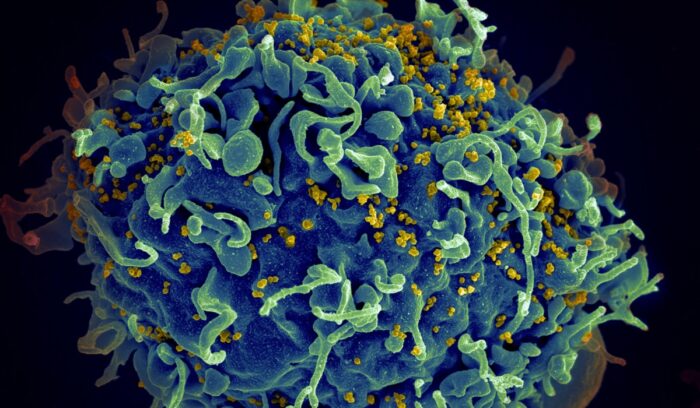
Virus up close, for article on lenacapavir HIV prevention

‘Gamechanger’ HIV prevention drug to be made available cheaply in 120 countries

Lenacapavir, a twice-yearly HIV prevention shot with near-perfect results in clinical trials, is about to become far more affordable for millions of people. Gilead Sciences has licensed six generic manufacturers across India, Egypt, Pakistan, and the U.S. to produce the drug for 120 lower-income countries, where researchers estimate it could eventually be made for as little as $40 per patient per year. In trials among cisgender women in South Africa and Uganda, not a single participant who received the injection contracted HIV. Advocates are urging wider access, since much of Latin America was left out of the deal. Still, it’s a hopeful signal that breakthrough prevention tools can reach the people who need them most — fast.