LGBTQ+ rights & well-being

This archive tracks 337 stories about legal protections, health equity, community milestones, and policy advances for LGBTQ+ people around the world. From court rulings to local programs expanding access to care, these articles document real progress — reported with context and care.

A rainbow flag displayed near a city street for an article about same-sex census recognition in South Korea

South Korea’s national census counts same-sex couples as spouses for the first time

South Korea same-sex census recognition marks a historic first as the country’s 2025 Population and Housing Census now allows same-sex couples to register as spouses or cohabiting partners in national statistics. For years, the system returned an error when same-sex couples attempted to identify their relationships accurately, rendering LGBT families effectively invisible to the government. The update creates an empirical foundation for future policy discussions on healthcare, housing, and legal protections. While South Korea still does not legally recognize same-sex marriage, being counted in official data is a meaningful step toward inclusion that advocates and researchers can build on.


Kenyan Parliament building in Nairobi at dusk for an article about transgender rights Kenya

Kenyan court orders parliament to pass transgender rights law

Transgender rights in Kenya took a landmark step forward as the Eldoret High Court issued what advocates are calling the first ruling of its kind on the African continent, directing parliament to enact explicit legal protections for transgender people. The case began in 2019 when activist Shieys Chepkosgei was unlawfully arrested and subjected to invasive gender-verification procedures the court found unconstitutional. The ruling awards her roughly ,700 in damages and mandates a Transgender Protection Rights Act. Significantly, it establishes judicial precedent that could influence legal challenges across Africa.

Rainbow flag flying above a European city square for an article about same-sex family recognition in Lithuania

Lithuanian court recognizes same-sex couple as a family for the first time

Same-sex family recognition in Lithuania reached a historic milestone in May 2025, when the Vilnius City District Court became the first court in the country to grant legal family status to a same-sex couple and order the state to register their relationship. The ruling was won through years of litigation by LGBTQ+ rights organization TJA, building on a April 2025 Constitutional Court decision that found excluding same-sex couples from civil partnership recognition violated constitutional rights. With parliament still stalled on legislation, this case proves courts can close the gap between constitutional principle and lived reality.

The Massachusetts State House dome in Boston for an article about Massachusetts shield law protections

Massachusetts Senate passes Shield Act 2.0 to protect abortion and gender-affirming care

Massachusetts Shield Act 2.0 passed the state Senate 37-3 on June 26, 2025, strengthening protections for patients and providers seeking abortion care and gender-affirming care within the state. The updated law bars state agencies from cooperating with out-of-state or federal investigations targeting legally protected healthcare, restricts sharing of patient data, and mandates emergency care at acute-care hospitals. Critically, it extends new protections to clinicians themselves, allowing prescriptions under practice names and removing certain medications from drug monitoring programs to reduce provider exposure. The bill now moves to the Massachusetts House, representing the state’s third expansion of these protections in three years.

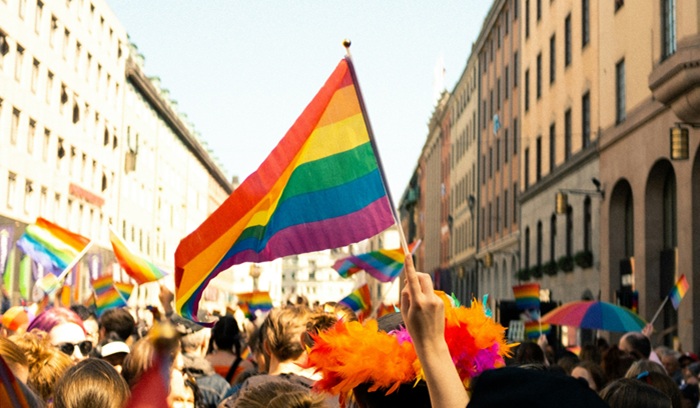
Rainbow flags flying against a blue sky, for an article about Saint Lucia decriminalization of same-sex conduct

Saint Lucia’s High Court decriminalizes same-sex conduct, ending colonial-era law

Saint Lucia decriminalization marks a landmark victory for human rights in the Eastern Caribbean, as the island’s High Court struck down colonial-era laws that imposed up to 10 years in prison for consensual same-sex conduct. The court ruled the statutes violated Saint Lucia’s own constitutional protections for privacy, equality, and human dignity. Significantly, these laws were never locally crafted — they were British colonial impositions from the 19th century. The ruling joins a growing wave of similar decisions across the region, reflecting a clear shift toward constitutional equality in Caribbean jurisprudence.

A Cuban national identity document on a desk, for an article about Cuba's gender marker reform for transgender people

Cuba lets trans people change ID gender markers without surgery

Cuba’s transgender gender marker reform marks a significant step forward for trans rights in Latin America. In 2025, Cuba’s National Assembly passed legislation allowing transgender Cubans to update gender markers on official identity documents through simple administrative declaration, requiring no surgery or judicial approval. The reform matters because mismatched IDs create cascading barriers to employment, housing, and healthcare for trans people. Notably, the change decouples legal recognition from medical access at a time when U.S. embargo-related shortages limit hormone availability, joining Argentina, Uruguay, and others in embracing self-determination over medicalized gatekeeping.

Two women holding a young child outdoors for an article about same-sex parental rights

Ukrainian court recognizes same-sex couple as a family for the first time

Same-sex family recognition reached a historic milestone in Ukraine as a Kyiv court ruled that a same-sex couple constitutes a legal family — the first such ruling in Ukrainian history. The case was brought by a serving soldier and his partner of over ten years, highlighting urgent legal gaps that leave LGBTQ+ service members’ partners without medical, property, or benefits protections during wartime. The ruling stops short of marriage equality but establishes family recognition as a viable legal path. Human rights advocates say it adds meaningful momentum to parliamentary discussions on civil partnerships already supported by President Zelenskyy.

A diverse group of elected officials at a government building for an article about LGBTQ+ political representation

Out LGBTQ+ elected officials in the U.S. have tripled since 2017

LGBTQ+ elected officials across the United States have more than tripled since 2017, marking an unprecedented expansion in American political history documented by the Victory Fund Institute. Wins are occurring not just in coastal cities but in suburban districts, rural counties, and states once considered out of reach — suggesting a genuine nationwide shift. Research links higher LGBTQ+ representation to stronger non-discrimination protections and more equitable public health policy. For young LGBTQ+ people, seeing someone like themselves hold office measurably affects civic identity and belief that participation matters. The tripling is a milestone, not an endpoint.

Two women holding a young child outdoors for an article about same-sex parental rights

Italy’s top court rules both same-sex mothers must appear on birth certificates

Same-sex parental rights in Italy took a landmark step forward on May 22, 2025, when the Constitutional Court ruled that both women in a same-sex couple must be legally recognized as parents of children conceived abroad through assisted reproduction. The decision closes a painful legal gap that left thousands of children without guaranteed ties to their non-biological mother. Centering children’s welfare rather than parental identity, the Court found that excluding co-mothers from birth certificates violates constitutional principles of equality and legal certainty. Italy now joins much of Western Europe in offering this foundational protection, though domestic restrictions on IVF for same-sex couples remain unresolved.

A variety of LGBTQ+ pride flags

Michigan expands hate crime law to protect LGBTQ+ identities

Michigan Gov. Gretchen Whitmer has signed a bill adding sexual orientation and gender identity to the state’s hate crime law, along with a companion bill amending sentencing guidelines for hate crimes. The 1988 ethnic intimidation law initially applied only to religion, ethnicity, and race. The new law adds LGBTQ+ identities, as well as sex, age, disability, national origin, and affiliation with these groups. A first offense for committing a hate crime against one of the protected classes is punishable with a fine of $5,000 and/or up to two years behind bars.