Climate crisis

Bison

Portugal welcomes first wild bison in 10,000 years as part of plan to rewild a quarter-million acres

From Poland to Romania to the U.K., European wood bison are now firmly recognized as one of the best tools for returning what little wilderness Europe has left to as wild a state as possible. In Portugal, the gradual abandonment of the Greater Côa Valley has presented an unprecedented opportunity for rewilding in the small country. The government has already set aside a quarter million acres of land for conservation.

Montpelier

Vermont becomes first U.S. state to require oil companies to pay for climate change damages

Vermont has enacted a law requiring fossil fuel companies to pay a share of the damage caused by climate change after the state suffered catastrophic summer flooding and damage from other extreme weather. The funds could be used for upgrading stormwater drainage systems; upgrading roads, bridges and railroads; relocating, elevating or retrofitting sewage treatment plants; and making energy-efficient weatherization upgrades to public and private buildings.

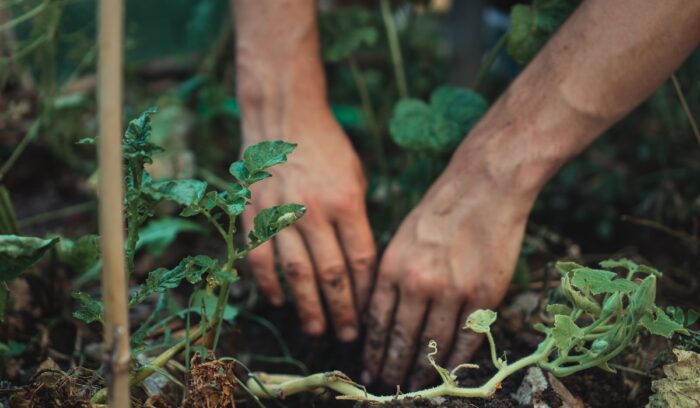
A person preparing for planting the plant

Campesinos plant nearly a million trees in deforestation hotspot in the Colombian Amazon

More than 700 campesinos from the municipality of Cartagena del Chairá have started restoring more than 11,000 acres of degraded rainforest in one of Colombia’s deforestation hotspots. In collaboration with researchers from SINCHI, the Amazonian Scientific Research Institute, and the Association of Community Action Boards, the families have recorded more than 600 plant and more than 100 animal species in the area.

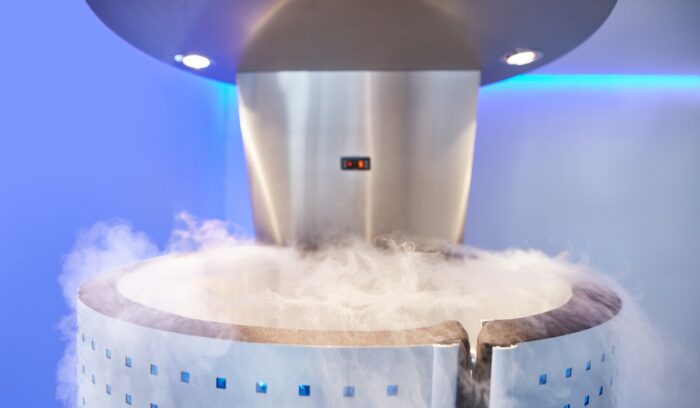
Cryo sauna for whole body cryotherapy

Cryo-cooling breakthrough slashes the energy cost of serious cold by 71%

Cryogenic cooling is used to preserve tissues, eggs, sperm, and embryos and CAT scanners, CERN’s massive particle accelerators, and the James Webb Space Telescope possible. It may also one day be the key to making fusion power or quantum computers a reality. However, it is also quite energy-intensive. Fortunately, researchers at the U.S.’s National Institute of Standards & Technology have recently discovered a way to reach near-absolute zero up to 3.5 times faster or using about 71% less energy.

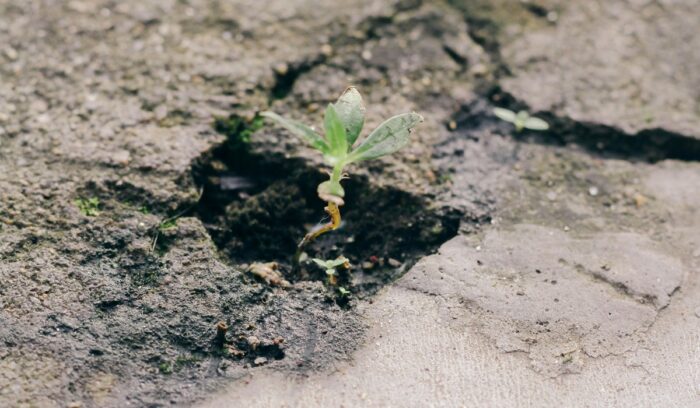
Plant coming out of concrete

‘Absolute miracle’ breakthrough provides recipe for zero-carbon cement

Concrete is the world’s most used building material, and making it is a particularly dirty business – concrete production alone is responsible for about 8% of total global CO2 emissions. But according to new research from the University of Cambridge, throwing old concrete into steel-processing furnaces not only purifies iron but produces “reactivated cement” as a byproduct. If done using renewable energy, the process could make for completely carbon-zero cement.

Cargo ship at sunset

New piloting approach cuts cargo ship emissions by 17.3% in first trials

Currently, most cargo ships go as quickly as they can from port A to port B. When they get there, they sit still and wait at idle, continuing to burn fuel, until it’s time for them to dock. The Blue Visby Solution simply tells the ships to slow down, so they arrive at port right on time. Pushing all that bulk through the water at a slower speed cuts down hugely on hydrodynamic drag, so the engines burn considerably less fuel.

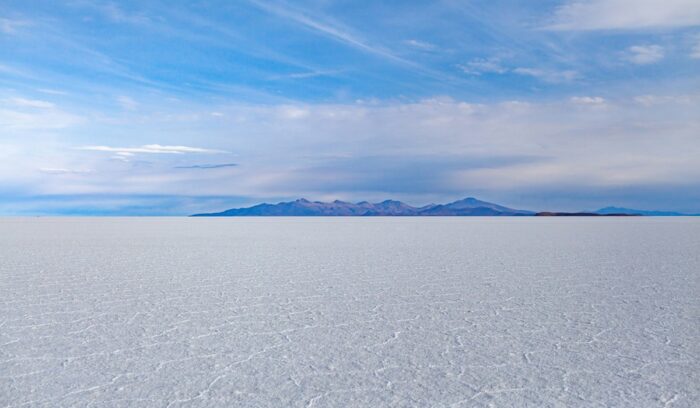
Vast salt flat

Chile to create network of protected salt flats

Currently, only around 8% of Chile’s salt flats are protected. The new network of protected salt flats will raise that to 25%. This also aligns with the 30×30 goal as outlined by the global Convention on Biological Diversity, which ensures that at least 30% of the planet’s ecosystems are protected by 2030. The protection plan is part of the broader National Lithium Strategy, which seeks to make Chile the world’s lead producer of lithium, a critical component of EV batteries.

Aerial view of a geothermal power facility surrounded by tropical landscape for an article about Indonesia coal phase-out

Coal’s share of power capacity in India drops below 50% for first time since 1960s

India is rapidly emerging as a renewable energy powerhouse on the world stage with a surge in both capacity addition and tendering to add more plants, according to new research. Renewable energy accounted for 71.5% of the record 13,669 MW power generation capacity added by India in the first quarter of 2024, while coal’s share of total power capacity dropped below 50% for the first time since the 1960s.

Young saplings

Microsoft signs another reforestation-based carbon removal megadeal

Microsoft and nature-based climate solutions startup re.green have announced one of the largest-ever carbon removal agreements, with Microsoft purchasing 3 million tons of carbon removal credits over a 15-year period, generated through re.green’s reforestation projects in Brazil. The deal marks the second large-scale Brazil reforestation-focused carbon removal agreement for Microsoft, following a 1.5 million ton offtake deal with Brazil-based Mombak in December 2023, forming part of the tech giant’s initiative to become carbon negative by 2030.