Climate crisis

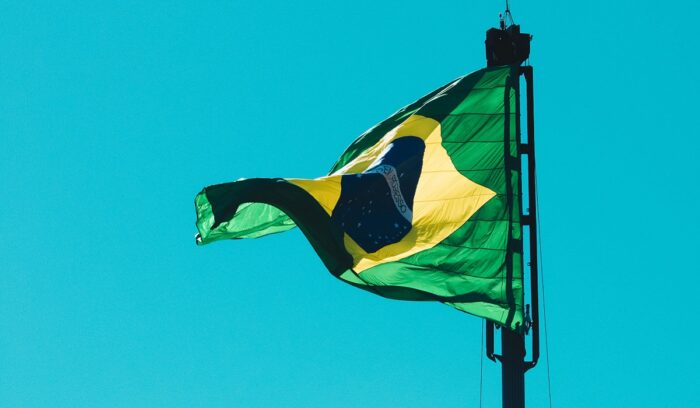
Brazilian flag

Brazil passes law to cap emissions and regulate carbon market

Brazil will join the short list of countries, which includes China, Mexico, and Kazakhstan, and most E.U. member states, with a nationwide regulated carbon emissions system. The Brazilian government and the law’s proponents in the industrial sector say a regulated market will encourage companies to adopt low-carbon technologies and innovate toward greener production methods. Fines for not complying will be largely rerouted toward Brazil’s national climate change fund and administrative costs, with 5% of the fines destined to compensate Indigenous communities.


Good news for British climate action

Renewable power set to overtake fossil fuels in the U.K. this year for the first time

While particularly windy periods have meant certain days in the last few years have been dominated by renewable power as turbines lit up the grid, this is the first time through an entire calendar year that renewable energy will be greater than power generated from burning oil, gas and coal. The shift is driven largely by a decline in production from coal, gas, and oil, as well as growing wind, solar, and biomass power, according to think tank Ember.

sidharth bhatia QstzxTWnXY unsplash scaled e

77% of universities have now pledged to divest from fossil fuels

115 U.K. universities have now pledged to exclude fossil fuel companies from their investment portfolios, following Birmingham City University, Glasgow School of Art, Royal Northern College of Music, and the University of Bradford all incorporating fossil fuel industry exclusions into their Ethical Investment Policies. The divested universities represent 77% of the U.K. Higher Education sector and more than $22 billion USD worth of endowments.

Molten iron ore

China develops new iron making method that boosts productivity by 3,600 times

The flash iron making method, as detailed by Professor Zhang Wenhai and his team in a paper published in the peer-reviewed journal Nonferrous Metals last month, can complete the iron making process in just three to six seconds, compared to the five to six hours required by traditional blast furnaces. According to Zhang and his colleagues, the new technology could improve energy use efficiency in China’s steel industry by over one-third. Additionally, by eliminating the need for coal entirely, it would help the steel industry achieve the goal of near-zero carbon dioxide emissions.

Aerial view of a geothermal power facility surrounded by tropical landscape for an article about Indonesia coal phase-out

Indonesia aims to phase out all coal-fired and fossil fuel power plants by 2040

Indonesian president Prabowo Subianto has announced his country will seek to phase out all coal-fired and fossil fuel power plants by 2040, pairing the goal with a target to build over 75 GW of renewable energy capacity over the same period. This brings forward Indonesia’s goal of retiring coal-fired power plants from 2056 to 2040. As the world’s fifth-largest operator of coal-fired power capacity at 52.3 GW, Indonesia’s promise to transition completely away from coal could serve as a pivotal step towards global decarbonization if implemented as planned.

Green plant sprout in cracked soil

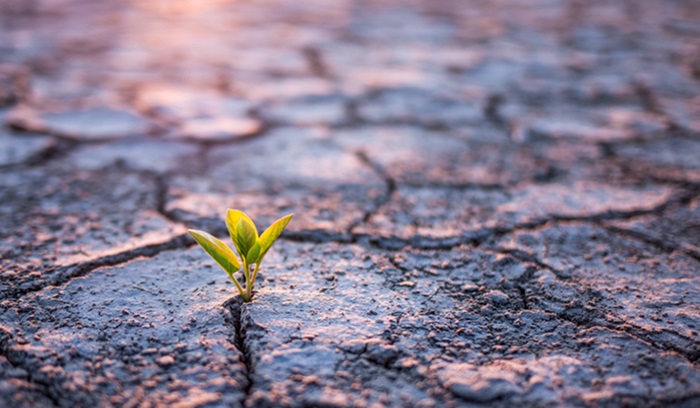
China completes historic 1,800-mile “Great Green Wall”

China has finished a 46-year campaign to encircle the Taklamakan Desert with trees, part of national efforts to end desertification and curb sandstorms. Efforts to enclose the desert with trees began in 1978 with the launch of China’s “Three-North Shelterbelt” project, colloquially known as the Great Green Wall. More than 116,000 square miles of trees have been planted, helping capture massive amounts of carbon and bringing China’s total forest coverage above 25% by the end of last year, up from around 10% in 1949.

A top view of solar farm

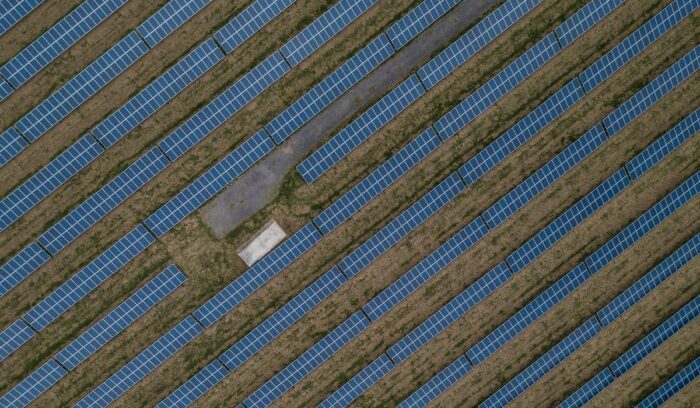
Solar power booms in Pakistan

Sky-high power prices are fueling a massive solar buildout in Pakistan. Solar is gaining traction on farms and factories after the government cut electricity subsidies, causing prices to spike. In many places, electric bills cost more than rent, and blackouts are common. Panels purchased in 2024 amount to 17 GW of capacity, enough to raise Pakistan’s total power capacity by a third.

Coastal farmland in Denmark

Denmark to plant one billion trees and return 15% of its land to nature

On farms in Denmark that grow crops like hay for animal feed, the government will soon pay farmers to turn some of their land into forests instead. In other areas, farm fields will revert to peatlands. In total, around 10% of the country will be restored to nature. The plan goes farther than any other country has so far to tackle emissions from the food chain, which is responsible for around a quarter of the world’s total carbon footprint.

Solar panels

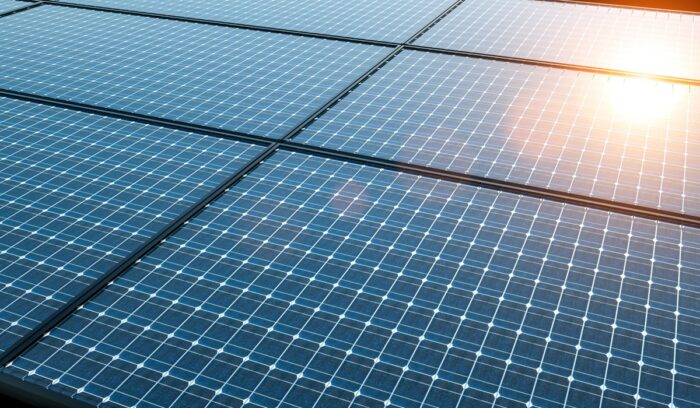
Australia to invest $125m in Pacific island off-grid and community scale renewables

The funding, which comprises a $75 million investment through the REnew Pacific program and $50 million through the Australia-Pacific Partnership for Energy Transition, was announced at the COP29 United Nations climate summit. The REnew Pacific program will help deliver off-grid and community-scale renewable energy in remote and rural parts of the Pacific, enabling lighting, access to water, improved agriculture, better food security, quality education and health services, reliable communications connectivity and enhanced incomes. The $50 million Partnership for Energy Transition funding will capture renewable energy investment benefits such as energy transition modelling, grid studies, feasibility studies and university collaborations.

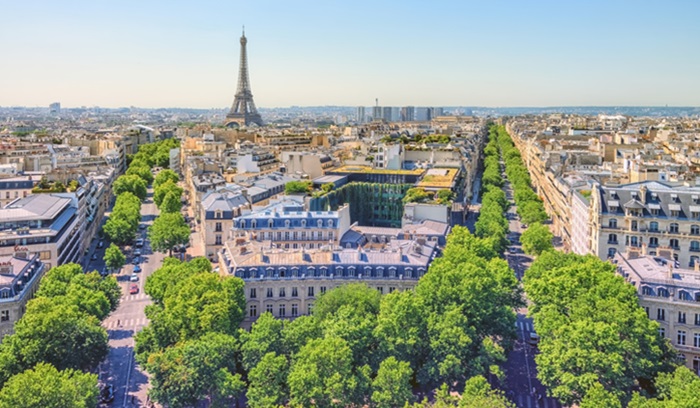
Eiffel Tower in Paris City

Paris to replace 60,000 parking spaces with trees 

Paris aims to replace 60,000 parking spaces across the city with trees by the end of this decade, according to its newly released climate plan. The plan, which must still be approved by the Council of Paris, lays out steps to help the city prepare for more extreme heat. The goal of ripping up parking spaces is part of a larger aim to create more than 700 acres of green space by 2030. The plan also calls for setting up more cooling centers, creating more car-free zones, and installing reflective roofs on 1,000 public buildings.