Climate crisis

Traffic on freeway

Global sales of combustion engine cars have peaked

To decarbonize road transport and achieve global climate goals, the world must move away from petrol and diesel cars and toward electric vehicles and other forms of low-carbon transport. Fortunately, this transition is already well underway, with global sales of combustion engine cars peaking in 2017 or 2018 and now falling. In 2018, global combustion engine cars peaked at more than 80 million. By 2023, sales had fallen below 65 million units as EV sales rose dramatically.

Norwegian flag|Norway fjord

Norway is set to become the first country to fully transition to electric vehicles

Despite its vast oil and gas reserves, the Nordic country has long been recognized as a global leader in sustainable transportation. Its EV sales have increased from less than 1% of total auto sales in 2010 to a whopping 88.9% last year — and this trend doesn’t show any sign of slowing. Data published by the Norwegian Public Roads Administration found EVs accounted for more than 96% of new cars sold in the first few weeks of this year. It puts Norway within touching distance of going fully electric — realizing a non-binding goal that was first established by lawmakers back in 2017.

Industrial pipes and infrastructure at a coastal energy facility for an article about carbon capture and storage

China sets new fusion endurance record of over a thousand seconds

Fusion power is widely thought of as the holy grail of renewable, climate-friendly energy. Now, we are one step closer to realizing practical fusion power for the masses. The Experimental Advanced Superconducting Tokamak reactor in China’s Anhui Province has set a new record with a 1,066-second sustained fusion reaction. The new record builds on the previous record of 403 seconds set by EAST in 2023. The increase was made possible by a number of upgrades to the experimental system that have doubled the power output while keeping the reaction stable.

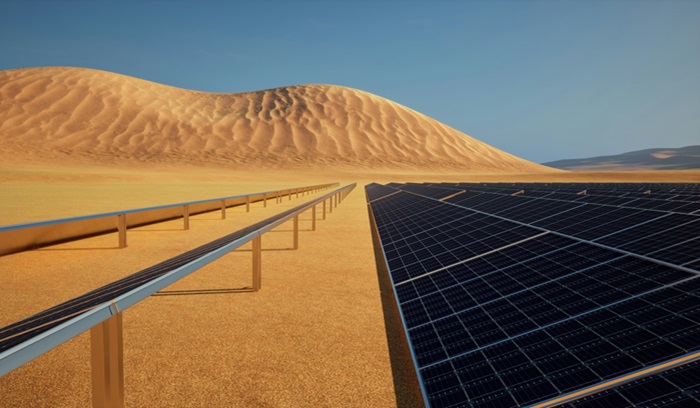
Solar farm in the desert

Abu Dhabi to build world’s largest solar energy project

Abu Dhabi will soon be home to a 5.2-GW solar farm, enough to power 750,000 homes and become the world’s new largest-ever solar energy project. The project will cost US$6 billion, and is set to be commissioned in 2027. It will consist of around 10 million solar panels across 20 square miles, more than 10,000 football fields. The new project in Abu Dhabi not only earns the United Arab Emirates major bragging rights, but also gets it closer to its Net Zero by 2050 target.

Rainforest canopy

The Democratic Republic of Congo to create the Earth’s largest protected tropical forest reserve

An area covering the size of France will now be protected through partnerships with communities that integrates conservation and restoration with green economic development. This forms the world’s largest protected forest area and consists of a network of economic hubs built on sustainable agricultural production and powered by renewable energy derived from the hydropower potential of the Congo River. The initiative aims to create 500,000 new jobs and transfer a million tons of food annually to Kinshasa, Africa’s largest city.

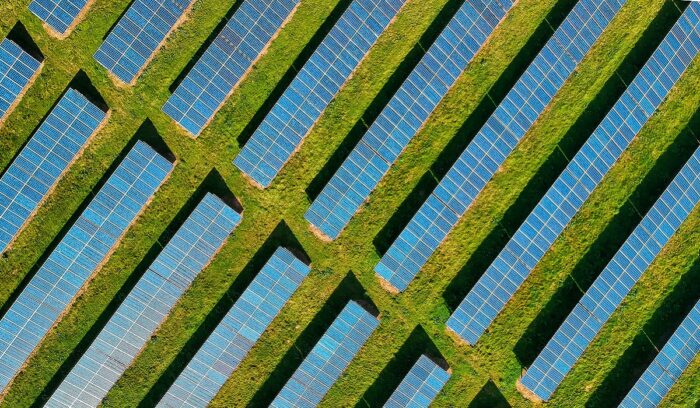
Solar farm from above

India adds record 24.5 GW of solar in 2024

India added 24.5 GW of solar and 3.4 GW of wind capacity in 2024, doubling solar installations and increasing wind capacity by 21% from 2023, according to JMK Research & Analytics. These additions brought India’s total renewable energy capacity to 209.44 GW, with solar accounting for 47%. Utility-scale additions nearly tripled from 2023, while rooftop and off-grid installations rose 53% and 197%, respectively, driven by the PM Surya Ghar: Muft Bijli Yojana program, which spurred 700,000 rooftop installations in 10 months.

New York

New York City to get a $3 billion, 80,000-acre offshore wind farm

New York City will soon be getting its own personal offshore wind farm. The Empire Wind 1 project just received a US$3 billion project financing package and is expected to go online in 2027, powering roughly half a million borough residents. A turbine-laden 80,000-acre plot of Atlantic Ocean – which is nearly half the size of NYC – could generate 810 MW if running efficiently at its designed capacity. That is around 3.19 TWh per year or roughly 6% of NYC’s overall consumption. Empire Wind 1 will be the first offshore wind project to connect directly to NYC’s electrical grid.

Power plant polluting

New York to fine fossil fuel companies $75 billion under new climate law

New York state will fine fossil fuel companies a total of $75 billion over the next 25 years to pay for damage caused to the climate under a bill Governor Kathy Hochul signed into law at the end of 2024.
New York state will fine fossil fuel companies $75 billion over the next 25 years to pay for damage caused to the climate. The new law is intended to shift some of the recovery and adaptation costs of climate change from individual taxpayers to oil, gas, and coal companies. The money raised will be spent on mitigating the impacts of climate change, including adapting roads, transit, water and sewage systems, buildings and other infrastructure. Fossil fuel companies will be fined based on the amount of greenhouse gases they emitted between 2000 and 2018.

Quebec city

Quebec passes bill that bans gas-powered vehicle sales by 2035

The ban, which is part of the province’s plan to reduce greenhouse gas emissions, will take place in two phases. First, as of Jan. 31, 2034, it will be prohibited to advertise the sale of a light combustion vehicle of the 2035 model year or later, whether it’s a new or used vehicle, including hybrid and plug-in hybrid models. Then, beginning Dec. 31, 2035, selling and leasing new light combustion vehicles of 2034 model year and earlier will be banned.