Gavi

African children smiling, for article on measles vaccination Africa

Nearly 20 million measles deaths averted in Africa since 2000

Measles vaccines in Africa have prevented an estimated 19.5 million deaths since 2000 — roughly 800,000 lives saved every year for nearly a quarter century. A new WHO and Gavi analysis credits steady investment in cold-chain systems, community health workers, and political will, with coverage for the critical second measles dose climbing more than tenfold over that stretch. This year, Cabo Verde, Mauritius, and Seychelles became the first sub-Saharan nations to officially eliminate measles and rubella, a milestone once considered out of reach. The story is a powerful reminder that global health progress, though uneven, compounds quietly over decades — and that protecting children anywhere strengthens the case for protecting them everywhere.

A young child receives a vaccine injection at a health clinic, for an article about malaria vaccine price cut in Africa

Malaria vaccine price cut will protect 7 million more children by 2030

Malaria vaccine price cut: a landmark deal between Gavi and UNICEF has reduced the cost of the R21/Matrix-M malaria vaccine by roughly 25%, dropping the price to under per dose. The savings unlock more than 30 million additional doses, extending protection to an estimated 7 million more children across 24 African countries by 2030. The agreement integrates R21 into routine immunization programs, making it part of standard care rather than a one-off campaign. In a region where malaria kills a child every two minutes, this financing breakthrough offers a replicable model for expanding access to lifesaving vaccines worldwide.

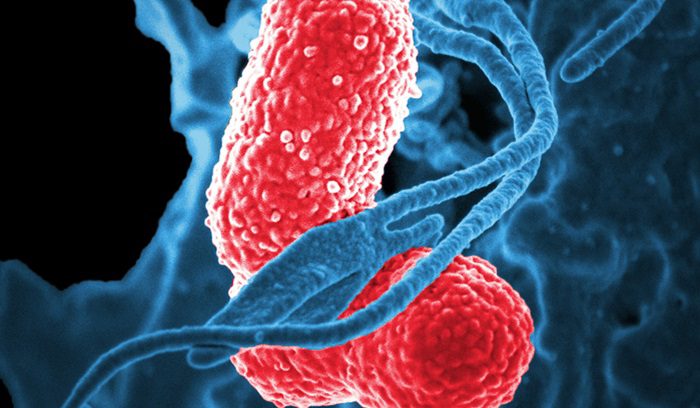
digitally colorized scanning electron microscopic (SEM) image, depicts a blue-colored, human white blood cell, (WBC) known specifically as a neutrophil, interacting with two pink-colored, rod shaped, multidrug-resistant (MDR), Klebsiella pneumoniae bacteria, for article on pneumococcal vaccine, for article on pneumococcal vaccines

Global child deaths from pneumonia have been cut in half since 2009

Childhood pneumonia deaths have been cut roughly in half since 2009, when a new kind of vaccine funding model launched and 438 million children across 64 countries received pneumococcal vaccines. The breakthrough wasn’t just the science — it was a $1.5 billion fund that guaranteed manufacturers a buyer, bringing prices down so lower-income countries could finally afford to protect their kids. In Kenya, invasive pneumococcal disease in young children dropped 92% within eight years of rollout. Now the vaccine is reaching fragile places like Chad, Somalia, and South Sudan, where a single dose can mean the difference between life and death. It’s a quiet reminder that when global health gets the funding right, millions of children grow up who otherwise wouldn’t.

A doctor is about to vaccinate a child, for article on malaria vaccine rollout

Sudan launches first malaria vaccine in landmark child health initiative

Sudan’s malaria vaccine rollout is reaching more than 148,000 children under 12 months in its opening phase, making it the first country in the WHO Eastern Mediterranean Region to launch the shot nationally. That’s remarkable on its own, but consider the backdrop: hospitals shuttered, health workers unpaid for months, and a war reshaping daily life. Even so, the Federal Ministry of Health worked with UNICEF, WHO, and Gavi to train staff, build cold chain capacity, and reach two states, with expansion to 129 localities planned by 2026. It’s a quiet reminder that even in the hardest places, public health progress can still find a way through.

Person filling syringe with vaccine, for article on mpox vaccines for Africa

Global alliance buys half a million mpox vaccines for Africa

Gavi has tapped its emergency First Response Fund for the very first time, committing up to $50 million to send 500,000 mpox vaccines to African countries hit hardest by the outbreak. The fund was built precisely for moments like this — letting the alliance move within days of a health emergency rather than waiting on slower funding cycles. The doses, from manufacturer Bavarian Nordic, will head to places like the Democratic Republic of the Congo, which has carried the heaviest burden of the new Clade 1b strain. It’s a real start, even as experts estimate Africa needs around 10 million doses overall. If the tool keeps getting used and funded, it could reshape how quickly the world responds to outbreaks in lower-income regions.