
E.U. Parliament approves new measures to create a circular economy
“By 2025, at least 55% of municipal waste (from households and businesses) should be recycled. The target will rise to 60% by 2030 and 65% by 2035.”
This archive tracks progress tied to the European Union, the political and economic bloc representing member states across Europe. Stories here cover E.U. policies, agreements, and initiatives that advance health, climate, human rights, and economic well-being.

“By 2025, at least 55% of municipal waste (from households and businesses) should be recycled. The target will rise to 60% by 2030 and 65% by 2035.”

In March 2011, environment ministers from Austria, Croatia, Hungary, Serbia, and Slovenia gathered in Gödöllő, Hungary, and signed a declaration to protect a 700-kilometer corridor of wild rivers known as “Europe’s Amazon.” The agreement laid the groundwork for what became, a decade later, the world’s first UNESCO five-country biosphere reserve — a rare instance of rivers drawing nations together.
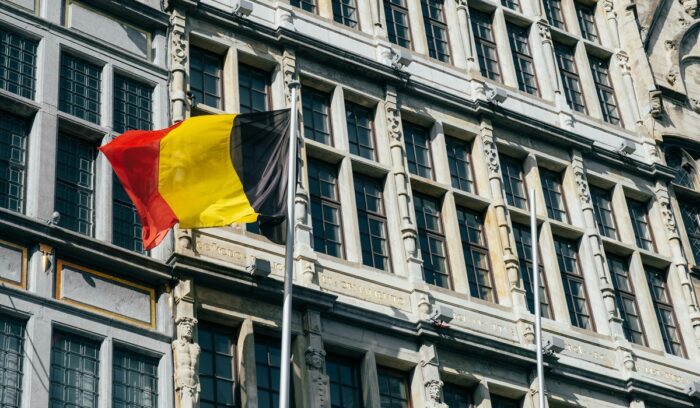
Same-sex marriage has been legal in Belgium since 1 June 2003, making it the second country in the world to open marriage to same-sex couples, after the Netherlands, and 9 days ahead of the Canadian province of Ontario. Legislation to grant marriage rights to same-sex couples was passed by both chambers of the Federal Parliament in November 2002 and January 2003 with the support of most political parties, and received royal assent on 13 February 2003.
EU enlargement in 1995 brought Austria, Finland, and Sweden into the union on January 1st, growing membership from 12 to 15 countries. Each nation put the question to its people first, with Austrians backing it most enthusiastically at 66% and Swedes narrowly approving at 52%. A quiet turning point for three longtime neutrals after the Cold War.