
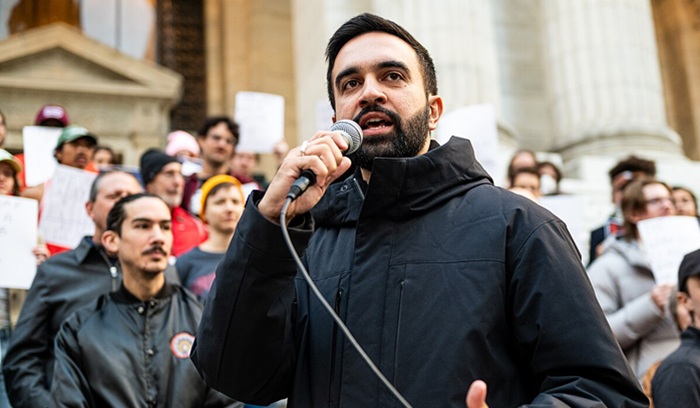
Zohran Mamdani’s election as the first Muslim Mayor of New York City marks a powerful and historic moment for American democracy. This victory signals a decisive shift toward embracing diverse, progressive leadership in the nation’s largest metropolis. Mamdani, who won on a platform focused on housing, transportation, and economic justice, embodies the city’s tradition of upward mobility and inclusive politics. His win is a triumph for community organizing and a powerful affirmation that the city is committed to equitable representation.
The election results highlight the growing political power of diverse coalitions. They show that a message focused on social equity and economic reform can resonate deeply with a broad, multi-ethnic electorate.
Elevating Marginalized Voices in Governance
The most significant good news of this election is the breakthrough for representation. Mamdani’s identity as a Muslim and his background as a son of immigrants provide a long-overdue voice in city governance. This visibility at the highest level of city government offers a powerful source of inspiration for young people from marginalized communities worldwide. It proves that there are no ceilings in American political life.
His victory brings a necessary perspective to policy discussions. Mamdani has centered his platform on issues directly affecting working-class families and immigrants. His commitment ensures that city policies will be designed through a lens of equity, addressing systemic issues like housing affordability and job security. This focus on the needs of all residents strengthens the legitimacy of city governance.
A Mandate for Equitable Policy and Reform
Mamdani ran on a platform that secured a strong mandate for progressive reform. His victory is a testament to the effectiveness of local, grassroots political movements. He prioritized tangible solutions for complex urban challenges. For example, his proposals focused on expanding tenant rights and investing in public transportation.
The new administration is expected to accelerate public investment in social infrastructure. This will lead to positive changes in areas like public housing and healthcare access. This commitment to equitable distribution of city resources helps close disparity gaps. It builds a more resilient and inclusive economic future for all New Yorkers. For background on the city’s focus on inclusive housing policies, the New York City Mayor’s Office of Housing Recovery Operations provides useful context.
Strengthening Civic Engagement and Community Organizing
This election outcome is a major success for civic engagement and community organizing. Mamdani’s campaign leveraged the energy of local activists and first-time voters. This demonstrates the power of bottom-up politics. The mobilization of diverse communities ensures sustained political participation beyond the election cycle itself.
This vibrant engagement strengthens the overall health of the city’s democracy. It provides a model for how progressive ideas can achieve mainstream success through grassroots coalition-building. This victory inspires young progressives across the nation to organize and compete for political leadership at every level. The Brennan Center for Justice often highlights the importance of inclusive voting and democratic participation in urban environments.
A Legacy of Inclusivity and Global Influence
New York City’s decision to elect its first Muslim Mayor sends a profound message of inclusivity to the world. As a global city, New York often sets precedents for cultural and political acceptance. This election affirms the city’s identity as a welcoming sanctuary for all people. This is particularly significant in a world grappling with issues of immigration and religious identity.
Mamdani’s historic achievement will undoubtedly influence the political trajectory of other major global cities. It proves that diversity in leadership is a source of strength, innovation, and democratic vitality. The Schomburg Center for Research in Black Culture provides context on the long history of social justice movements that paved the way for this moment. The National Congress of American Indians (NCAI) provides a model for how sovereignty and governance are pursued by historically marginalized groups.
Resources
- New York City Mayor’s Office of Housing Recovery Operations on Inclusive Housing Policies
- Brennan Center for Justice on Democratic Participation
- Schomburg Center for Research in Black Culture on Social Justice Movements
More Good News
-

Marie-Louise Eta becomes the first female head coach in men’s top-flight European football
Marie-Louise Eta, 34, was appointed head coach of Bundesliga side Union Berlin on April 12, 2026, becoming the first woman to hold the top coaching position at a men’s club in any of Europe’s Big Five leagues — the Premier League, La Liga, Serie A, Ligue 1, and Bundesliga. A Champions League winner as a player with Turbine Potsdam in 2010, Eta had already broken barriers as the first female assistant coach in the Bundesliga in 2023. She takes charge for the final five matches of the season as Union Berlin fights to secure top-flight survival, after which she was…
-

Renewables now make up at least 49% of global power capacity
Renewable energy reached 49.4% of total global installed power capacity by end of 2025, up from 46.3% in 2024, according to the International Renewable Energy Agency’s Renewable Capacity Statistics 2026. The world added 692 gigawatts of new renewable capacity last year — the largest annual addition ever recorded — with solar alone contributing 511 gigawatts. Africa recorded its highest renewable expansion on record, and the Middle East its fastest-ever growth. IRENA Director-General Francesco La Camera noted that countries investing in renewables are absorbing the current Middle East energy crisis with measurably less economic damage than fossil-fuel-dependent economies.
-

Global suicide rate has fallen by 40% since 1995
A landmark study published in The Lancet Public Health by researchers at the Institute for Health Metrics and Evaluation at the University of Washington found that the global age-standardized suicide mortality rate fell nearly 40% between 1990 and 2021 — from 15 deaths per 100,000 people to nine. The decline was driven by measurable interventions including restrictions on toxic pesticides, expanded mental health services, and national prevention strategies. Female suicide rates fell more than 50% globally over the period. Roughly 740,000 people still die by suicide each year, and rates have risen in parts of Latin America and North America,…
-

Rhinos are reintroduced back into Uganda’s wild after 43 years
The Uganda Wildlife Authority havetranslocated the first southern white rhinos to Kidepo Valley National Park — 43 years after the last rhino in the park was killed by poachers in 1983. The animals came from Ziwa Rhino Sanctuary, a breeding program established in 2005 with just six individuals that has grown Uganda’s total rhino population to 61. Four more rhinos will follow by May, with a separate group already relocated to Ajai Wildlife Reserve in January 2026. The reintroduction restores a key grazing species to one of Africa’s most remote savannah ecosystems and makes Kidepo the only national park in…
-

U.K. cancer death rates down to their lowest level on record
Cancer Research UK data published in March 2026 confirms that UK cancer death rates have reached their lowest level on record — around 247 deaths per 100,000 people annually between 2022 and 2024, down 29% from the 1989 peak of 355 per 100,000. The rate fell 11% in just the past decade, with stomach cancer deaths down 34%, lung cancer down 22%, and ovarian cancer down 19%. Cervical cancer death rates have dropped 75% since the 1970s, driven by NHS screening programs and the HPV vaccine introduced in 2008. Researchers caution that liver, womb, and gallbladder cancer death rates are…