
At a glance
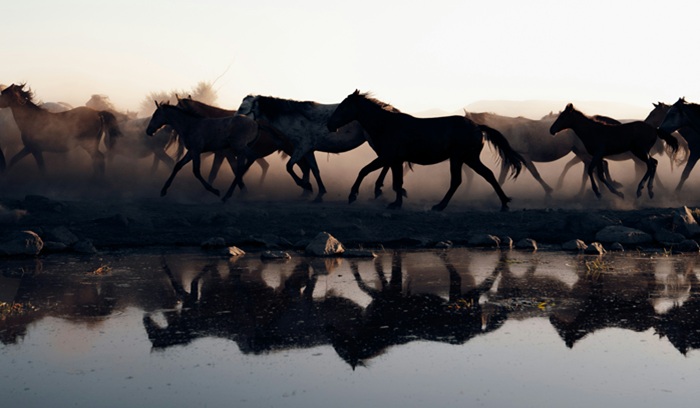
- Wild horse rewilding: Primitive horse breeds, selected for genetics closely tied to ancient Iberian lineages, have been released into the highlands of central Spain after an absence stretching back to the end of the last Ice Age.
- Ecosystem role: As the horses graze, they suppress shrub overgrowth, reduce wildfire fuel, create movement corridors through dense vegetation, and disperse seeds — all functions that no other species currently fills in this landscape.
- Community backing: Local governments, landowners, and residents have joined the effort, with rewilding designed to support a nature-based economy including sustainable tourism alongside conservation goals.
Why 10,000 years matters
Wild horses disappeared from the Iberian Peninsula at the close of the Pleistocene epoch, part of a continent-wide collapse of large herbivore populations driven by climate shifts and early human hunting pressure. Their absence left a functional gap in the ecosystem — one that persisted through the rise and fall of every civilization that followed. The horses now roaming the highlands are descended from primitive Iberian breeds that retain behavioral and physical traits close to their ancient ancestors. They are not domesticated animals released into the wild. They are carefully selected individuals with the instincts, social structures, and ecological behaviors needed to survive and function as wild animals. That distinction is important. Rewilding is not the same as releasing animals and hoping for the best.What horses actually do for the land
The ecological case for wild horse rewilding rests on something concrete: herbivores shape landscapes in ways that matter deeply to other species. When horses graze, they reduce the thick accumulation of dry grasses and shrubs that turn Spain’s hot summers into wildfire tinder. The IUCN has documented how large herbivore reintroductions can significantly alter fire regimes in fire-prone ecosystems — a finding with urgent relevance as climate change drives longer and more intense fire seasons across southern Europe. Beyond fire, the horses open up dense vegetation through movement, creating habitat corridors that smaller animals and birds can use. They deposit seeds through their dung across wide territories. They disturb and aerate soil in ways that support plant diversity. Each of these effects ripples outward. The highlands had been losing biodiversity for decades. Shrub encroachment — largely a result of rural depopulation and the abandonment of traditional grazing — had smothered grassland habitat. The horses address that directly.Building something that lasts
The most striking aspect of this project may be its structure. Rewilding Europe, working alongside local partners and drawing on guidance from the IUCN, did not design this as a top-down conservation intervention. The initiative involves landowners, local officials, and residents from the beginning — people whose livelihoods and sense of place are tied to the land. That matters because rewilding projects fail when local communities feel excluded or threatened. Here, the framing has been different: the return of wild horses is positioned as an economic opportunity as well as an ecological one. Nature-based tourism — already growing across rewilded areas of Europe — can generate income for rural communities that have been losing population and economic vitality for a generation. The United Nations Development Programme has highlighted the connection between community ownership and long-term conservation success. The Iberian highlands project reflects that lesson. Similar thinking has driven rewilding efforts elsewhere. In Uganda, a landmark rhino reintroduction to Kidepo Valley showed how large mammal recovery can anchor both ecosystem restoration and regional identity.Part of a larger shift
Spain’s wild horse project sits inside a broader movement. Across Europe, wolves have expanded into regions where they had been absent for a century. Bison have been returned to Polish and Romanian forests. Beavers have been reintroduced to British rivers. Each effort tests the same core idea: that ecosystems degraded by human activity can recover meaningful function when key species are restored. The evidence is increasingly strong that trophic rewilding — restoring animals at different levels of the food web — produces cascading benefits that extend far beyond the target species. Long-term monitoring of the Iberian highlands project will add to that body of knowledge. Still, rewilding is not without friction. Questions remain about livestock predation risk, land use conflicts, and the pace at which released animals can establish stable, self-sustaining populations. These tensions are real, and managing them honestly is part of what makes or breaks a project like this. Progress in ecology rarely moves in a straight line. But 10,000 years is a long time to wait, and the horses are back. Discoveries like this — of nature’s capacity to recover when given the chance — sit alongside breakthroughs in human health. A landmark Alzheimer’s prevention trial recently showed that cutting disease risk in half is possible with the right intervention. In both cases, the story is the same: restoration is possible, and the evidence is growing.Read more
For more from Good News for Humankind, see:
- Alzheimer’s risk cut in half in landmark prevention trial
- Uganda’s rhino reintroduction to Kidepo Valley
- The Good News for Humankind archive on rewilding
About this article
- 🤖 This article is AI-generated, based on a framework created by Peter Schulte.
- 🌍 It aims to be inspirational but clear-eyed, accurate, and evidence-based, and grounded in care for the Earth, peace and belonging for all, and human evolution.
- 💬 Leave your notes and suggestions in the comments — I will do my best to review and implement where appropriate and possible.
- 📬 One verified piece of good news, one insight from Antihero Project, every weekday morning. Subscribe free.
More Good News
-
Rhinos return to Uganda’s wild after 43 years in landmark conservation milestone
For the first time in 43 years, wild rhinos are roaming Uganda again. After poaching wiped out the population in the early 1980s, conservation authorities have successfully reintroduced rhinos into Kidepo Valley National Park — the result of decades of breeding, community engagement, and anti-poaching work. The milestone is one of Africa’s most significant wildlife recovery achievements in recent memory and offers a model for rewilding efforts across the continent.
-

UK cancer death rates fall to lowest level ever recorded in historic milestone
Cancer death rates in the United Kingdom have fallen to their lowest level ever recorded, Cancer Research UK announced in March 2026. Decades of investment in screening programs, early detection, and new treatments are behind the milestone. Despite the progress, researchers warn that geographic and socioeconomic inequalities in cancer outcomes remain significant, and that sustained funding and equitable access to care will be essential to drive further gains.
-
California condors nest on Yurok land in Pacific Northwest for first time in over a century
California condors are nesting in the Pacific Northwest for the first time in more than a century, confirmed on Yurok Tribe territory in Northern California. The Yurok, who regard condors as sacred relatives, launched their restoration program in 2003 and released the first birds in 2022. The nesting confirmation marks a milestone for both species recovery and Indigenous-led conservation, showing that when Native peoples lead ecological restoration on their own lands, the results can be extraordinary.
