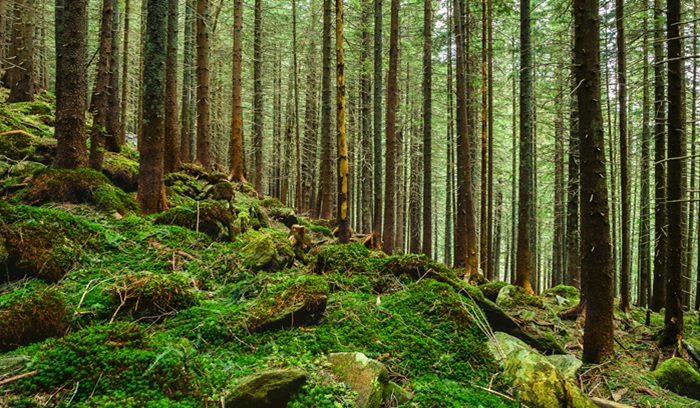
Washington State has taken a historic step to preserve its most valuable forests. On August 26, 2025, Public Lands Commissioner Dave Upthegrove signed a new order to permanently conserve 77,000 acres of what are known as “legacy forests.” This action is being called the most significant conservation move in a generation. It is a bold new approach that balances ecological preservation with the state’s economic needs, and it follows a growing recognition of the multiple values that forests provide.
The Value of Legacy Forests
These legacy forests, while not old-growth, are critical for the health of the ecosystem. They are prized for their rich biodiversity, robust carbon storage capacity, and natural resilience to wildfires. A new inventory of 106,000 acres of these forests was created by a team of scientists and forest ecologists. From this data, the Washington State Department of Natural Resources (DNR) selected the 77,000 most significant acres to protect. This decision effectively conserves all remaining older forests on state timber lands. The move acknowledges that these forests are not just a source of timber but are also vital natural assets.
Balancing Conservation and Economic Needs
The conservation effort is carefully balanced to ensure continued revenue for essential public services. A total of 29,000 acres of these forests will still be available for a sustainable timber harvest. Public Lands Commissioner Upthegrove stated that harvest projections are expected to remain steady for the next decade. He also emphasized the need for new, innovative approaches to stewardship. This includes exploring ecosystem-service funding, such as the sale of carbon credits, to support trust lands. This approach proves that conservation and a healthy economy can go hand in hand. It represents a shift towards a more holistic view of forest management, where forests are valued for their climate benefits as well as their timber.
A Response to Public Demand
The decision to protect these legacy forests follows a period of high-profile activism. Environmental advocates and activists have called for more urgent action, with protests and tree-sits drawing public attention to the issue. This groundswell of support highlighted the public’s desire to see these unique ecosystems preserved. The new plan, while criticized by some groups for not going far enough, is a significant response to this demand. It shows that the state government is listening to its citizens and that public action can drive real change. The new plan provides a new vision for forestry that recognizes the importance of biodiversity and climate-smart practices.
A Beacon of Hope for the Future
This new conservation strategy aims to chart a sustainable future for Washington’s forests. By weaving ecology, innovation, and public financing together, the DNR hopes to create a model that can be replicated elsewhere. As the state explores new markets for ecosystem services and adopts updated forestry practices, these protected forests could become the old-growth refuges of tomorrow. This move demonstrates how stewardship can evolve in the face of climate change and shifting societal values. It is a powerful message of hope for a future where economic growth and environmental protection are not seen as competing interests but as mutually reinforcing goals.
- For more information, the Washington Department of Natural Resources has published a fact sheet on this initiative.
- You can read more about the economics of this decision in a report from the Oregon Capital Chronicle.
- You can find more information on Washington’s conservation goals from the Washington DNR Forest Forward initiative.
- The Legacy Forest Defense Coalition also offers additional perspectives on the need for stronger protections.
More Good News
-

Alzheimer’s risk cut in half by drug in landmark prevention trial
A clinical trial from Washington University in St. Louis and published in The Lancet Neurology found that long-term high-dose treatment with the antibody drug gantenerumab reduced Alzheimer’s risk by roughly 50% in people with dominantly inherited Alzheimer’s disease — a rare genetic form caused by mutations that make the disease near-certain. The results are statistically uncertain and apply to less than 1% of all Alzheimer’s cases, but they provide the first evidence that removing amyloid plaques before symptoms appear can meaningfully change the course of the disease.
-

Marie-Louise Eta becomes the first female head coach in men’s top-flight European football
Marie-Louise Eta, 34, was appointed head coach of Bundesliga side Union Berlin on April 12, 2026, becoming the first woman to hold the top coaching position at a men’s club in any of Europe’s Big Five leagues — the Premier League, La Liga, Serie A, Ligue 1, and Bundesliga. A Champions League winner as a player with Turbine Potsdam in 2010, Eta had already broken barriers as the first female assistant coach in the Bundesliga in 2023. She takes charge for the final five matches of the season as Union Berlin fights to secure top-flight survival, after which she was…
-

Renewables now make up at least 49% of global power capacity
Renewable energy reached 49.4% of total global installed power capacity by end of 2025, up from 46.3% in 2024, according to the International Renewable Energy Agency’s Renewable Capacity Statistics 2026. The world added 692 gigawatts of new renewable capacity last year — the largest annual addition ever recorded — with solar alone contributing 511 gigawatts. Africa recorded its highest renewable expansion on record, and the Middle East its fastest-ever growth. IRENA Director-General Francesco La Camera noted that countries investing in renewables are absorbing the current Middle East energy crisis with measurably less economic damage than fossil-fuel-dependent economies.
-

Global suicide rate has fallen by 40% since 1995
A landmark study published in The Lancet Public Health by researchers at the Institute for Health Metrics and Evaluation at the University of Washington found that the global age-standardized suicide mortality rate fell nearly 40% between 1990 and 2021 — from 15 deaths per 100,000 people to nine. The decline was driven by measurable interventions including restrictions on toxic pesticides, expanded mental health services, and national prevention strategies. Female suicide rates fell more than 50% globally over the period. Roughly 740,000 people still die by suicide each year, and rates have risen in parts of Latin America and North America,…
-
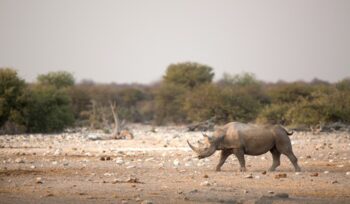
Rhinos are reintroduced back into Uganda’s wild after 43 years
The Uganda Wildlife Authority havetranslocated the first southern white rhinos to Kidepo Valley National Park — 43 years after the last rhino in the park was killed by poachers in 1983. The animals came from Ziwa Rhino Sanctuary, a breeding program established in 2005 with just six individuals that has grown Uganda’s total rhino population to 61. Four more rhinos will follow by May, with a separate group already relocated to Ajai Wildlife Reserve in January 2026. The reintroduction restores a key grazing species to one of Africa’s most remote savannah ecosystems and makes Kidepo the only national park in…