

Italy has agreed to turn a 430-hectare field at Santa Maria Galeria—about 35 kilometers north of Rome—into a solar farm aimed at powering Vatican City entirely with renewable energy and making it the world’s first carbon-neutral state (AP News). The site holds extraterritorial status and carries financial implications that require approval from the Italian parliament before contracts can be awarded.
A Controversial History Recast for Sustainability
The Santa Maria Galeria site was long associated with Vatican Radio, which has operated transmission towers there since the 1950s. As the surrounding area became more developed, residents raised health concerns, including reports of childhood leukemia linked to electromagnetic emissions. While courts cleared the transmitters of wrongdoing, the Vatican reduced broadcasting hours in subsequent years due to technological changes, not health concerns (AP News; AP News historical background).
Aligning Religious Commitment with Environmental Action
Pope Francis, a vocal advocate for ecological stewardship and author of the encyclical Laudato Si’, commissioned the study into converting the controversial site into a solar energy facility. His successor, Pope Leo XIV, visited the site in June and reaffirmed his commitment to bringing Francis’s ecological vision to life, emphasizing environmental responsibility as central to the Church’s spiritual mission (AP News; Wikipedia: Vatican Climate Forest).
Project Details and Benefits
The agreement stipulates that the site’s agricultural use will continue alongside solar development to minimize environmental disruption. Italy’s support includes allowing the Vatican to import solar panels tax-free, although the Vatican won’t receive the subsidies typically available to solar installers in Italy. In return, any electricity generated beyond Vatican needs will be shared with nearby communities, and Italy can count the clean energy output toward its EU climate targets (AP News; ESG News).
Vatican officials estimate the project will cost under €100 million (around US $114 million). Once parliamentary approval is secured, contracts for construction and operation could be tendered, potentially launching the project before the decade’s end (AP News; Caliber.az).
Beyond energy metrics, this project is a powerful symbol of how religious institutions can embody environmental stewardship. Pope Leo XIV’s recent Mass using an ecological liturgy underlines this symbolic shift—highlighting care for creation as a core spiritual and moral priority (AP News on liturgy).
Global Significance and Forward Momentum
The Vatican’s solar farm could serve as an influential model for small states, religious entities, and diplomatic spaces seeking sustainable leadership. In replicating this approach—leveraging institutional legitimacy, symbolic values, and innovative policy—a blueprint emerges for decarbonization across unique jurisdictions.
With energy demands shifting and climate impacts accelerating, the Vatican’s solar initiative turns legacy land into a beacon of hope. By aligning theological purpose with clean energy investment, Vatican City may not just be carbon-neutral—it could be a renewal of faith in global environmental responsibility.
More Good News
-

Alzheimer’s risk cut in half by drug in landmark prevention trial
A clinical trial from Washington University in St. Louis and published in The Lancet Neurology found that long-term high-dose treatment with the antibody drug gantenerumab reduced Alzheimer’s risk by roughly 50% in people with dominantly inherited Alzheimer’s disease — a rare genetic form caused by mutations that make the disease near-certain. The results are statistically uncertain and apply to less than 1% of all Alzheimer’s cases, but they provide the first evidence that removing amyloid plaques before symptoms appear can meaningfully change the course of the disease.
-

Marie-Louise Eta becomes the first female head coach in men’s top-flight European football
Marie-Louise Eta, 34, was appointed head coach of Bundesliga side Union Berlin on April 12, 2026, becoming the first woman to hold the top coaching position at a men’s club in any of Europe’s Big Five leagues — the Premier League, La Liga, Serie A, Ligue 1, and Bundesliga. A Champions League winner as a player with Turbine Potsdam in 2010, Eta had already broken barriers as the first female assistant coach in the Bundesliga in 2023. She takes charge for the final five matches of the season as Union Berlin fights to secure top-flight survival, after which she was…
-
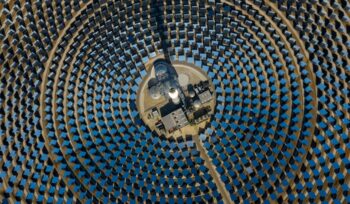
Renewables now make up at least 49% of global power capacity
Renewable energy reached 49.4% of total global installed power capacity by end of 2025, up from 46.3% in 2024, according to the International Renewable Energy Agency’s Renewable Capacity Statistics 2026. The world added 692 gigawatts of new renewable capacity last year — the largest annual addition ever recorded — with solar alone contributing 511 gigawatts. Africa recorded its highest renewable expansion on record, and the Middle East its fastest-ever growth. IRENA Director-General Francesco La Camera noted that countries investing in renewables are absorbing the current Middle East energy crisis with measurably less economic damage than fossil-fuel-dependent economies.
-
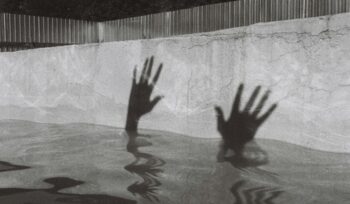
Global suicide rate has fallen by 40% since 1995
A landmark study published in The Lancet Public Health by researchers at the Institute for Health Metrics and Evaluation at the University of Washington found that the global age-standardized suicide mortality rate fell nearly 40% between 1990 and 2021 — from 15 deaths per 100,000 people to nine. The decline was driven by measurable interventions including restrictions on toxic pesticides, expanded mental health services, and national prevention strategies. Female suicide rates fell more than 50% globally over the period. Roughly 740,000 people still die by suicide each year, and rates have risen in parts of Latin America and North America,…
-
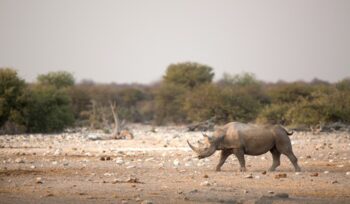
Rhinos are reintroduced back into Uganda’s wild after 43 years
The Uganda Wildlife Authority havetranslocated the first southern white rhinos to Kidepo Valley National Park — 43 years after the last rhino in the park was killed by poachers in 1983. The animals came from Ziwa Rhino Sanctuary, a breeding program established in 2005 with just six individuals that has grown Uganda’s total rhino population to 61. Four more rhinos will follow by May, with a separate group already relocated to Ajai Wildlife Reserve in January 2026. The reintroduction restores a key grazing species to one of Africa’s most remote savannah ecosystems and makes Kidepo the only national park in…