
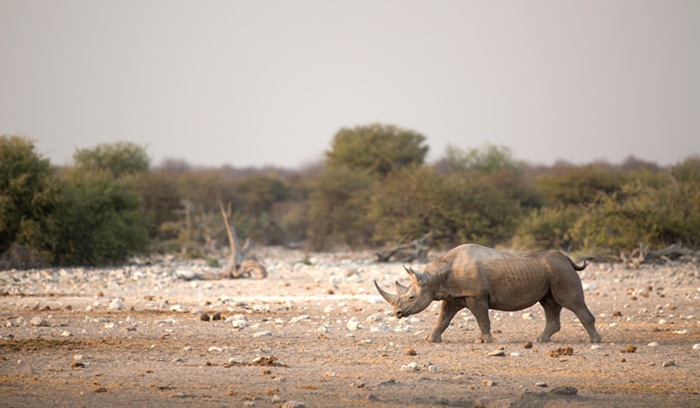
For the first time in more than four decades, wild rhinoceroses are roaming Ugandan soil. The Uganda rhino reintroduction — a decades-long effort to reverse one of East Africa’s most painful conservation losses — reached a landmark moment in 2026 C.E. when rhinos were released into Kidepo Valley National Park, ending an absence caused entirely by poaching.
At a glance
- Uganda rhino reintroduction: Rhinos were declared locally extinct in Uganda in the early 1980s C.E., wiped out by commercial poaching and instability during the Idi Amin era and its aftermath — making this release the culmination of more than 40 years of loss and recovery work.
- Ziwa Rhino Sanctuary: Before this release, Uganda’s only rhinos lived at Ziwa Rhino Sanctuary, a managed private reserve established in 2005 C.E. that served as a breeding base — growing the national population from just six animals to over 30.
- Kidepo Valley National Park: The reintroduction site is one of Africa’s most remote and biodiverse parks, a rugged wilderness in Uganda’s northeastern corner that conservationists have long considered ideal rhino habitat.
A loss written in history
Uganda once had healthy populations of both black and white rhinos. Then, between the 1970s C.E. and early 1980s C.E., the combination of political collapse and surging international demand for rhino horn erased them entirely.
It was a loss that reverberated across generations. Park rangers, conservationists, and local communities watched a species disappear in real time — and spent the following decades asking whether it could ever come back.
The answer, it turns out, was yes. But it required patience, funding, political will, and a functioning breeding program that could supply animals healthy enough to survive in the wild.
How Ziwa made it possible
The Rhino Fund Uganda, working alongside the Uganda Wildlife Authority, established Ziwa Rhino Sanctuary as a halfway point — a protected space where rhinos could breed and grow in number before eventually being moved to national parks. The model drew on lessons from successful reintroductions elsewhere in Africa, particularly in South Africa and Kenya.
Over nearly two decades, the Ziwa population expanded steadily. Calves were born, survived, and matured. Conservationists tracked each animal’s genetics, health, and temperament, identifying individuals suited for life in a wilder, less managed environment.
That careful work is what made 2026 C.E. possible.
Why Kidepo Valley
Kidepo Valley National Park sits near Uganda’s borders with South Sudan and Kenya — distant from the country’s main tourist circuits, which is part of what makes it ecologically valuable. The park hosts some of Uganda’s most intact savanna ecosystems, with prey species and vegetation that can support a growing rhino population.
For the Iteso and Karamojong communities living near the park, the return of rhinos carries cultural as well as ecological weight. Elders in the region remember the animals. Younger generations will now encounter them for the first time.
Wildlife tourism, which had bypassed Kidepo compared to Bwindi or Queen Elizabeth National Park, may also see new attention — bringing economic opportunity to one of Uganda’s more isolated regions.
What still needs to go right
Reintroduction is not the same as recovery. The rhinos released into Kidepo Valley face real risks: poaching pressure has diminished but not disappeared across East Africa, and establishing a self-sustaining wild population will require years of continued monitoring, anti-poaching patrols, and community engagement. White rhinos remain listed as Near Threatened globally by the IUCN, and the overall African picture is still fragile.
Uganda’s ability to protect its new wild population will depend on sustained funding and political commitment — neither of which can be taken for granted over the long term.
Still, the symbolism of what happened in 2026 C.E. is hard to overstate. A species that was hunted to local extinction returned — not by accident, but through deliberate, sustained human effort. That is a rare story in conservation, and Uganda has earned the right to tell it.
Read more
For more on this story, see: Mongabay
For more from Good News for Humankind, see:
- Alzheimer’s risk cut in half by drug in landmark prevention trial
- Uganda rhino reintroduction: Kidepo Valley
- The Good News for Humankind archive on Uganda
About this article
- 🤖 This article is AI-generated, based on a framework created by Peter Schulte.
- 🌍 It aims to be inspirational but clear-eyed, accurate, and evidence-based, and grounded in care for the Earth, peace and belonging for all, and human evolution.
- 💬 Leave your notes and suggestions in the comments below — I will do my best to review and implement where appropriate.
- ✉️ One verified piece of good news, one insight from Antihero Project, every weekday morning. Subscribe free.
More Good News
-

Germany finishes 60-year project turning coal mines into a 23-lake district
Germany’s Lusatian Lakeland is now complete — a chain of 23 human-made lakes covering 14,000 hectares where open-cast coal mines once scarred the land between Berlin and Dresden. The final piece, Lake Sedlitz, opened to swimmers and boaters this April, and in June, five of the lakes will be linked by navigable canals into a continuous 5,000-hectare waterway. Engineers spent decades channeling river water into the old craters, securing embankments, and flushing out acid — work that would have taken nature a century. The region now welcomes around 800,000 overnight stays a year, with former miners finding work in hospitality…
-

Brazilian researchers find vitamin D boosts breast cancer chemo by 79%
Vitamin D may give breast cancer chemotherapy a meaningful boost, according to a new Brazilian trial in which 43% of women taking a daily supplement saw their tumors disappear completely, compared to 24% on a placebo. Researchers at São Paulo State University gave 80 patients a modest 2,000 IU dose alongside their standard pre-surgery chemo — a level safe enough for everyday use and cheap enough for almost anyone. Most women in the study were vitamin D-deficient to begin with, a pattern common in cancer patients worldwide. If larger trials confirm the finding, it points to something rare and hopeful…
-

Chinese solar exports double in last month to hit record high
China’s solar exports hit a record 68.03 gigawatts in March 2026, nearly doubling February’s volume as countries raced to replace disrupted Middle Eastern oil and gas. Fifty nations logged all-time-high imports of Chinese solar equipment that month, with African countries jumping 176% from February alone. Behind those numbers are governments that had been moving cautiously on renewables and suddenly found solar to be the fastest, cheapest answer on the table. Battery and electric vehicle shipments climbed alongside the panels, hinting at a clean-energy package moving together. The takeaway is hopeful even amid hard circumstances: when fossil fuels falter, the world…
