
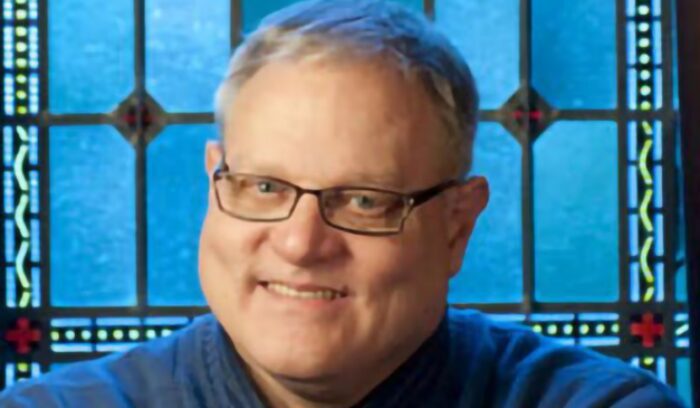
In 1972 C.E., a small but deliberate act in a New England congregation quietly changed the course of American religious history. The United Church of Christ (UCC) ordained William R. Johnson as a clergyperson — knowing he was openly gay. No denomination of its size or standing in the United States had done this before. In a country where gay men and lesbians could still be arrested for gathering in bars, fired from government jobs, or labeled mentally ill by the medical establishment, a Christian church had just said: you belong here, and you can lead.
Key facts
- UCC gay ordination: William R. Johnson was ordained by the United Church of Christ in 1972 C.E., making him the first openly gay person ordained by a mainline Protestant denomination in the United States.
- Mainline Protestant denomination: The UCC was not a small or fringe congregation — it was a historic, theologically rooted church with roots in the Puritan and Congregationalist traditions dating back to colonial America.
- LGBT clergy history: The Metropolitan Community Church, founded in 1968 C.E. and specifically serving LGBT Christians, had ordained LGBT ministers before 1972 C.E. — but the UCC’s action marked the first time a major, broadly-based Protestant denomination had done so.
Why the UCC acted when it did
The UCC had long positioned itself on the progressive edge of American Protestantism. Its founding merger in 1957 C.E. brought together traditions that valued congregational autonomy — the idea that each local church holds final authority over its own affairs, including who it calls to ministry. That structure made it possible for affirming congregations to move faster than a centralized church body might.
By 1972 C.E., the social context was shifting fast. The American Psychiatric Association would not remove homosexuality from its list of mental disorders until 1973 C.E. The Stonewall uprising had happened just three years earlier. The ordination of William Johnson was not a response to settled cultural acceptance — it was a decision made in the middle of active, unresolved conflict about who gay and lesbian Americans even were as human beings.
Johnson had been open about his sexuality throughout his theological education. His ordination was not an accident or an oversight. It was a choice, made with full knowledge of what it meant.
A global movement, unfolding slowly
The UCC’s action in 1972 C.E. did not immediately trigger a wave of similar decisions. For decades, most mainline denominations in the United States and elsewhere continued to restrict ordination. The debates were often long, painful, and marked by schism.
Gradually, the circle widened. The Episcopal Church in the U.S., the Evangelical Lutheran Church in America, the Presbyterian Church (U.S.A.), and the Christian Church (Disciples of Christ) all eventually moved to allow openly LGBT clergy. Internationally, denominations in Sweden, Norway, Denmark, Germany, the Netherlands, Scotland, and Canada followed similar paths — each on its own timeline, shaped by its own theological and cultural pressures.
In 2009 C.E., the Evangelical Lutheran Church in America voted to accept gay, lesbian, and bisexual clergy in committed monogamous relationships. In 2021 C.E., Megan Rohrer became the first openly transgender bishop elected in the ELCA — a milestone that would have been difficult to imagine in 1972 C.E.
The Church of Sweden, the Church of Norway, and several other Nordic Lutheran bodies now permit openly LGBT clergy, often in senior leadership roles. Eva Brunne was elected Bishop of Stockholm in 2009 C.E., living openly in a same-sex marriage. These shifts happened across decades, each one building — in part — on the precedent that a mainline American church had set in 1972 C.E.
Lasting impact
The UCC’s ordination of William Johnson did something that legal victories and political campaigns could not fully accomplish on their own: it said, from within a religious tradition, that gay identity and spiritual calling were not in conflict.
For millions of LGBT Christians in the United States and around the world, that distinction mattered enormously. Legal tolerance is one thing. To be welcomed — affirmed — by the institution that shapes your deepest sense of meaning and belonging is another. The UCC’s action in 1972 C.E. opened a door that, for many people, had never seemed possible to open.
It also gave other denominations a precedent to point to. When congregations and governing bodies debated the question in later decades, the UCC’s decision was evidence that ordaining LGBT clergy did not destroy a church. The denomination continued to function, to grow in some regions, and to shape American religious life.
The downstream effects extended beyond Christianity. Pew Research data consistently shows that religious affiliation and acceptance of LGBT people are not mutually exclusive — and that affirming congregations have played a direct role in changing how their members think and vote. The arc from 1972 C.E. to the present-day landscape of LGBT rights in the United States runs, in part, through churches.
Blindspots and limits
The UCC’s decision, significant as it was, did not resolve the deeper conflict within American Christianity or protect LGBT people from the harms that religious condemnation continued to cause for decades. Many LGBT people — particularly those raised in non-affirming traditions — experienced profound psychological damage from religious environments that explicitly rejected them, damage that persists for many today.
The history of LGBT ordination has also centered predominantly on white, Western, and affluent congregations. LGBT Christians of color, and those in the Global South, have often navigated different and more complex terrain — facing both racial and sexual marginalization within religious institutions that were themselves shaped by colonial histories. The full story of LGBT faith communities is far wider than any single denomination’s policy decision.
And within the UCC itself, not every congregation moved at the same pace. The denomination’s congregational structure — the same feature that made the 1972 C.E. ordination possible — also means that individual churches have continued to hold widely varying positions.
Read more
For more on this story, see: LGBT clergy in Christianity — Wikipedia
For more from Good News for Humankind, see:
- Rob Jetten becomes the Netherlands’ first openly gay prime minister
- Overdose deaths in the United States drop for first time in two decades
- The Good News for Humankind archive on religion
About this article
- 🤖 This article is AI-generated, based on a framework created by Peter Schulte.
- 🌍 It aims to be inspirational but clear-eyed, accurate, and evidence-based, and grounded in care for the Earth, peace and belonging for all, and human evolution.
- 💬 Leave your notes and suggestions in the comments below — I will do my best to review and implement where appropriate.
- ✉️ One verified piece of good news, one insight from Antihero Project, every weekday morning. Subscribe free.


