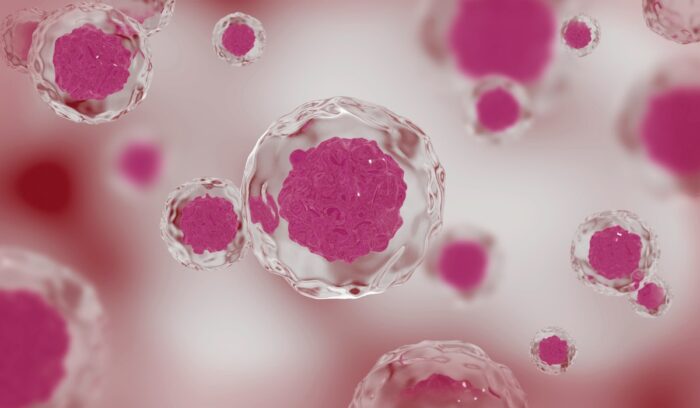
Chinese researchers have reversed type 1 diabetes in a human patient for the first time using cells drawn from her own body — a milestone that could reshape how one of the world’s most demanding chronic diseases is treated. A 25-year-old woman began producing her own insulin less than three months after receiving a transplant of reprogrammed stem cells, according to findings published in the journal Cell in 2024. The breakthrough, led by scientists in China, eliminates a major hurdle that has long blocked stem cell therapies: the need for donor cells and the immune rejection that follows.
- Fast fact: The patient started producing insulin in under three months after the transplant — a result researchers described as unprecedented for a type 1 diabetes treatment.
- Fast fact: The therapy used cells extracted from the patient herself, which were then reprogrammed into insulin-producing cells, avoiding the immune rejection risks tied to donor tissue.
- Fast fact: Type 1 diabetes affects tens of millions of people worldwide and currently has no cure, requiring patients to manage insulin levels every day for the rest of their lives.
How the type 1 diabetes stem cell therapy works
Type 1 diabetes occurs when the immune system destroys the beta cells in the pancreas that produce insulin. Without those cells, the body cannot regulate blood sugar on its own, forcing patients to rely on insulin injections or pumps indefinitely. For decades, scientists have searched for a way to restore those cells — and this new approach may be the most promising step yet.
The Chinese research team extracted cells from the patient’s own body and reprogrammed them into induced pluripotent stem cells, a type of cell that can be coaxed into becoming almost any cell in the body. They then guided those stem cells to become functional, insulin-producing beta cells. The reprogrammed cells were transplanted back into the patient, where they took hold and began doing the work her pancreas had long since stopped doing.
Because the transplanted cells came from the patient herself, her immune system did not reject them — a problem that has derailed earlier transplant-based approaches that relied on donor cells. Within 75 days, the woman’s body was producing insulin on its own, and she was able to reduce her dependence on external insulin injections.
Why this type 1 diabetes breakthrough matters beyond one patient
Previous stem cell approaches to treating type 1 diabetes relied on cells from donors or required patients to take powerful immunosuppressant drugs to prevent rejection. Both paths carry significant risks and practical limitations. This new method sidesteps both problems by using the patient’s own biological material as the starting point.
The research was published in Cell in 2024, with lead authors including Wang S. and colleagues from institutions in China. It builds on a growing body of work exploring how stem cells can be used to regenerate tissue destroyed by autoimmune conditions. Earlier related research, including work published in Nature in 2022 by Guan J. and colleagues, helped lay the scientific foundation for this approach.
Researchers caution that this is still early-stage work based on a single patient, and larger clinical trials will be needed before the therapy can be offered more broadly. But the fact that it worked at all — that a patient’s own cells could be reprogrammed, transplanted, and set to work producing insulin — marks a genuine turning point. The question is no longer whether this kind of therapy is theoretically possible. It has now happened.
What comes next for stem cell research and chronic disease treatment
The implications of this research extend well beyond type 1 diabetes. The same underlying approach — extracting a patient’s own cells, reprogramming them, and transplanting functional tissue back into the body — could eventually apply to other conditions where the immune system destroys specific cell types. Scientists working on treatments for Parkinson’s disease, certain forms of blindness, and heart failure are watching this area of research closely.
For the roughly 8.4 million people worldwide who live with type 1 diabetes, the prospect of a one-time treatment that restores natural insulin production would be life-changing. Daily insulin management is not just burdensome — it requires constant vigilance to avoid dangerous swings in blood sugar that can lead to hospitalization or death. A durable biological fix would fundamentally change what it means to live with the disease.
Wider trials are now needed to confirm the therapy’s safety and effectiveness across a broader population. But for a field that has spent decades searching for a real cure, this Chinese research team has just provided the most compelling evidence yet that one may be within reach.
More breakthroughs closing in on diseases once thought untreatable
This stem cell milestone fits into a broader pattern of science finally gaining ground on conditions that have long seemed permanent. Researchers recently cut Alzheimer’s disease risk in half in a landmark drug prevention trial — another example of a once-intractable disease yielding to determined scientific effort. And in the U.K., cancer death rates have fallen to their lowest recorded level, reflecting decades of investment in early detection and treatment innovation. Together, these stories suggest a moment when the arc of medical research is bending visibly toward breakthrough. You can find more coverage of advances like these in the Good News for Humankind archive, and if you want stories like this delivered directly to you, the Good News newsletter makes that easy. For a deeper look at the people driving change in science and medicine, the Antihero Project profiles the unconventional thinkers who refuse to accept the status quo.
Sourcing
This story was generated by AI based on a template created by Peter Schulte. It was originally reported by Nature.
More Good News
-

COP30 pledges recognition of 160 million hectares of Indigenous land rights
At the COP30 World Leaders Summit in Belém, Brazil in November 2025, 15 governments pledged to formally recognize Indigenous land rights over 160 million hectares by 2030 — an area the size of Iran — through the Intergovernmental Land Tenure Commitment. Brazil committed at least 59 million hectares. More than 35 donors renewed a $1.8 billion Forest and Land Tenure Pledge. The Tropical Forest Forever Facility secured nearly $7 billion, with 20% directed to Indigenous peoples. It was the largest Indigenous participation in COP history.
-

Ghana creates its first marine protected area to rescue depleted fish stocks
Ghana has declared its first marine protected area near Cape Three Points on the Gulf of Guinea, marking a historic step to reverse decades of overfishing. The protected zone aims to restore fish populations that have collapsed under pressure from industrial trawling and illegal fishing. The decision supports 2.7 million Ghanaians whose livelihoods depend on healthy coastal fisheries and aligns Ghana with the global goal of protecting 30 percent of the world’s oceans by 2030.
-
U.S. researchers cut Alzheimer’s risk by half in first-ever prevention trial
For the first time, researchers have evidence that removing amyloid plaques from the brain before symptoms appear can cut Alzheimer’s risk by roughly half. A clinical trial published in The Lancet Neurology, led by Washington University School of Medicine in St. Louis, found that long-term treatment with the antibody drug gantenerumab significantly delayed dementia onset in people with a rare genetic form of the disease. The findings provide the clearest signal yet that intervening years before symptoms emerge can change the course of Alzheimer’s disease.