

In 1790 C.E., an English cabinet maker named Thomas Saint filed a patent for a device that would, over the following century, reshape the entire clothing industry. His design — intended for leather and canvas rather than everyday fabric — outlined a machine capable of stitching material together mechanically, reducing the painstaking handwork that had defined garment-making since the beginning of recorded history.
What the evidence shows
- Sewing machine patent: Saint filed his patent in 1790 C.E., making his the earliest known mechanical sewing design on record — though no confirmed working model from that period survives.
- Chain stitch method: Saint’s design used a single thread looped through fabric with a stitching awl, creating interlocking chain stitches that held leather and canvas together reliably.
- Industrial Revolution context: The invention emerged at the dawn of factory-based manufacturing in England, when inventors across Europe were racing to mechanize labor-intensive trades.
A machine built for leather, not linen
Saint’s original intent was practical and narrow. He designed his machine to help craftspeople work with heavy materials like saddles, bridles, and ship sails — not the fine fabrics we associate with sewing today. His device featured an overhanging arm, a vertical needle bar, a feed mechanism, and a looper, components that would appear in recognizable form in every sewing machine built in the centuries that followed.
The machine worked by driving a stitching awl through material, then passing a forked rod carrying thread through the hole. A hook beneath the fabric caught the thread and moved it forward, where the next stitch would lock it in place. For its time, this was a remarkable piece of mechanical thinking.
Saint himself left little record of whether his machine was ever actually built and operated. It wasn’t until 1874 C.E. — 84 years later — that manufacturer William Newton Wilson found Saint’s original drawings in the U.K. Patent Office, made adjustments to the looper, and built a working version. That reconstructed machine is now held by the Science Museum in London.
One inventor among many
Saint’s patent sits at the beginning of a long chain of invention, not the end of one. Across Europe and North America, dozens of inventors were working in parallel on the same problem. In 1755 C.E., German-born engineer Charles Fredrick Wiesenthal had already received a British patent for a double-pointed sewing needle. Austrian tailor Josef Madersperger began his own sewing machine in 1807 C.E. French tailor Barthélemy Thimonnier built the first practically used machine in 1829 C.E. — and opened the world’s first machine-based clothing factory, only to see it burned down by workers who feared for their livelihoods.
In the United States, Walter Hunt developed a lockstitch machine in 1832 C.E., and Elias Howe patented a highly influential design in 1845 C.E. Isaac Merritt Singer — perhaps the name most associated with the sewing machine in popular memory — combined elements of Thimonnier, Hunt, and Howe’s designs into a machine he patented in 1851 C.E. Singer didn’t originate the machine; he refined it, marketed it brilliantly, and introduced the first hire-purchase arrangement, allowing working-class families to buy machines on installment payments.
That financial innovation may have mattered as much as any mechanical one. It put sewing machines into homes, not just factories.
Lasting impact
The sewing machine didn’t just speed up stitching — it reorganized the global economy of clothing. Before mechanical sewing, garments were made almost entirely by hand, a process so slow and labor-intensive that clothes were expensive, repaired endlessly, and passed down through generations. The mechanization of stitching, beginning with Saint’s 1790 C.E. patent and accelerating through the mid-19th century, made affordable clothing accessible to working people on a scale that had never existed before.
By the late 1800s, sewing factories employed hundreds of thousands of workers — disproportionately women and immigrant laborers — and mass-produced garments were reaching global markets. The clothing industry became one of the first truly industrialized sectors of the economy, and the sewing machine was the device that made it possible.
The machine also changed domestic life. Home sewing machines, particularly those sold by Singer from the 1850s C.E. onward, gave families the ability to make and repair their own clothing far more efficiently than by hand. For many households, especially those with limited income, this was a meaningful improvement in everyday life.
Later developments — electric motors, computerized controls, industrial multi-head machines — built on the same mechanical logic Saint outlined in 1790 C.E. The overhanging arm, the needle bar, the feed mechanism: all still present in the sewing machines used in factories and homes today.
Blindspots and limits
The mechanization of sewing brought real hardship alongside its efficiencies. The French factory workers who burned Thimonnier’s machines in 1830 C.E. were not wrong that industrialization threatened their trades. As factory sewing expanded through the 19th century, garment workers — many of them women and children — often worked in dangerous, poorly paid conditions, a pattern that led to major labor movements and, eventually, landmark reforms.
Saint’s own role is also uncertain. The absence of a confirmed working model from 1790 C.E. means his place as the “inventor” of the sewing machine rests largely on the patent record and the later reconstruction by Wilson. Whether Saint ever saw his design operate is something history has not definitively answered.
More Good News
-

Nearly 20 million measles deaths averted in Africa since 2000
Measles vaccines in Africa have prevented an estimated 19.5 million deaths since 2000 — roughly 800,000 lives saved every year for nearly a quarter century. A new WHO and Gavi analysis credits steady investment in cold-chain systems, community health workers, and political will, with coverage for the critical second measles dose climbing more than tenfold over that stretch. This year, Cabo Verde, Mauritius, and Seychelles became the first sub-Saharan nations to officially eliminate measles and rubella, a milestone once considered out of reach. The story is a powerful reminder that global health progress, though uneven, compounds quietly over decades —…
-
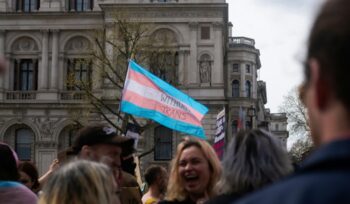
Romania finally recognizes trans man’s identity in landmark E.U. victory
Romanian trans rights took a real leap forward this week, as courts finally ordered the government to legally recognize Arian Mirzarafie-Ahi as male — a recognition the U.K. granted him back in 2020. For years, he lived with two identities depending on which border he crossed, until his case climbed all the way to the E.U.’s top court and came home with a binding answer. That ruling now obligates every E.U. member state to honor gender recognition documents issued by another. It’s a quiet but powerful shift: transgender people across Europe gain stronger footing not through new laws, but through…
-

Alaska judge permanently shields Tongass old-growth forests from logging
The Tongass National Forest just won a major day in court, with a federal judge ruling in March 2026 that the U.S. Forest Service is not legally required to ramp up logging to meet timber industry demand. The decision protects the world’s largest temperate old-growth rainforest — home to roughly a third of what remains of this ecosystem globally, along with wild salmon runs, brown bears, and trees older than 800 years. Tribal nations, fishing crews, and tourism operators stood alongside federal defenders in the case, a reminder that the forest’s value reaches far beyond timber. Wins like this give…
