After decades of sustained public health work, Suriname has earned official certification from the World Health Organization as a malaria-free country — the first nation in the Amazon region to reach this milestone. The achievement reflects a national strategy built on community health workers, universal treatment access, and cross-border cooperation that other high-burden countries are now watching closely.
At a glance
- Malaria elimination: The WHO certified Suriname malaria-free, making it the third country in the Americas to earn that status in the past five years.
- Community health workers: An extensive network of trained local health workers enabled diagnosis and treatment in the country’s remote interior, where illegal gold mining had driven outbreaks.
- Global Fund support: The Global Fund to Fight AIDS, Tuberculosis and Malaria provided critical funding for mosquito net distribution, rapid diagnostic tests, and scaled-up prevention programs.
A crisis that sparked a turning point
Suriname’s path to malaria elimination was not linear. Efforts began in the mid-20th century but stalled repeatedly. The real turning point came in 2004, when a surge in cases — especially in the forested interior — forced the government to overhaul its national strategy.
Much of that surge was tied to illegal gold mining. Mining camps drew a mobile, largely undocumented workforce into dense jungle, creating conditions where the disease could spread fast and go undetected. The new strategy responded by prioritizing universal access to diagnosis and treatment, regardless of where someone lived or what their legal status was. That last detail mattered more than it might seem: it meant people in the most vulnerable situations had no reason to hide from health workers.
The government’s commitment to free malaria care for all people — documented workers and undocumented miners alike — helped build trust in communities that had historically been underserved by national health systems.
Reaching the communities most at risk
Suriname’s interior is home to Indigenous and Maroon communities — descendants of escaped enslaved Africans who built autonomous societies in the rainforest over centuries. These communities faced the highest disease burden and were also the hardest to reach through conventional health infrastructure.
Rather than treating this as a logistical obstacle, Suriname’s public health strategy treated it as a design requirement. Community health workers from within these communities were trained to detect and treat malaria on-site. They became the backbone of the surveillance system, feeding data back into national tracking and catching cases before they could spread.
This bottom-up design — combining local knowledge with national coordination and international funding — is what health officials point to when explaining why Suriname succeeded where others have struggled. It echoes the kind of evidence-based, people-centered approach that has driven other public health breakthroughs, including recent advances in Alzheimer’s prevention research showing that early intervention in high-risk populations can have outsized results.
What certification actually means
WHO malaria-free certification is not symbolic. The WHO’s criteria require a country to demonstrate zero indigenous transmission for at least three consecutive years, along with a credible surveillance system capable of detecting any resurgence. Suriname met both.
Certification also requires a plan to prevent re-establishment — no small challenge for a country sharing borders with Guyana and Brazil, where malaria remains endemic. Cross-border collaboration is now considered a formal part of Suriname’s ongoing strategy, and regional health officials see it as a model for the Pan American Health Organization’s broader elimination goals across the Americas.
That said, certification is not a finish line. Suriname’s forested borders and continued migration mean the country must maintain its surveillance infrastructure indefinitely. A single imported case, left undetected, could restart transmission. The work continues — it just looks different now.
A regional blueprint taking shape
Suriname joins El Salvador and Azerbaijan as countries certified malaria-free in recent years, part of a global push that has seen malaria deaths fall dramatically from their early 2000s peak. In the Americas specifically, cases have dropped by more than 60% since 2000 — a reduction driven partly by exactly the kind of community-level work Suriname exemplifies.
For neighbors like Guyana and parts of Brazil, Suriname’s certification is both an inspiration and a practical resource. The surveillance systems, trained health workers, and cross-border protocols developed over two decades don’t disappear — they become regional infrastructure.
It’s a reminder that eliminating a disease is a collective act. No country does it alone, and no country’s success stays contained within its borders. Stories like this one sit alongside other unlikely milestones — from historic firsts in European football to breakthrough medicine — as evidence that sustained effort against long odds does, sometimes, pay off exactly as hoped.
Read more
For more on this story, see: Good News for Humankind
For more from Good News for Humankind, see:
- Alzheimer’s risk cut in half by drug in landmark prevention trial
- Marie-Louise Eta becomes the first female head coach in men’s top-flight European football
- The Good News for Humankind archive on health
About this article
- 🤖 This article is AI-generated, based on a framework created by Peter Schulte.
- 🌍 It aims to be inspirational but clear-eyed, accurate, and evidence-based, and grounded in care for the Earth, peace and belonging for all, and human evolution.
- 💬 Leave your notes and suggestions in the comments below — I will do my best to review and implement where appropriate.
- ✉️ One verified piece of good news, one insight from Antihero Project, every weekday morning. Subscribe free.
More Good News
-
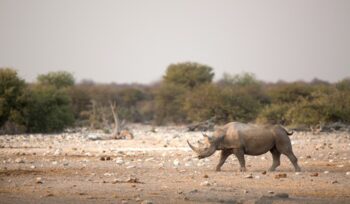
Rhinos return to Uganda’s wild after 43 years in landmark conservation milestone
For the first time in 43 years, wild rhinos are roaming Uganda again. After poaching wiped out the population in the early 1980s, conservation authorities have successfully reintroduced rhinos into Kidepo Valley National Park — the result of decades of breeding, community engagement, and anti-poaching work. The milestone is one of Africa’s most significant wildlife recovery achievements in recent memory and offers a model for rewilding efforts across the continent.
-
UK cancer death rates fall to lowest level ever recorded in historic milestone
Cancer death rates in the United Kingdom have fallen to their lowest level ever recorded, Cancer Research UK announced in March 2026. Decades of investment in screening programs, early detection, and new treatments are behind the milestone. Despite the progress, researchers warn that geographic and socioeconomic inequalities in cancer outcomes remain significant, and that sustained funding and equitable access to care will be essential to drive further gains.
-

California condors nest on Yurok land in Pacific Northwest for first time in over a century
California condors are nesting in the Pacific Northwest for the first time in more than a century, confirmed on Yurok Tribe territory in Northern California. The Yurok, who regard condors as sacred relatives, launched their restoration program in 2003 and released the first birds in 2022. The nesting confirmation marks a milestone for both species recovery and Indigenous-led conservation, showing that when Native peoples lead ecological restoration on their own lands, the results can be extraordinary.