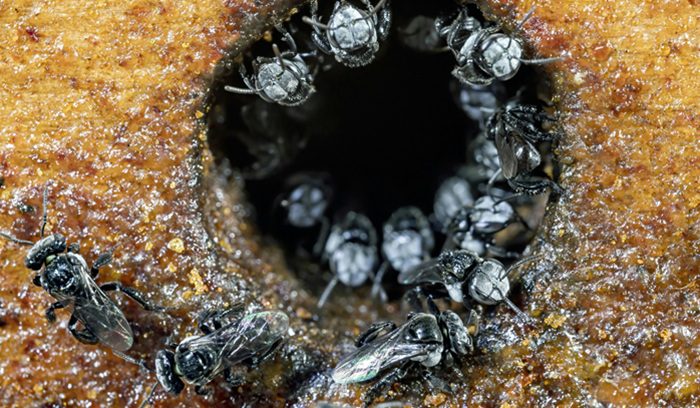
A small, stingless bee native to the Peruvian Amazon has become the first insect species in the world to be granted legal rights — a milestone that conservationists say could reshape how courts and governments protect pollinators at the heart of tropical ecosystems. The ruling, which recognized the Melipona bees and the broader environment they depend on as legal subjects with the right to exist and be protected, emerged from a legal case brought by Indigenous and Amazonian communities who have cultivated these bees for centuries.
At a glance
- Stingless bee rights: A Peruvian court recognized Melipona stingless bees as legal subjects — the first time any insect species has received formal legal protections of this kind anywhere in the world.
- Indigenous meliponiculture: Amazonian communities have practiced the traditional keeping of stingless bees, known as meliponiculture, for thousands of years, relying on their honey and pollination services for food, medicine, and forest regeneration.
- Amazon biodiversity: Peru’s Amazon basin hosts hundreds of stingless bee species, which pollinate an estimated 40 to 90 percent of native Amazonian plant species — far exceeding the ecological role of honey bees in this region.
Why stingless bees matter more than most people realize
Stingless bees are not the bees most people picture. They are smaller, often nesting in hollow trees or termite mounds, and they produce a thinner honey prized across Amazonian and Mesoamerican cultures for its medicinal properties. But their ecological importance is enormous.
Unlike the Apis mellifera honeybee introduced to South America from Europe, stingless bees co-evolved with the Amazon’s native flora over millions of years. Many Amazonian plant species can only be pollinated by specific stingless bee varieties — a relationship so specialized that losing the bee effectively means losing the plant. The IUCN Red List has flagged multiple stingless bee species as vulnerable, with habitat loss and pesticide exposure cited as primary threats.
For Indigenous communities across the Peruvian Amazon, the bees are also woven into cultural identity. Meliponiculture — the practice of maintaining stingless bee hives — is documented in the region going back thousands of years, with knowledge passed across generations about where bees nest, how to harvest without harming colonies, and which forest plants sustain them through dry seasons.
The legal argument that changed things
The case drew on Peru’s growing body of environmental jurisprudence, as well as the global UN Declaration on the Rights of Indigenous Peoples, which recognizes Indigenous communities’ rights to maintain their relationships with traditional species and territories. Lawyers argued that protecting the bees was inseparable from protecting the rights of the communities who depend on them.
The ruling builds on a wider international movement granting legal personhood to natural entities. New Zealand granted the Whanganui River legal personhood in 2017 C.E., and courts in Colombia, Ecuador, and Bangladesh have extended similar protections to rivers and ecosystems. But this is the first time an invertebrate species has crossed that threshold.
What legal rights for a bee actually means
Granting legal rights to a species does not mean the bees can file lawsuits on their own behalf. What it does mean is that courts can accept cases brought by human advocates — communities, environmental lawyers, or government bodies — arguing on the bees’ behalf against activities that threaten them. ClientEarth, the environmental law organization, has noted that such rights create standing in court where none previously existed, making it far harder for extractive industries to receive permits in critical habitats without judicial review.
In practical terms, that could affect mining permits, road construction, and agricultural expansion in areas identified as critical stingless bee habitat across the Peruvian Amazon.
An imperfect breakthrough
Critics of rights-of-nature frameworks point out that enforcement remains the hard part. Legal personhood for a river or a bee species means little without the institutional capacity, funding, and political will to pursue cases. Peru’s environmental enforcement bodies have historically been under-resourced, and the communities who know these ecosystems best often lack access to legal infrastructure. Whether this ruling becomes a genuine protective tool or a largely symbolic gesture will depend on what comes next.
Still, the symbolic weight matters. Recognizing a stingless bee as a legal subject forces a question that most legal systems have never had to answer: what do we owe to the creatures that hold tropical ecosystems together? The Convention on Biological Diversity has set targets for protecting 30 percent of land and ocean by 2030 C.E., but targets alone have rarely been enough without legal teeth. This ruling offers one model for what those teeth might look like.
Read more
For more on this story, see: Good News for Humankind
For more from Good News for Humankind, see:
- Indigenous land rights: 160 million hectares recognized ahead of COP30
- Ghana creates marine protected area at Cape Three Points
- The Good News for Humankind archive on biodiversity
About this article
- 🤖 This article is AI-generated, based on a framework created by Peter Schulte.
- 🌍 It aims to be inspirational but clear-eyed, accurate, and evidence-based, and grounded in care for the Earth, peace and belonging for all, and human evolution.
- 💬 Leave your notes and suggestions in the comments below — I will do my best to review and implement where appropriate.
- ✉️ One verified piece of good news, one insight from Antihero Project, every weekday morning. Subscribe free.