
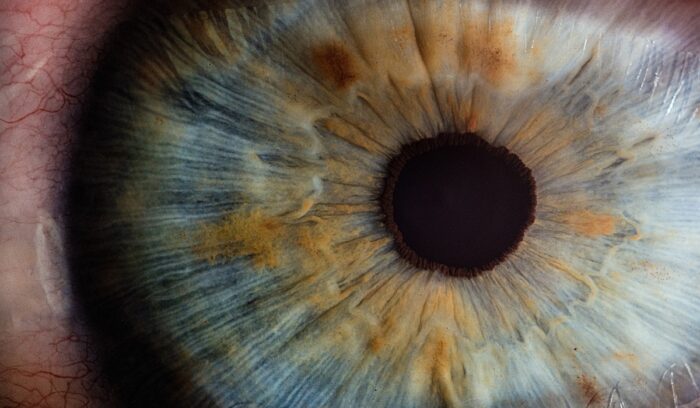
A team of Japanese researchers has achieved what scientists have long worked toward: successfully restoring vision in people with severely damaged corneas using reprogrammed stem cells. Three of four patients who received the experimental transplants saw substantial improvements in their sight, with results holding strong for more than a year. The findings, published in The Lancet in 2024, mark the first time this type of stem-cell therapy has been used to treat corneal damage in humans.
- Three of four patients experienced lasting vision improvements after receiving reprogrammed stem-cell transplants to repair damaged corneas.
- The cornea is the clear outer layer of the eye — when it breaks down, it can cause severe or total vision loss.
- The results were published in The Lancet and represent the first human use of this stem-cell approach for corneal restoration.
How the stem-cell cornea transplant works
The cornea sits at the very front of the eye and plays a critical role in focusing light. When it becomes scarred or diseased, vision can deteriorate dramatically. Traditional treatments rely on donor corneas, but supply is limited and rejection is a constant risk. The Japanese research team developed a different path: using reprogrammed stem cells, known as induced pluripotent stem cells (iPSCs), to grow new corneal tissue in the lab and transplant it into patients.
Induced pluripotent stem cells start as ordinary adult cells — often skin or blood cells — that scientists reprogram back into an earlier, more flexible state. From there, researchers can guide them to become almost any tissue in the body. In this case, the team directed the cells to become corneal epithelial cells, the type that form the eye’s outermost surface. The resulting tissue was then transplanted into the eyes of four people whose corneas had been severely damaged.
Three patients showed significant, lasting improvement in vision after the procedure. One patient also saw initial gains, but those improvements did not persist. No serious safety concerns were reported in the study, a critical milestone for any therapy moving toward wider clinical use.
Stem-cell cornea research opens a new door in vision medicine
The significance of this result stretches well beyond four patients. Corneal disease is one of the leading causes of blindness worldwide, affecting tens of millions of people. In many parts of the world, donated corneas are simply not available in sufficient numbers. A lab-grown solution — one that could eventually be manufactured at scale — would change the options available to patients and doctors alike.
Japan has been at the forefront of iPSC research for years. Shinya Yamanaka won the Nobel Prize in Physiology or Medicine in 2012 for co-discovering how to reprogram adult cells into stem cells, and Japanese institutions have since pursued a range of clinical applications. This cornea study follows earlier Japanese-led work using iPSCs to treat conditions including macular degeneration, a leading cause of vision loss in older adults.
The research team, led by Takahiro Soma and colleagues, noted that the therapy appeared safe over the follow-up period. That safety record matters enormously at this stage. Before any stem-cell therapy can become a standard treatment, regulators need evidence that it does not cause tumors, immune reactions, or other unintended effects over time. The one-year-plus follow-up data is an encouraging early sign, though larger trials with more patients will be needed before the approach can move into routine clinical practice.
What this means for patients and the science ahead
For people living with corneal blindness, the promise of a lab-grown solution has felt distant for many years. This study brings it measurably closer. The fact that improvements persisted beyond 12 months — rather than fading quickly as sometimes happens in early trials — suggests the transplanted tissue is integrating and surviving in its new environment.
Researchers still need to answer important questions. How will the therapy perform in a larger and more diverse group of patients? Can the manufacturing process be standardized and scaled? Will the improvements continue to hold at two, five, or 10 years? Those answers will take time, but the foundation laid by this world-first result gives the field a credible, evidence-based footing to build on.
The study was published in The Lancet under the authorship of Soma et al. and released in 2024. It joins a growing body of evidence suggesting that reprogrammed stem cells will play a meaningful role in the future of regenerative medicine — not as a distant theoretical possibility, but as a tested, real-world clinical tool.
Part of a bigger pattern in medical breakthroughs
This stem-cell milestone sits alongside other remarkable recent advances in medicine that once seemed out of reach. Researchers recently showed that an experimental drug cut Alzheimer’s risk in half in a landmark prevention trial — another example of science delivering results that rewrite what treatment can mean for patients. And in the U.K., cancer death rates have fallen to their lowest level on record, reflecting decades of investment in research and early detection finally showing up in population-level outcomes. Each of these stories reflects the same underlying truth: sustained scientific effort, given enough time and support, produces results that genuinely change lives. You can find more progress like this in the Good News for Humankind archive, sign up to receive it in the daily newsletter, or explore the bigger forces shaping these breakthroughs through the Antihero Project.
Sourcing
This story was generated by AI based on a template created by Peter Schulte. It was originally reported by Nature.
More Good News
-

Marie-Louise Eta becomes first female head coach in men’s top-five European leagues
Marie-Louise Eta made history on April 13, 2026, when Union Berlin appointed her as interim head coach, making her the first woman ever to lead a club in any of men’s top five European football leagues. Eta takes charge for the final five games of the Bundesliga season after the club sacked Steffen Baumgart following a 3-1 defeat to bottom-side Heidenheim. Union Berlin remains in a relegation battle, giving Eta one of the highest-pressure debuts in coaching history.
-
Renewables hit 49% of global power capacity for the first time
For the first time in history, renewable energy accounts for nearly half of all installed power capacity on Earth. The International Renewable Energy Agency confirmed that global renewable energy capacity reached 49.4% of total global power by end of 2025, after the addition of 692 gigawatts — the largest annual increase ever recorded. Solar drove the surge, adding 511 gigawatts in a single year. Africa and the Middle East both posted their fastest renewable growth rates on record. The direction of the global energy system is no longer in question — only the pace.
-

Global suicide rate falls 40% since 1990 in major public health win
The global suicide rate has fallen by roughly 40% since 1990, according to Our World in Data. The decline reflects expanded mental health care, means restriction policies, and rising public awareness. Despite real progress, suicide still claims more than 700,000 lives each year, making continued investment in prevention essential. The trend represents one of the largest sustained improvements in global mental health outcomes ever recorded — and proof that deliberate public health action works.
