

TSouth Korea has achieved a significant milestone for human rights and LGBTQ+ visibility. The national census has been officially updated to allow same-sex couples to register and identify as spouses. This historic policy change acknowledges the existence and validity of diverse family structures within the country. It is a powerful affirmation of the dignity of LGBTQ+ citizens.
This move is a direct result of sustained civil rights advocacy and political engagement. It ensures that the LGBTQ+ community is counted and represented in official demographic data. This marks a major step toward greater social acceptance and policy inclusion.
A Victory for Visibility and Data Accuracy
The core positive impact of this census change is the immediate increase in visibility. By officially collecting data on same-sex partnerships, the government is recognizing a population that was previously invisible in official statistics. Accurate demographic data is essential for informed policymaking. It ensures that government resources are allocated fairly to support all families, regardless of composition.
This new data will provide researchers and policymakers with critical information. It will help them understand the economic and social challenges facing same-sex households. The move strengthens the legal standing of these couples. It acknowledges their contributions to the nation’s economy and social structure.
Strengthening Social and Legal Foundations
The inclusion of same-sex partners in the national census is a foundational step toward achieving broader legal equality. While the change does not immediately grant full legal marriage rights, it formalizes a necessary level of government recognition. This acknowledgment builds critical momentum for future legislative reform. It will aid efforts to achieve comprehensive rights in areas like inheritance and property.
This policy shift sends a clear message of inclusion to the entire society. It helps to erode long-standing social stigmas. This enhanced visibility is vital for fostering a more accepting and equitable social environment for LGBTQ+ individuals and their families. This is a powerful demonstration of institutional support for human rights. The continuous work of organizations like the National Human Rights Commission of Korea (NHRCK) was instrumental in advocating for this change.
A Model for East Asian Progress
South Korea’s census reform establishes a progressive model for other nations in East Asia. The region is often characterized by conservative social and political environments regarding LGBTQ+ rights. South Korea’s leadership demonstrates that cultural progress and legal modernization are compatible goals. This move is an inspiring example of a major Asian economy choosing to advance civil rights.
This action provides a hopeful blueprint for neighboring countries facing similar debates over family definition and legal recognition. The adoption of inclusive data collection practices sets a standard for government accountability across the continent. The Council on Foreign Relations (CFR) provides context on the movement for LGBTQ+ rights across Asia.
The Path to Full Equality
The census change is a massive positive step, but it is part of an ongoing journey toward full legal equality. Activists continue to advocate for the complete legalization of same-sex marriage. This would grant comprehensive rights across all sectors, including healthcare and taxes. This official recognition provides a strong legal basis for these future legislative efforts.
The victory confirms that perseverance and strategic advocacy are effective tools for social change. It ensures that the voices and needs of the LGBTQ+ community can no longer be ignored in national discourse. The positive momentum generated by this reform is a powerful promise for a more equitable future. The United Nations Development Programme (UNDP) supports policy work that integrates diverse communities into national data systems. Furthermore, the Seoul Metropolitan Government Human Rights Office is a key resource for local policy enforcement. This systemic change moves South Korea significantly closer to achieving its full potential as an inclusive democracy.
Resources
- National Human Rights Commission of Korea (NHRCK) Official Website
- Council on Foreign Relations (CFR) on LGBTQ+ Rights in Asia
- United Nations Development Programme (UNDP) on LGBTQ+ Inclusion and Data
- Seoul Metropolitan Government Human Rights Office
More Good News
-

Alzheimer’s risk cut in half by drug in landmark prevention trial
A clinical trial from Washington University in St. Louis and published in The Lancet Neurology found that long-term high-dose treatment with the antibody drug gantenerumab reduced Alzheimer’s risk by roughly 50% in people with dominantly inherited Alzheimer’s disease — a rare genetic form caused by mutations that make the disease near-certain. The results are statistically uncertain and apply to less than 1% of all Alzheimer’s cases, but they provide the first evidence that removing amyloid plaques before symptoms appear can meaningfully change the course of the disease.
-

Marie-Louise Eta becomes the first female head coach in men’s top-flight European football
Marie-Louise Eta, 34, was appointed head coach of Bundesliga side Union Berlin on April 12, 2026, becoming the first woman to hold the top coaching position at a men’s club in any of Europe’s Big Five leagues — the Premier League, La Liga, Serie A, Ligue 1, and Bundesliga. A Champions League winner as a player with Turbine Potsdam in 2010, Eta had already broken barriers as the first female assistant coach in the Bundesliga in 2023. She takes charge for the final five matches of the season as Union Berlin fights to secure top-flight survival, after which she was…
-

Renewables now make up at least 49% of global power capacity
Renewable energy reached 49.4% of total global installed power capacity by end of 2025, up from 46.3% in 2024, according to the International Renewable Energy Agency’s Renewable Capacity Statistics 2026. The world added 692 gigawatts of new renewable capacity last year — the largest annual addition ever recorded — with solar alone contributing 511 gigawatts. Africa recorded its highest renewable expansion on record, and the Middle East its fastest-ever growth. IRENA Director-General Francesco La Camera noted that countries investing in renewables are absorbing the current Middle East energy crisis with measurably less economic damage than fossil-fuel-dependent economies.
-

Global suicide rate has fallen by 40% since 1995
A landmark study published in The Lancet Public Health by researchers at the Institute for Health Metrics and Evaluation at the University of Washington found that the global age-standardized suicide mortality rate fell nearly 40% between 1990 and 2021 — from 15 deaths per 100,000 people to nine. The decline was driven by measurable interventions including restrictions on toxic pesticides, expanded mental health services, and national prevention strategies. Female suicide rates fell more than 50% globally over the period. Roughly 740,000 people still die by suicide each year, and rates have risen in parts of Latin America and North America,…
-
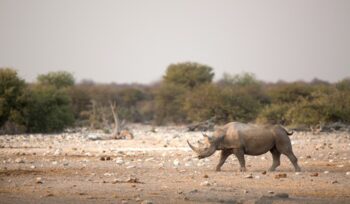
Rhinos are reintroduced back into Uganda’s wild after 43 years
The Uganda Wildlife Authority havetranslocated the first southern white rhinos to Kidepo Valley National Park — 43 years after the last rhino in the park was killed by poachers in 1983. The animals came from Ziwa Rhino Sanctuary, a breeding program established in 2005 with just six individuals that has grown Uganda’s total rhino population to 61. Four more rhinos will follow by May, with a separate group already relocated to Ajai Wildlife Reserve in January 2026. The reintroduction restores a key grazing species to one of Africa’s most remote savannah ecosystems and makes Kidepo the only national park in…