
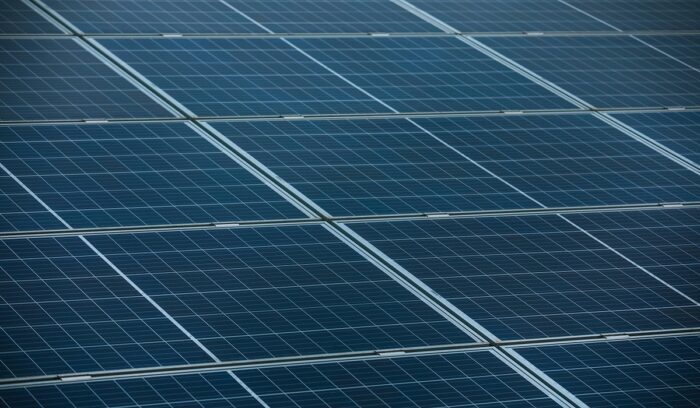
In early 2016 C.E., something extraordinary happened in the American energy market: the price utilities paid for solar electricity fell by a quarter in less than half a year. That kind of speed — in any market, for any technology — is rare. For solar, it was the latest surge in a decade-long freefall that was quietly rewriting the economics of energy.
Key findings
- Solar power prices: U.S. utility-scale solar power purchase agreement prices fell roughly 25% in just five months during early 2016 C.E., according to data tracked by Lawrence Berkeley National Laboratory.
- Solar cost decline: The drop continued a long-term trend — utility-scale solar costs had already fallen more than 50% since 2012 C.E., driven by manufacturing scale, improved panel efficiency, and intensifying competition among installers.
- Renewable energy capacity: By mid-2016 C.E., solar was being installed faster than any other electricity source in the U.S. for the first time, signaling a structural shift in how the country generates power.
Why solar costs keep falling
The economics of solar follow what analysts call a “learning curve” — every time global manufacturing capacity doubles, panel costs fall by a predictable percentage. This pattern has held for decades, and by 2016 C.E. it was accelerating.
Several forces converged at once. Chinese manufacturers had massively scaled up panel production, flooding global markets with cheaper components. Installation companies in the U.S. were competing hard for contracts, compressing labor and financing costs. And federal tax incentives — particularly the Investment Tax Credit — were pulling forward demand, giving developers strong reason to move fast.
The result was a Lawrence Berkeley National Laboratory analysis showing that the median price in U.S. utility-scale solar power purchase agreements had dropped to record lows. Contracts signed in the first half of 2016 C.E. were coming in at prices that would have seemed implausible just a few years earlier.
A global story with local roots
While the headline numbers came from U.S. market data, the underlying forces were global. The dramatic drop in panel costs owed much to manufacturing scale built up in China, engineering advances developed across Germany, Japan, and the U.S., and financing innovations pioneered in multiple markets simultaneously.
Communities in the American Southwest — where sun-belt geography had long made utility-scale solar viable — were among the first to feel the effects, with large solar farms delivering electricity at prices that undercut new natural gas plants. But falling costs were beginning to reach communities far beyond those early adopters. Distributed solar on homes and businesses was following a similar cost curve, making clean electricity more accessible to more people each year.
Researchers at the International Renewable Energy Agency were tracking parallel declines across international markets, with countries including India, the United Arab Emirates, and Chile beginning to sign solar contracts at similarly historic lows.
Lasting impact
The 2016 C.E. price drop was not an anomaly — it was a milestone in a continuing trend. In the years that followed, solar costs kept falling. By the early 2020s C.E., the International Energy Agency would declare solar the cheapest source of electricity in history for new capacity in much of the world.
The consequences reached well beyond energy bills. Falling solar power prices began to shift investment flows away from fossil fuels, change the calculations of utilities and grid planners, and open up possibilities for electrifying transportation, heating, and industry in ways that had previously seemed distant.
The speed of the transition also challenged long-standing assumptions. As recently as 2010 C.E., mainstream projections had underestimated solar’s growth by enormous margins. The 2016 C.E. price data was one more signal that the models needed updating — and that the energy transition was moving faster than most institutions had expected.
For grid operators and policymakers, the challenge shifted: not whether solar could compete on price, but how to integrate vast and variable solar generation into electricity systems built for a different era. The U.S. Department of Energy’s Solar Energy Technologies Office began redirecting resources toward storage, grid flexibility, and transmission — the infrastructure needed to make cheap solar electrons useful around the clock.
Blindspots and limits
The 25% drop reflected U.S. utility-scale power purchase agreement prices — a specific and narrow slice of the solar market. Residential solar costs were falling too, but more slowly, and the benefits of cheap solar remained uneven: low-income households and renters faced structural barriers to accessing rooftop solar that price declines alone could not remove. The mining of materials for solar panels — including polysilicon and silver — also carried environmental and labor costs that the headline cost numbers did not capture.
Read more
For more on this story, see: Futurism
For more from Good News for Humankind, see:
- Renewable energy generates 90% of the U.K.’s electricity for the first time ever
- U.K. achieves record numbers of heat pump and solar panel installations in first half of 2023
- The Good News for Humankind archive on renewable energy
About this article
- 🤖 This article is AI-generated, based on a framework created by Peter Schulte.
- 🌍 It aims to be inspirational but clear-eyed, accurate, and evidence-based, and grounded in care for the Earth, peace and belonging for all, and human evolution.
- 💬 Leave your notes and suggestions in the comments below — I will do my best to review and implement where appropriate.
- ✉️ One verified piece of good news, one insight from Antihero Project, every weekday morning. Subscribe free.


