At a glance
- Solar installations: The world added roughly 600 GW of new solar capacity in 2025, more than any other energy source in a single year.
- Year-on-year growth: The 64% increase marks the steepest annual rise ever recorded for solar, according to the IEA report.
- Cost advantage: Solar is now frequently the cheapest source of new electricity generation in many parts of the world, making adoption self-reinforcing.
Why solar grew so fast
The economics are now almost impossible to argue with. Over the past decade, the cost of solar panels has fallen by more than 90%. That drop has pushed solar below natural gas, coal, and nuclear in new-build cost comparisons across most major markets. When the cheapest option is also the cleanest, decisions get easier for utilities, governments, and private investors alike. China leads global solar deployment by a wide margin, accounting for roughly half of all new installations worldwide. Europe is close behind, with the continent accelerating its rollout in direct response to the energy price shocks triggered by Russia’s invasion of Ukraine. Both regions made grid-scale solar a priority — and the numbers followed. The IEA also notes that solar’s low cost is helping reduce wholesale electricity prices, delivering real savings to businesses and households. That feedback loop — cheaper solar leads to more solar, which lowers prices further — is one reason analysts expect growth to continue.What this means for energy security
For decades, energy security meant controlling access to oil, gas, and coal. Countries that lacked domestic fossil fuel reserves were vulnerable to price spikes, supply disruptions, and political leverage from exporting nations. Solar changes that equation. Sunlight is domestic by definition. No country can embargo it. A nation that builds solar capacity reduces its exposure to global fuel markets — and the volatility that comes with them. This shift matters especially for developing economies in Africa, South Asia, and Southeast Asia, where imported fossil fuels have historically consumed large shares of foreign exchange reserves. The IEA’s renewables outlook shows that solar deployment in these regions is accelerating, though it still lags wealthier markets with better access to financing. The distribution of benefits is uneven, and that’s worth naming. Countries with the capital and grid infrastructure to absorb large solar buildouts are capturing most of the gains. Closing that gap will require international financing, technology transfer, and policy coordination — none of which is guaranteed.The challenges that come with the boom
More solar creates a new set of problems that didn’t exist when solar was a minor player. The most immediate is storage. Solar only generates electricity when the sun shines. As its share of total generation grows, the evening hours — when demand peaks and panels go dark — create stress on grids that weren’t designed for this kind of variability. The U.S. Department of Energy tracks the rapid expansion of battery storage projects aimed at solving exactly this problem, and the pace of battery deployment is accelerating alongside solar itself. Grid modernization is the other piece. Existing transmission infrastructure in most countries was built around centralized power plants. Distributed solar — rooftop panels, community arrays, remote installations — feeds power in from many directions at once. Upgrading that infrastructure is slow, expensive, and often politically contested. The International Renewable Energy Agency estimates that grid investment needs to roughly double through 2030 to keep pace with renewable energy growth. Hybrid projects — solar paired with wind, hydro, or battery storage — are one of the more promising answers. They smooth out the intermittency problem by combining sources that peak at different times.A genuine shift, not a projection
Climate progress has often been measured in pledges and targets. This is different. Six hundred gigawatts is hardware. It is panels installed, electrons flowing, carbon not emitted. The world has been setting renewable energy records for several consecutive years — renewables now account for nearly half of all global power capacity — and 2025 marks the year solar specifically crossed into dominance. That does not mean the transition is complete or guaranteed. Fossil fuel consumption is still rising in absolute terms in some regions. The gap between new clean capacity and the retirement of old dirty capacity remains a live problem. And the policy environment in several major economies is uncertain. But the underlying dynamic — that solar is now the cheapest, fastest-growing, and most widely deployed energy technology in human history — is not a projection. It already happened. Ember Energy’s global electricity review puts the trend in longer context: the share of clean power in the global mix has risen steadily for a decade. The 2025 solar surge is the most dramatic single-year expression of that arc. The question now is not whether solar will dominate new energy investment. It already does. The question is how fast the rest of the system — storage, grids, finance, policy — can catch up.Read more
For more from Good News for Humankind, see:
- Renewables now make up nearly half of global power capacity
- U.K. cancer death rates fall to their lowest level on record
- The Good News for Humankind archive on clean energy
About this article
- 🤖 This article is AI-generated, based on a framework created by Peter Schulte.
- 🌍 It aims to be inspirational but clear-eyed, accurate, and evidence-based, and grounded in care for the Earth, peace and belonging for all, and human evolution.
- 💬 Leave your notes and suggestions in the comments — I will do my best to review and implement where appropriate and possible.
- 📬 One verified piece of good news, one insight from Antihero Project, every weekday morning. Subscribe free.
More Good News
-

Marie-Louise Eta becomes first female head coach in men’s top-five European leagues
Marie-Louise Eta made history on April 13, 2026, when Union Berlin appointed her as interim head coach, making her the first woman ever to lead a club in any of men’s top five European football leagues. Eta takes charge for the final five games of the Bundesliga season after the club sacked Steffen Baumgart following a 3-1 defeat to bottom-side Heidenheim. Union Berlin remains in a relegation battle, giving Eta one of the highest-pressure debuts in coaching history.
-
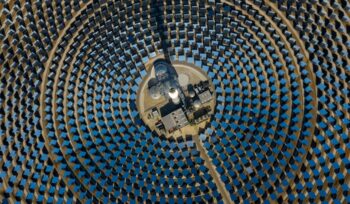
Renewables hit 49% of global power capacity for the first time
For the first time in history, renewable energy accounts for nearly half of all installed power capacity on Earth. The International Renewable Energy Agency confirmed that global renewable energy capacity reached 49.4% of total global power by end of 2025, after the addition of 692 gigawatts — the largest annual increase ever recorded. Solar drove the surge, adding 511 gigawatts in a single year. Africa and the Middle East both posted their fastest renewable growth rates on record. The direction of the global energy system is no longer in question — only the pace.
-

Global suicide rate falls 40% since 1990 in major public health win
The global suicide rate has fallen by roughly 40% since 1990, according to Our World in Data. The decline reflects expanded mental health care, means restriction policies, and rising public awareness. Despite real progress, suicide still claims more than 700,000 lives each year, making continued investment in prevention essential. The trend represents one of the largest sustained improvements in global mental health outcomes ever recorded — and proof that deliberate public health action works.