
At a glance
- Sleeping sickness: A parasitic disease transmitted by tsetse flies that, if untreated, is fatal within weeks — Kenya last recorded a locally transmitted case in 2009 C.E.
- WHO validation: Kenya submitted its elimination dossier in 2023 C.E. and received official WHO recognition in June 2025 C.E., becoming the 10th country globally to reach this threshold.
- Neglected tropical diseases: This is Kenya’s second elimination win, following its eradication of Guinea worm disease in 2018 C.E. — a record few countries can match.
A century-long fight
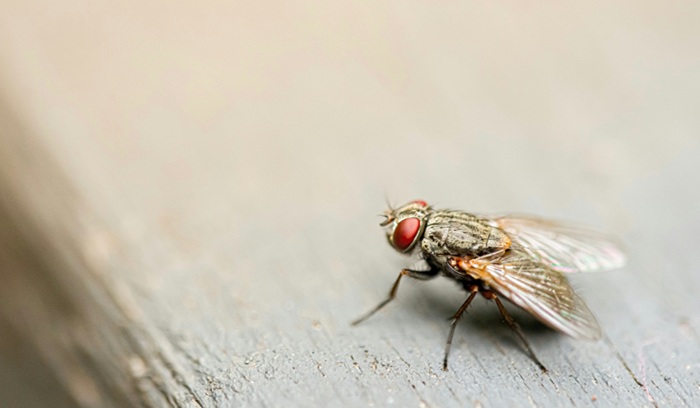
Kenya’s battle with sleeping sickness stretches back to the early 20th century C.E. The disease is caused by the parasite Trypanosoma brucei rhodesiense, spread through the bite of infected tsetse flies. It attacks the nervous system, causing confusion, disrupted sleep, coma, and — without treatment — death, usually within weeks. Rural and farming communities carried most of the burden. Tsetse flies thrive in the savanna and woodland ecosystems that many Kenyans depend on for agriculture and livestock. That overlap made the disease especially hard to contain. The last locally transmitted case was reported in 2009 C.E. Two exported cases tied to the Maasai Mara reserve followed in 2012 C.E. After that, silence — sustained, verified, and now formally recognized.How Kenya did it
Elimination did not happen by accident. It required a long chain of coordinated decisions, investments, and community-level action. Kenya established 12 sentinel health facilities across six historically affected counties. Each was equipped with advanced diagnostic tools and trained staff capable of running sensitive tests for the disease. That surveillance infrastructure meant that even rare or ambiguous cases could be caught and confirmed quickly. Vector control was equally important. The Kenya Tsetse and Trypanosomiasis Eradication Council (KENTTEC) scaled up monitoring of tsetse fly populations and animal trypanosomiasis — because the disease cycles through wildlife and livestock as well as humans. Cutting transmission at the animal level helped protect people. Winning the WHO validation also required careful documentation. Kenya’s 2023 C.E. dossier had to demonstrate sustained zero transmission, functional surveillance, and a credible plan for what comes next. The country now operates a post-validation surveillance plan supported by FIND, with WHO maintaining a reserve of treatments from Bayer and Sanofi ready to deploy if a case does emerge. That preparedness matters. Elimination is not eradication. Experts stress that rare cases may still arise — particularly through travel or wildlife exposure near game reserves. Ongoing vigilance is the price of keeping the numbers at zero.What it means for Africa
Kenya joins nine other countries — Benin, Chad, Côte d’Ivoire, Equatorial Guinea, Ghana, Guinea, Rwanda, Togo, and Uganda — that have eliminated sleeping sickness as a public health problem. Across all neglected tropical diseases, 57 countries have now eliminated at least one NTD, according to reporting by Down to Earth. WHO Director-General Dr. Tedros Adhanom Ghebreyesus called the achievement “another step toward making Africa free of neglected tropical diseases.” Kenya’s Health Cabinet Secretary Aden Duale credited sustained political will, scientific rigor, and community-driven action. Both are right. Neither alone would have been enough. The broader goal sits in the WHO’s Roadmap for Neglected Tropical Diseases 2021–2030, which targets elimination of at least one NTD in 100 countries by 2030. With fewer than five years remaining, momentum like Kenya’s is exactly what the roadmap needs — especially as funding for NTD programs faces growing pressure from global health budget cuts. This kind of sustained, long-horizon public health work shares something with other quiet victories in science and medicine. Progress on declining cancer death rates in the U.K. or advances in clean energy capacity both reflect what happens when investment and coordination hold steady across decades.What comes next
Kenya’s National Public Health Institute will lead ongoing surveillance, with integrated disease control systems designed to catch any recurrence early. The sentinel facility network built during the elimination push will remain active. Sleeping sickness was once a rural scourge that devastated farming families and depressed entire regional economies. Its elimination frees health workers, resources, and community energy for other challenges. It also demonstrates something important: that diseases long accepted as an inevitable feature of rural African life can, in fact, be defeated. That proof belongs to Kenya. And it belongs to every community that held the line for more than a decade.Read more
For more from Good News for Humankind, see:
- U.K. cancer death rates at record low
- Renewables reach 49% of global power capacity
- The Good News for Humankind archive on global health
About this article
- 🤖 This article is AI-generated, based on a framework created by Peter Schulte.
- 🌍 It aims to be inspirational but clear-eyed, accurate, and evidence-based, and grounded in care for the Earth, peace and belonging for all, and human evolution.
- 💬 Leave your notes and suggestions in the comments — I will do my best to review and implement where appropriate and possible.
- 📬 One verified piece of good news, one insight from Antihero Project, every weekday morning. Subscribe free.
More Good News
-
COP30 pledges recognition of 160 million hectares of Indigenous land rights
At the COP30 World Leaders Summit in Belém, Brazil in November 2025, 15 governments pledged to formally recognize Indigenous land rights over 160 million hectares by 2030 — an area the size of Iran — through the Intergovernmental Land Tenure Commitment. Brazil committed at least 59 million hectares. More than 35 donors renewed a $1.8 billion Forest and Land Tenure Pledge. The Tropical Forest Forever Facility secured nearly $7 billion, with 20% directed to Indigenous peoples. It was the largest Indigenous participation in COP history.
-

Ghana creates its first marine protected area to rescue depleted fish stocks
Ghana has declared its first marine protected area near Cape Three Points on the Gulf of Guinea, marking a historic step to reverse decades of overfishing. The protected zone aims to restore fish populations that have collapsed under pressure from industrial trawling and illegal fishing. The decision supports 2.7 million Ghanaians whose livelihoods depend on healthy coastal fisheries and aligns Ghana with the global goal of protecting 30 percent of the world’s oceans by 2030.
-

U.S. researchers cut Alzheimer’s risk by half in first-ever prevention trial
For the first time, researchers have evidence that removing amyloid plaques from the brain before symptoms appear can cut Alzheimer’s risk by roughly half. A clinical trial published in The Lancet Neurology, led by Washington University School of Medicine in St. Louis, found that long-term treatment with the antibody drug gantenerumab significantly delayed dementia onset in people with a rare genetic form of the disease. The findings provide the clearest signal yet that intervening years before symptoms emerge can change the course of Alzheimer’s disease.
