
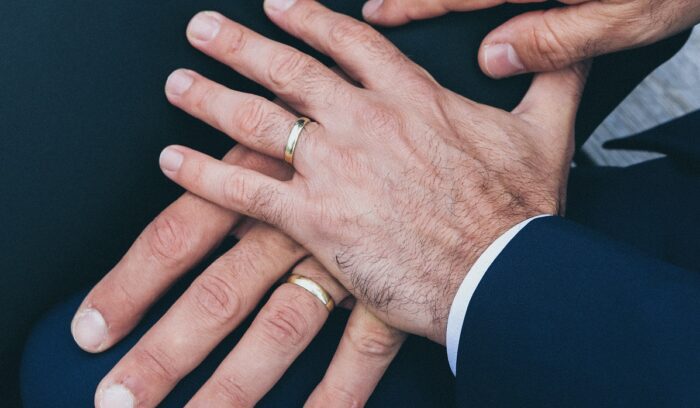
More than 500,000 same-sex couples have married in the United States since the Supreme Court legalized marriage equality nationwide in 2015 C.E., and those weddings have pumped an estimated $3.8 billion into state and local economies, according to research from the Williams Institute at UCLA School of Law.
At a glance
- Same-sex weddings: Nearly 300,000 gay and lesbian couples married in the five years following the Supreme Court’s 2015 C.E. ruling, more than doubling the number who had wed before it.
- Marriage equality economy: Couples and their guests spent roughly $3.2 billion on weddings and $544 million on travel, generating $244 million in state and local tax revenue.
- Job creation: The wave of ceremonies supported approximately 45,000 jobs across the country, from caterers and florists to hotel workers and photographers.
What the numbers reveal
The Williams Institute study, published in 2020 C.E., drew on data from the U.S. Census Bureau to build one of the most detailed pictures yet of marriage equality’s economic reach. Lead author Christy Mallory, the institute’s state and local policy director, put it plainly: the ruling changed lives and delivered real money to local governments and businesses.
Those aren’t abstract figures. Wedding spending flows directly into small businesses — venues, catering companies, florists, photographers, and musicians — most of them rooted in their communities. Guest travel fills hotel rooms and restaurant tables. And tax revenue funds public services.
Massachusetts became the first U.S. state to recognize same-sex marriage in 2003 C.E., and a growing number of states followed over the next decade. By the time the Supreme Court issued its ruling in Obergefell v. Hodges, roughly 242,000 same-sex couples had already married in states where it was legal. The national figure has since climbed to more than half a million.
A milestone in a longer movement
The economic data arrives alongside a broader global shift. At the time of the study’s publication, the U.S. was one of 28 United Nations member states recognizing the right of same-sex couples to marry. Costa Rica had just joined that group, and advocacy organization Open For Business estimated the move could add up to $592 million to the Costa Rican economy.
The Williams Institute, a leading research center on sexual orientation and gender identity law and public policy, has tracked the economic effects of marriage equality since its earliest state-level expansions. Their work has consistently found that inclusion generates measurable returns — not just for couples, but for the wider communities around them.
Researchers have also documented significant non-economic benefits. Studies have found that mental health outcomes improve for LGBTQ+ adults in states with marriage equality protections, and that children of same-sex couples benefit from the legal stability that marriage provides.
Progress, and what remains unfinished
The economic gains are real, but they don’t reach everyone equally. Same-sex couples in lower-income brackets are less likely to have large weddings, meaning the spending and job-creation benefits tend to cluster around wealthier households and urban areas. Disparities in access to legal recognition also persist globally — more than 60 countries still criminalize same-sex relationships in some form, according to ILGA World.
Within the United States, the legal landscape has also shifted in ways that create new uncertainties. While same-sex marriage remains federally protected under the Respect for Marriage Act, passed by U.S. Congress in 2022 C.E., some state-level legal challenges have continued. The full promise of marriage equality — social, legal, and economic — is still unevenly distributed.
Still, the trajectory is clear. Half a million marriages. Billions in economic activity. Tens of thousands of jobs. And behind every statistic, a couple who wanted the same recognition that others had long taken for granted.
Read more
For more on this story, see: Thomson Reuters Foundation via the Internet Archive
For more from Good News for Humankind, see:
- Alzheimer’s risk cut in half by drug in landmark prevention trial
- Indigenous land rights win secures 160 million hectares ahead of COP30
- The Good News for Humankind archive on LGBTQ+ rights
About this article
- 🤖 This article is AI-generated, based on a framework created by Peter Schulte.
- 🌍 It aims to be inspirational but clear-eyed, accurate, and evidence-based, and grounded in care for the Earth, peace and belonging for all, and human evolution.
- 💬 Leave your notes and suggestions in the comments below — I will do my best to review and implement where appropriate.
- ✉️ One verified piece of good news, one insight from Antihero Project, every weekday morning. Subscribe free.