
At a glance
- Saint Lucia decriminalization: The High Court struck down colonial-era “buggery” and “gross indecency” laws that had been on the books for generations, with penalties of up to 10 years in prison for consensual same-sex acts.
- Constitutional grounds: The court ruled the laws violated fundamental rights to privacy, equality, and human dignity — rights enshrined in Saint Lucia’s own constitution.
- Regional momentum: Saint Lucia now joins Barbados, Antigua and Barbuda, Saint Kitts and Nevis, and Dominica in repealing similar colonial-era statutes in recent years.
Laws rarely enforced but deeply harmful
The criminal provisions at the heart of this case were rarely prosecuted in recent years. But legal advocates have long argued that rarity of enforcement misses the point entirely. Laws that criminalize identity — even unenforced ones — create an environment where stigma, harassment, and discrimination can flourish. They tell a community that the state considers their lives illegal. They push people away from healthcare, legal protection, and public life. Human Rights Watch has documented how these kinds of laws, inherited from British colonial codes and applied across the Caribbean and beyond, continue to cause concrete harm decades after independence. The Saint Lucia ruling recognizes that constitutional rights cannot coexist with laws that contradict them.What advocates are saying
The reaction from LGBTQ+ advocacy groups across the Caribbean has been immediate and emotional. Kenita Placide, executive director of the Eastern Caribbean Alliance for Diversity and Equality (ECADE), called the decision a signal “that our Caribbean can and must be a place where all people are free and equal under the law.” OutRight International and the Human Dignity Trust, which has supported legal challenges to colonial-era criminalization laws worldwide, also celebrated the ruling. For local activists who have spent years building the case for reform, this moment carries weight that goes beyond legal language. It is a recognition, from within the Caribbean’s own judicial system, that LGBTQ+ lives deserve full protection.A region still divided
Saint Lucia’s ruling arrives in a Caribbean that remains deeply divided on LGBTQ+ rights. Several countries — including Jamaica, Grenada, Guyana, Saint Vincent and the Grenadines, and Trinidad and Tobago — still criminalize same-sex relations. The legal and cultural landscape varies significantly from island to island, shaped by distinct histories, religious institutions, and political environments. Legal experts note that decriminalization, while essential, is only one step. Broader societal acceptance — in workplaces, healthcare settings, schools, and families — is necessary before LGBTQ+ people can live fully free from discrimination. Laws change faster than cultures, and the gap between the two can remain dangerous. That tension is real and unresolved. But the direction of travel in the Eastern Caribbean has shifted. Within just a few years, a cluster of nations has moved from criminalization to constitutional protection. Each ruling makes the next one more conceivable.The colonial origins of these laws
It is worth understanding where these laws came from. The statutes struck down in Saint Lucia — like similar laws still in force across parts of Africa, Asia, and the Pacific — were not organic expressions of local culture. They were written by British colonial administrators in the 19th century and imposed across the empire. Many of the countries that inherited these laws were given no say in the matter. The BBC has tracked how dozens of countries still carry the mark of Victorian-era British criminal codes, long after independence. When courts in the Caribbean strike these laws down, they are in a real sense reclaiming their own constitutional sovereignty — not importing foreign values, but rejecting a foreign imposition. This history matters. It reframes the ruling not just as a civil rights victory but as an act of decolonization.What comes next
Legal reform creates space. What fills that space depends on communities, governments, and individuals choosing to build something better. Saint Lucia’s ruling may encourage advocates in neighboring countries to press forward with their own legal challenges. It adds to a body of Caribbean jurisprudence that frames human rights as universal — not Western, not foreign, not incompatible with Caribbean identity. And for LGBTQ+ people in Saint Lucia itself, the ruling means something immediate and personal. The law no longer calls them criminals. That is not everything. But it is not nothing. It is, in fact, the foundation on which everything else is built. For more Good News context, see how other legal and social milestones are reshaping lives — like the progress tracked in our look at falling U.K. cancer death rates and renewables reaching nearly half of global power capacity. Progress is rarely tidy — but it accumulates. Read more about human rights milestones in the Good News for Humankind archive.Read more
For more from Good News for Humankind, see:
- U.K. cancer death rates fall to a record low
- Renewables reach nearly half of global power capacity
- The Good News for Humankind archive on human rights
About this article
- 🤖 This article is AI-generated, based on a framework created by Peter Schulte.
- 🌍 It aims to be inspirational but clear-eyed, accurate, and evidence-based, and grounded in care for the Earth, peace and belonging for all, and human evolution.
- 💬 Leave your notes and suggestions in the comments — I will do my best to review and implement where appropriate and possible.
- 📬 One verified piece of good news, one insight from Antihero Project, every weekday morning. Subscribe free.
More Good News
-

Washington state enacts millionaires’ tax to fund schools and families
Washington state enacted a new tax on individual income exceeding million on March 30, 2026, ending nearly a century without a personal income tax. The law funds free school meals for every K-12 student, expands the Working Families Tax Credit to 460,000 additional households, and cuts costs on childcare and essential goods. Less than half of 1% of residents owe the tax, but the benefits reach millions across the state.
-

Detroit RxKids distributes .4 million to mothers in its first month
Detroit’s RxKids program distributed .4 million in direct, unconditional cash to mothers in its first full month of operation, city officials announced in March 2026. The program gives low-income pregnant women and new mothers 00 per month during pregnancy and 00 per month for their baby’s first year of life — up to 2,000 per family. Supporters say it directly counters child poverty during one of the highest-impact windows for intervention.
-
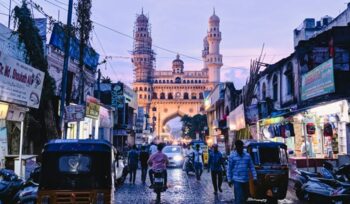
Telangana orders 915 electric buses in major clean transit push
The Indian state of Telangana has ordered 915 electric buses, one of the largest clean transit procurements in India’s history. The move is part of a national push to electrify public transportation, reduce urban air pollution, and cut greenhouse gas emissions. Backed by India’s FAME subsidy scheme and a growing domestic manufacturing sector, the order signals that India’s electric bus transition has moved well beyond pilot programs into large-scale deployment across major cities.