

A major conservation success story is unfolding in Rwanda. The majestic gray crowned crane, once near local extinction, is now making a robust comeback. Decades of habitat loss and illegal pet trade had pushed this beautiful bird to the brink. This population recovery reinforces Rwanda’s position as a regional leader in nature preservation.
This achievement shows the profound positive change possible through decisive human action. It proves that dedicated conservation can successfully restore critical species. The return of the cranes is a source of national pride and a hopeful global example.
A Coordinated National Rescue Effort
The success story is rooted in a coordinated national strategy. Rwanda’s government put strict new laws in place against poaching and the illegal pet trade. These legal measures provided necessary protection for the cranes in their natural habitats. Conservation groups then worked tirelessly to rescue captive cranes from private homes.
The rehabilitation process for these rescued birds was complex and required specialized centers. Teams provided medical care and essential behavioral training. This prepared the birds for survival when re-released into the wild. This dedication from experts and volunteers was crucial to the project’s success.
A key part of the strategy focused on restoring the cranes’ native wetland habitats. The degradation of these marshes had been a major factor in the birds’ decline. The government initiated large-scale projects to protect and rehabilitate these sensitive wetland areas.
Restoring these ecosystems benefits more than just the cranes. Healthy wetlands are vital for local communities, providing essential natural services. These services include reliable water filtration and flood control. The flourishing presence of the cranes is now a visible sign of these healthy, functioning wetlands.
Community Engagement Fuels Long-Term Success
The long-term success of the recovery depends on local community engagement. Conservation groups realized that protecting the cranes required securing the full support of nearby residents. They did this by running extensive public awareness and education campaigns. These efforts highlighted the ecological and tourism value of the crowned cranes.
The approach shifted toward empowering local people as environmental stewards. This created community-based conservation initiatives that offered local jobs in ecotourism and monitoring. By creating a direct economic incentive for protection, the community became the cranes’ most effective guardian. This model proves that sustainable development and wildlife recovery are compatible goals. You can find more information about community-based conservation from the African Wildlife Foundation.
A Beacon of Hope for Global Biodiversity
Rwanda’s achievement with the gray crowned crane has earned international praise. It serves as a powerful beacon of hope for global biodiversity efforts. The recovery of a vulnerable species shows that even severely endangered populations can be saved. This successful reintroduction provides valuable data and methods for similar projects worldwide.
The lessons learned on rescue, rehabilitation, and community integration are now being shared globally. This victory reinforces Rwanda’s national commitment to environmental sustainability. The country’s efforts contribute directly to global biodiversity targets. The vibrant, dancing presence of the crowned cranes is a beautiful, living symbol of successful environmental stewardship.
Resources
- Rwanda Development Board (RDB) Official Tourism Information
- African Wildlife Foundation on Conservation Models
- International Union for Conservation of Nature (IUCN) Red List
- IUCN Species Survival Commission (SSC) on Reintroduction Guidelines
More Good News
-

Marie-Louise Eta becomes the first female head coach in men’s top-flight European football
Marie-Louise Eta, 34, was appointed head coach of Bundesliga side Union Berlin on April 12, 2026, becoming the first woman to hold the top coaching position at a men’s club in any of Europe’s Big Five leagues — the Premier League, La Liga, Serie A, Ligue 1, and Bundesliga. A Champions League winner as a player with Turbine Potsdam in 2010, Eta had already broken barriers as the first female assistant coach in the Bundesliga in 2023. She takes charge for the final five matches of the season as Union Berlin fights to secure top-flight survival, after which she was…
-

Renewables now make up at least 49% of global power capacity
Renewable energy reached 49.4% of total global installed power capacity by end of 2025, up from 46.3% in 2024, according to the International Renewable Energy Agency’s Renewable Capacity Statistics 2026. The world added 692 gigawatts of new renewable capacity last year — the largest annual addition ever recorded — with solar alone contributing 511 gigawatts. Africa recorded its highest renewable expansion on record, and the Middle East its fastest-ever growth. IRENA Director-General Francesco La Camera noted that countries investing in renewables are absorbing the current Middle East energy crisis with measurably less economic damage than fossil-fuel-dependent economies.
-

Global suicide rate has fallen by 40% since 1995
A landmark study published in The Lancet Public Health by researchers at the Institute for Health Metrics and Evaluation at the University of Washington found that the global age-standardized suicide mortality rate fell nearly 40% between 1990 and 2021 — from 15 deaths per 100,000 people to nine. The decline was driven by measurable interventions including restrictions on toxic pesticides, expanded mental health services, and national prevention strategies. Female suicide rates fell more than 50% globally over the period. Roughly 740,000 people still die by suicide each year, and rates have risen in parts of Latin America and North America,…
-
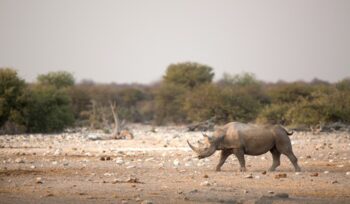
Rhinos are reintroduced back into Uganda’s wild after 43 years
The Uganda Wildlife Authority havetranslocated the first southern white rhinos to Kidepo Valley National Park — 43 years after the last rhino in the park was killed by poachers in 1983. The animals came from Ziwa Rhino Sanctuary, a breeding program established in 2005 with just six individuals that has grown Uganda’s total rhino population to 61. Four more rhinos will follow by May, with a separate group already relocated to Ajai Wildlife Reserve in January 2026. The reintroduction restores a key grazing species to one of Africa’s most remote savannah ecosystems and makes Kidepo the only national park in…
-

U.K. cancer death rates down to their lowest level on record
Cancer Research UK data published in March 2026 confirms that UK cancer death rates have reached their lowest level on record — around 247 deaths per 100,000 people annually between 2022 and 2024, down 29% from the 1989 peak of 355 per 100,000. The rate fell 11% in just the past decade, with stomach cancer deaths down 34%, lung cancer down 22%, and ovarian cancer down 19%. Cervical cancer death rates have dropped 75% since the 1970s, driven by NHS screening programs and the HPV vaccine introduced in 2008. Researchers caution that liver, womb, and gallbladder cancer death rates are…