On the shores of the ancient Willandra Lakes in what is now New South Wales, Australia, a profound shift in human consciousness occurred approximately 42,000 years ago. Here, amidst a landscape then teeming with fresh water, giant marsupials, and golden wattle, the Mungo people performed a rite that would echo through history. They did not merely abandon their dead; they transformed them. The burial of the woman known today as Mungo Lady represents the world’s oldest known cremation, a complex ritual that signals the emergence of deep spiritual belief and abstract thinking.
The Fires of Transformation
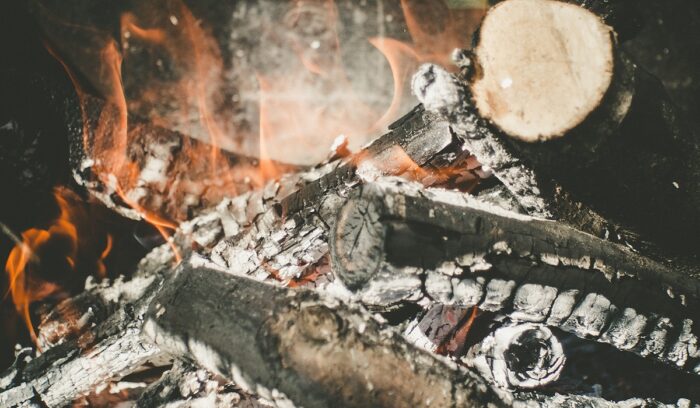
The ritual performed for Mungo Lady was intricate, demanding both planning depth and emotional investment. The archaeological evidence reveals a multi-stage process that goes far beyond simple disposal. First, the community built a pyre to burn her body. But the rite did not end when the flames died down.
In a display of deliberate symbolic action, her surviving kin returned to the pyre. They gathered her calcined bones and systematically smashed them, reducing the remains to fragments. These fragments were then burned a second time before being buried in a conical hole beneath the sand dunes. This act of “double cremation” suggests a sophisticated theology—perhaps a belief in releasing the spirit, preventing a return, or transforming the physical body to return it to the Dreaming. It was a technological and spiritual solution to the mystery of death. Learn about Mungo Lady’s discovery.
A Fertile Oasis in the Ice Age
At the time of this cremation, the Australian interior was not the arid dustbowl it is today. The Willandra Lakes were a lush system of freshwater basins, described by some archaeologists as a “Pleistocene Eden.” The people here thrived on a diet rich in golden perch, Murray cod, mussels, and yabbies, supplemented by the eggs of emus and potentially the meat of megafauna like the Genyornis, a giant flightless bird.
This resource-rich environment provided the stability necessary for complex culture to flourish. With food abundant, the Mungo people had the leisure time to develop elaborate social rituals, oral histories, and the complex trade networks that brought materials like ochre from hundreds of kilometers away. The cremation of Mungo Lady is a testament to a society that had moved beyond the struggle for survival into the realm of meaning-making. Explore the ancient environment of Willandra Lakes.
The Dawn of Abstract Thought
The complexity of Mungo Lady’s burial serves as definitive proof of behavioral modernity in early Indigenous Australians. The use of fire to transform a body requires an abstract understanding of chemistry and physics, but applying it to a loved one implies a metaphysical worldview.
Just a few hundred meters away, the remains of Mungo Man were found buried around the same era, covered in red ochre. Together, these discoveries show a diverse set of funerary practices, indicating that these early humans made individual choices about how to honor their dead. This variability is a hallmark of a mature culture with rich traditions and social hierarchies. The care taken to pulverize and re-burn Mungo Lady’s bones indicates a desire to ensure her proper transition to the next stage of existence, revealing a capacity for love, grief, and hope that is recognizably modern. Read about the significance of Mungo Man.
A Legacy of Stewardship
The ingenuity of the Mungo people lies not just in their rituals, but in their enduring stewardship of the land. For over 40,000 years, their descendants have maintained a physical and spiritual connection to this region. The discovery of Mungo Lady revolutionized the scientific understanding of human history, pushing back the timeline of human occupation in Australia and proving that Indigenous Australians practiced complex rites millennia before the pyramids of Egypt were conceived.
Today, Mungo Lady has been repatriated to the Traditional Owners—the Paakantji, Mutthi Mutthi, and Ngiyampaa people—symbolizing a closing of the circle. Her story remains a powerful beacon of human dignity, reminding us that the impulse to honor those we have lost is one of the oldest and most unifying traits of our species. View the UNESCO World Heritage listing.