
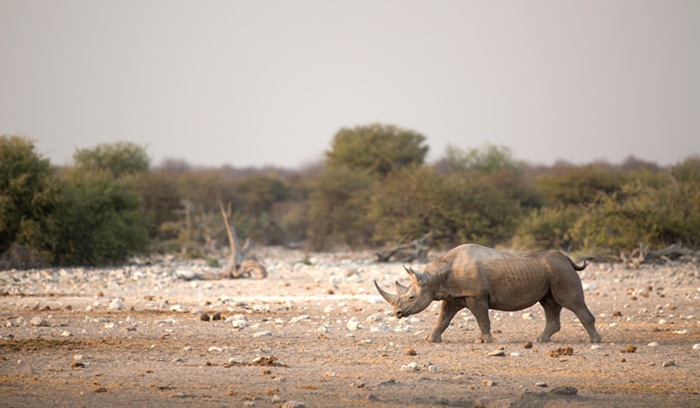
The last rhino in Uganda’s Kidepo Valley National Park was killed in the Narus Valley in 1983. On March 17, 2026, the first two southern white rhinos arrived back in that same valley, transported more than 250 miles from a sanctuary that spent two decades building toward exactly this moment. Uganda’s rhino reintroduction program is no longer a breeding project. It has become a re-wilding one.
- Uganda Wildlife Authority translocated the first four southern white rhinos to Kidepo Valley National Park on March 17, 2026, with four more to follow by May — the first rhinos in the park in 43 years.
- The animals came from Ziwa Rhino Sanctuary, a breeding program established in 2005 with just six individuals. Uganda’s total rhino population has since grown to 61, bolstered by eight additional rhinos imported from South Africa in December 2025.
- A separate translocation in January 2026 sent four rhinos to Ajai Wildlife Reserve in Uganda’s West Nile region, marking the start of a phased re-wilding strategy across multiple protected areas.
The reintroduction follows a feasibility study by the Uganda Wildlife Authority that assessed habitat suitability, water availability, and security conditions across the country’s protected areas. Kidepo Valley — a remote savannah ecosystem in Uganda’s far northeast, bordering South Sudan and Kenya — ranked among the most suitable sites. Partners including Global Conservation, the Uganda Conservation Foundation, Wild Landscapes East Africa, and Save the Rhino supported infrastructure preparation that included perimeter fencing, access roads, fire management systems, ranger facilities, and water infrastructure before the first animal arrived.
How Uganda went from zero rhinos to 61
Uganda was once home to an estimated 300 northern white rhinos and 400 eastern black rhinos. Both populations were wiped out by poaching that intensified during the civil conflict of the late 1970s. The last wild rhino in the country was killed in 1983.
Rhino Fund Uganda began planning reintroduction as early as 1997. That groundwork led to the establishment of Ziwa Rhino Sanctuary in 2005 — a private ranch in central Uganda built specifically to breed rhinos for eventual re-wilding. Six southern white rhinos arrived the following year: four from Solio Game Reserve in Kenya and two from Disney’s Animal Kingdom in Florida. Under 24-hour protection and careful management, the population grew steadily. In a country where poaching had previously eliminated the species entirely, not a single rhino at Ziwa has been illegally killed since the program began.
By late 2025, the sanctuary’s success and an infusion of eight additional animals from South Africa — added to strengthen genetic diversity — brought Uganda’s total rhino population to 61. That number finally provided the surplus needed to begin moving animals into wild national parks.
What re-wilding means for Kidepo Valley
Kidepo Valley National Park is already regarded as one of Africa’s most remote and ecologically intact wilderness areas. Its vast savannahs, seasonal rivers, and the lush Narus Valley provide habitat that closely resembles the environments where rhinos evolved. White rhinos are grazers — their large food intake keeps grassland vegetation in check, opening terrain for smaller species and supporting the broader ecosystem. Their return restores a functional role that has been absent from this ecosystem for more than four decades.
The eight rhinos being relocated to Kidepo are not simply released into the open park immediately. They are first held in a secure 18.2-square-kilometer fenced sanctuary within the Narus Valley, where trained rangers and veterinary teams monitor their health and habituation before eventual full release. The infrastructure built to house and protect them — 24-hour armed ranger patrols, advanced monitoring systems, and water infrastructure for the semi-arid climate — raises the overall standard of park management in ways that benefit every species in Kidepo.
For local communities in Uganda’s Karamoja region, the return of rhinos carries direct economic implications. Kidepo Valley is now the only national park in Uganda where visitors can see the full Big Five — lion, leopard, elephant, buffalo, and rhino — in a single landscape, a distinction that draws high-end safari travelers and generates employment and tourism revenue in one of the country’s most remote regions.
The challenges that remain real
The UWA and its partners are clear-eyed about what could undo this progress. Kidepo Valley borders South Sudan, and the park has historically faced cattle raiding and wildlife poaching from across that border. The wildlife authority is deploying more than 40 additional rangers to Kidepo and plans to recruit 80 more during 2026 specifically in response to this risk.
Robert Aruho, a veterinary specialist who led UWA’s rhino conservation program from 2013 to 2020, told Mongabay that managing rhino health, preventing human-wildlife conflict, and sustaining anti-poaching protection all present ongoing costs and challenges. He noted, however, that the presence of rhinos raises the stakes and intensity of overall park management — and that benefit flows to every other species under protection.
Conservationists also note that the animals being reintroduced are southern white rhinos, a different subspecies from the northern white rhinos that originally inhabited Uganda. The northern white rhino is now functionally extinct globally, with only two females remaining in captivity. The reintroduction cannot restore what was originally lost — but it does restore an ecologically functional rhino to a habitat that has been without one for a generation.
Plans are already in place to eventually introduce eastern black rhinos to Kidepo once security conditions are fully established, which would add a second rhino species and further deepen the park’s ecological recovery.
This story was originally reported by Mongabay.
More Good News
-
Global suicide rate has fallen by 40% since 1995
A landmark study published in The Lancet Public Health by researchers at the Institute for Health Metrics and Evaluation at the University of Washington found that the global age-standardized suicide mortality rate fell nearly 40% between 1990 and 2021 — from 15 deaths per 100,000 people to nine. The decline was driven by measurable interventions including restrictions on toxic pesticides, expanded mental health services, and national prevention strategies. Female suicide rates fell more than 50% globally over the period. Roughly 740,000 people still die by suicide each year, and rates have risen in parts of Latin America and North America,…
-
Rhinos are reintroduced back into Uganda’s wild after 43 years
The Uganda Wildlife Authority havetranslocated the first southern white rhinos to Kidepo Valley National Park — 43 years after the last rhino in the park was killed by poachers in 1983. The animals came from Ziwa Rhino Sanctuary, a breeding program established in 2005 with just six individuals that has grown Uganda’s total rhino population to 61. Four more rhinos will follow by May, with a separate group already relocated to Ajai Wildlife Reserve in January 2026. The reintroduction restores a key grazing species to one of Africa’s most remote savannah ecosystems and makes Kidepo the only national park in…
-

U.K. cancer death rates down to their lowest level on record
Cancer Research UK data published in March 2026 confirms that UK cancer death rates have reached their lowest level on record — around 247 deaths per 100,000 people annually between 2022 and 2024, down 29% from the 1989 peak of 355 per 100,000. The rate fell 11% in just the past decade, with stomach cancer deaths down 34%, lung cancer down 22%, and ovarian cancer down 19%. Cervical cancer death rates have dropped 75% since the 1970s, driven by NHS screening programs and the HPV vaccine introduced in 2008. Researchers caution that liver, womb, and gallbladder cancer death rates are…
-
California condors nesting in Pacific Northwest for first time in a century
A pair of California condors reintroduced by the Yurok Tribe appear to be incubating the first egg in the Pacific Northwest in more than a century, nesting inside a hollow old-growth redwood in Redwood National Park in early February 2026. The female, named Ney-gem’ Ne-chween-kah — Yurok for “She carries our prayers” — and her mate were among the first cohort released in 2022 as part of the Northern California Condor Restoration Program. The species fell to just 22 individuals in 1982 and has since recovered to 607. The Yurok Tribe began working toward this moment in 2003, driven by…
-
Canada commits $3.8 billion to protect 30% of the country’s land and water by 2030
Prime Minister Mark Carney announced Canada’s $3.8 billion nature conservation strategy on March 31, 2026, committing the world’s second-largest country to protect 30% of its land and 28% of its marine territory by 2030. Two sites launched immediately: the Wiinipaawk Indigenous Protected Area in eastern James Bay and the Seal River Watershed National Park in Manitoba, one of the world’s largest intact watersheds at 50,000 square kilometers. The plan expands the Indigenous Guardians Program by $230 million. Conservation experts say implementation accountability, not the dollar figure, will determine whether Canada’s biodiversity commitments hold this time.