
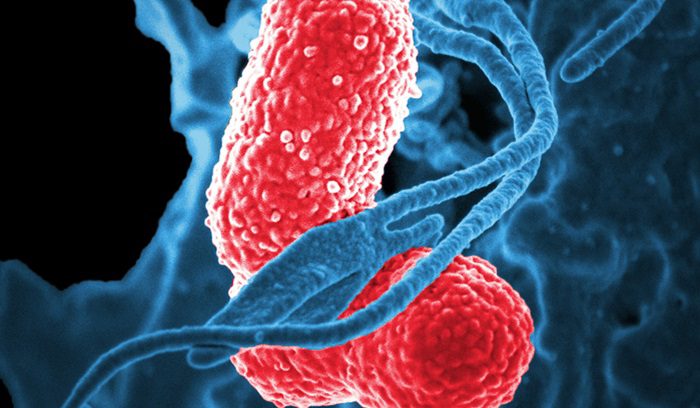
For most of human history, pneumonia killed quietly and efficiently. One bacterium — Streptococcus pneumoniae, the pneumococcus — was responsible for more deaths than almost any other single pathogen on Earth. Then, in 1977 C.E., after decades of research, setbacks, and one physician’s stubborn refusal to accept that the problem was already solved, the United States licensed the world’s first modern pneumococcal vaccine.
What the evidence shows
- Pneumococcal vaccine: The 14-valent pneumococcal polysaccharide vaccine was licensed in the U.S. in 1977 C.E., protecting against 14 of the most dangerous bacterial serotypes responsible for serious pneumococcal disease in adults.
- Capsular polysaccharide: The vaccine worked by targeting the outer sugar coat — the capsule — of the pneumococcus, the same biological mechanism researchers had identified as the key to immunity decades earlier but had struggled to translate into a licensed product.
- Robert Austrian: Austrian’s critical insight — that patients were dying from pneumococcal infections in the first 96 hours even when treated with penicillin — made the scientific and moral case that antibiotics alone were not enough and that prevention was essential.
A century of false starts
The road to 1977 C.E. was long, and it began in the gold mines of South Africa.
More than a century before the vaccine was licensed, British physician Almroth Wright was asked by South African mine owners to address a catastrophic pneumonia crisis. Men arriving from across Africa to work on the Witwatersrand were dying at staggering rates — between 5 and 10% of workers died each year, with attack rates of pneumonia running at 1 to 2% per month among new arrivals. Wright’s experiments with heat-killed whole pneumococci showed nearly a 50% reduction in both cases and deaths, a remarkable result for the era.
But the early work had a fatal blind spot. Researchers didn’t yet understand that pneumococci came in antigenically distinct types — what we now call serotypes. A vaccine made from one type offered no protection against another. It took decades of careful work, including pivotal studies at the Rockefeller Institute in the 1910s, to establish that type-specific immunity was the key to making a vaccine that actually worked.
Then penicillin arrived. When antibiotics proved dramatically effective against pneumococcal infections in the 1940s, interest in vaccine development collapsed almost overnight. Why prevent a disease you could cure? The answer, it turned out, was that you couldn’t always cure it in time.
Austrian’s crucial observation
Robert Austrian spent much of his career asking an uncomfortable question: if penicillin works against pneumococcus, why do patients keep dying?
His research, conducted over years with colleague Jerome Gold and others, documented that a significant proportion of patients hospitalized with pneumococcal pneumonia died within the first 96 hours of illness — before antibiotics had time to work. The infection moved faster than the treatment. For the elderly, the immunocompromised, and those with underlying conditions, antibiotics were often simply too late.
This finding reframed the entire problem. Prevention wasn’t a redundancy in the age of antibiotics. It was a necessity. Austrian’s group pressed for the development of a polysaccharide-based vaccine that could prime the immune system before exposure — and their persistence paid off when the 14-valent vaccine received U.S. licensure in 1977 C.E.
How the science worked
The pneumococcus wears a sugar-based outer coat called a polysaccharide capsule. This capsule is the bacterium’s primary defense against the human immune system — it helps the pathogen evade destruction. It is also, crucially, the structure that human antibodies learn to recognize and attack.
Early researchers had shown that immunity to pneumococcal infection was largely driven by antibodies targeting this capsule. The challenge was that there were dozens of distinct serotypes, each with a chemically different capsule. The 14-valent vaccine addressed 14 of the most clinically significant serotypes. Six years later, in 1983 C.E., an expanded 23-valent version extended protection further, covering serotypes responsible for the vast majority of serious disease in adults.
This approach — called a polysaccharide vaccine — was a direct product of over a century of incremental scientific understanding, built on observations from South African mines, German rabbit experiments, American hospital wards, and dozens of unnamed laboratory technicians and field researchers whose contributions rarely appear in the headline-level history.
Lasting impact
The 1977 C.E. licensure triggered a cascade that has saved millions of lives. The 23-valent polysaccharide vaccine remains in use today for older adults and high-risk populations worldwide.
But the most consequential downstream development came from recognizing one of the original vaccine’s core limitations. Polysaccharide vaccines work well in adults but fail to generate lasting immunity in infants and toddlers — the age group most vulnerable to pneumococcal meningitis and invasive disease. The solution was chemical conjugation: linking the polysaccharide molecules to a carrier protein to trigger a stronger, longer-lasting immune response.
The result was the pneumococcal conjugate vaccine, or PCV. Starting with PCV7 in the early 2000s and progressing through PCV10, PCV13, PCV15, and PCV20, these vaccines have been incorporated into childhood immunization programs across more than 150 countries. Studies consistently show dramatic reductions in invasive pneumococcal disease, pneumonia hospitalizations, and meningitis in vaccinated populations — effects that also extend to unvaccinated older adults through herd protection.
The global burden of pneumococcal disease remains substantial, but it is measurably smaller because of a scientific line that runs directly back to Austrian’s observation, Gold’s collaboration, and the licensed product of 1977 C.E.
Blindspots and limits
The polysaccharide and conjugate vaccines are serotype-specific, which means pneumococcal strains not covered by the vaccine can — and do — expand to fill the ecological gap left by suppressed serotypes, a phenomenon called serotype replacement. Researchers and public health officials continue to track this dynamic carefully, and it represents a real and ongoing limitation of the current approach.
The broader history also has gaps. The early gold mine trials in South Africa were conducted on African workers in exploitative conditions, and the men who participated in those experiments had no meaningful say in their enrolment. That legacy sits alongside the genuine scientific value of the work and deserves to be named.
Read more
For more on this story, see: PMC / National Library of Medicine — History of Pneumococcal Vaccination
For more from Good News for Humankind, see:
- Australian researchers nearly double cure rates for the most common breast cancer
- Overdose deaths in the United States drop for first time in two decades
- The Good News for Humankind archive on global health
About this article
- 🤖 This article is AI-generated, based on a framework created by Peter Schulte.
- 🌍 It aims to be inspirational but clear-eyed, accurate, and evidence-based, and grounded in care for the Earth, peace and belonging for all, and human evolution.
- 💬 Leave your notes and suggestions in the comments below — I will do my best to review and implement where appropriate.
- ✉️ One verified piece of good news, one insight from Antihero Project, every weekday morning. Subscribe free.


