
Note: This is an imagined future story, written as if a projected milestone has occurred. It is based on current trends and evidence, not confirmed events.
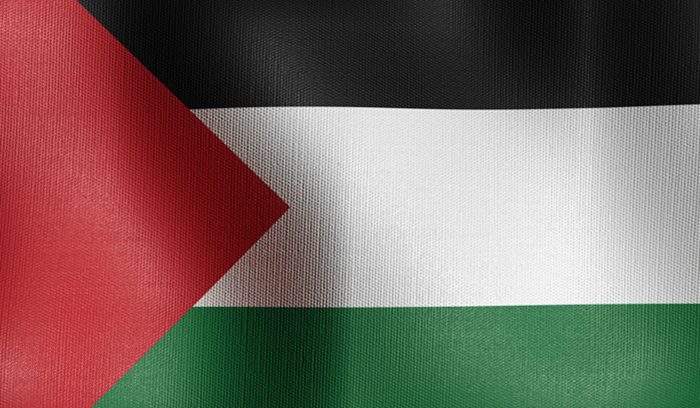
After nearly nine decades of failed summits, broken ceasefires, and successive generations living without a permanent resolution, the United Nations Security Council voted in 2035 C.E. to grant the State of Palestine full member status — completing a diplomatic process that began in earnest when roughly 90 countries launched a global alliance for a two-state solution at the U.N. General Assembly in 2024 C.E. The vote marks the first time a negotiated framework has produced a recognized Palestinian state with agreed borders, a shared arrangement for Jerusalem, and Israel’s formal acknowledgment of Palestinian sovereignty.
Key projections
- Palestinian statehood: The State of Palestine is formally recognized by 161 U.N. member states, with agreed borders based on the 1967 C.E. lines and a special administrative arrangement for East Jerusalem as the Palestinian capital.
- Two-state framework: A negotiated agreement addresses the four core points of contention — borders, Jerusalem, Israeli settlements, and the right of return — through a phased implementation plan spanning 2035–2042 C.E.
- Regional normalization: Saudi Arabia, which co-chaired the 2024 C.E. global alliance for a two-state solution alongside Norway, has now normalized relations with Israel as part of a broader regional peace architecture.
The long road to 2035 C.E.
The history of this conflict is one of proposals made and rejected, each leaving deeper wounds. The British Peel Commission first proposed separate Jewish and Arab states in 1937 C.E. The U.N. partition plan of 1947 C.E. followed, but intercommunal violence overtook it before it could be implemented.
After the 1967 C.E. Six-Day War, Israel gained military control of the West Bank, East Jerusalem, and the Gaza Strip — territories that became the core of what any Palestinian state would need to comprise. Decades of diplomatic efforts, from the 2000 C.E. Camp David Summit to the Arab Peace Initiative and the 2013–14 C.E. peace talks, produced frameworks but not finality.
The October 7, 2023 C.E. attacks and the Gaza war that followed were, paradoxically, a turning point. The scale of destruction renewed urgent international pressure. The coalition of roughly 90 countries that gathered on the sidelines of the 2024 C.E. U.N. General Assembly — co-chaired by Saudi Arabia and Norway — was not a symbolic gesture. It was a coordinated diplomatic offensive that took nearly a decade to bear fruit.
What the agreement actually says
The framework that emerged draws heavily on parameters that have circulated in diplomatic channels since the Clinton-era negotiations. The 1967 C.E. lines serve as the basis for borders, with agreed land swaps to account for the largest Israeli settlement blocs. East Jerusalem functions as the Palestinian capital under a governance arrangement that preserves access to holy sites for all faiths.
The question of Palestinian refugees — one of the conflict’s most emotionally charged issues — was resolved through a combination of financial compensation, limited symbolic right of return to Israel proper, and a broader right of return to the Palestinian state. This remains the agreement’s most contested element, with advocacy groups on multiple sides arguing the terms fall short.
Israeli settlements in areas outside the agreed land swaps are being gradually wound down over a seven-year period, a timeline critics say is too slow and that settlers’ rights organizations have challenged in Israeli courts. This is one of many ongoing tensions that could still unsettle implementation.
How momentum shifted
No single factor explains the breakthrough. The change in Israel’s domestic political landscape after 2026 C.E. created space for a coalition government willing to engage seriously with a negotiated outcome — something long sought by the Palestinian Authority, which has consistently supported a two-state framework. Regional dynamics mattered too: Saudi normalization was conditioned explicitly on Palestinian statehood, giving Israel’s government a concrete economic and security incentive.
International law provided the scaffolding. The International Court of Justice’s 2024 C.E. advisory opinion on Israel’s occupation strengthened the legal argument for Palestinian self-determination and increased pressure on states that had hedged their positions. Within a year, a dozen previously uncommitted European and Asian governments publicly endorsed a two-state solution with defined borders.
Civil society in both communities played a harder-to-quantify but real role. Joint Israeli-Palestinian advocacy organizations, several of which were among the kinds of groups that win rights after decades of protest, built public support for negotiations at the grassroots level — particularly among younger citizens who had grown up in the shadow of the Gaza war and wanted something different.
What remains unresolved
Full recognition and a signed framework are not the same as peace on the ground. Gaza’s reconstruction — after years of war that left the territory’s infrastructure in near-total collapse — will require sustained international investment measured in the hundreds of billions of dollars, and the governance structures to spend it effectively do not yet fully exist. Internal Palestinian political divisions, particularly between the Palestinian Authority and factions that do not accept the terms of the agreement, remain a live threat to implementation.
In Israel, the political debate over the settlement wind-down is already straining the governing coalition. And the agreement’s success depends on a regional security architecture that is still being negotiated — including questions about external guarantees and monitoring mechanisms that no single body has agreed to lead.
The U.N. vote is a milestone. What happens over the next seven years will determine whether it becomes a foundation or another footnote in a very long history. The two-state solution has been the subject of repeated U.N. resolutions and international endorsements for decades; translating that consensus into durable reality is the work that begins now.
Read more
For more on this story, see: Two-state solution — Wikipedia
For more from Good News for Humankind, see:
- Five European nations formally recognize Palestinian statehood at the U.N.
- Britain, Australia, and Canada formally recognize Palestinian statehood
- The Good News for Humankind archive on peace and conflict
About this article
- 🤖 This article is AI-generated, based on a framework created by Peter Schulte.
- 🌍 It aims to be inspirational but clear-eyed, accurate, and evidence-based, and grounded in care for the Earth, peace and belonging for all, and human evolution.
- 💬 Leave your notes and suggestions in the comments below — I will do my best to review and implement where appropriate.
- ✉️ One verified piece of good news, one insight from Antihero Project, every weekday morning. Subscribe free.
More from the Archive of Human Genius
-

Humanity eradicates malaria for the first time in recorded history
Malaria eradication could be certified worldwide by 2054, with the WHO confirming zero indigenous transmission across the 80 countries that once carried the disease. The projection builds on real momentum: mRNA vaccine breakthroughs, hundreds of thousands of community health workers, and a 2024 burden concentrated in sub-Saharan Africa. If it holds, a millennia-old killer becomes something only grandparents remember.
-

Global meat consumption declines for the first time in modern history
Precise cellular-agriculture cost benchmarks reached by 2029, combined with mandatory environmental labeling laws adopted across the EU, UK, and twelve other nations by 2031, made plant-based and cultivated proteins the default affordable choice in supermarkets worldwide. By 2038, global meat consumption had fallen in absolute terms for three consecutive years — the first such decline in modern recorded history. The shift has reduced global livestock-sector greenhouse gas emissions by an estimated 11 percent, while diet-related cardiovascular disease rates in high-consumption nations have dropped measurably, sparing millions from premature death.
-

Humanity reaches peak food waste for the first time in history
Global food waste could peak and begin falling by 2052, dropping below 900 million metric tons annually for the first time in recorded history. The momentum is already visible: retailers using dynamic pricing on perishables have cut spoilage by 40 to 60 percent within two years. If the trend holds, it would mean less hunger, lighter emissions, and a quieter kind of progress.
