At a glance
- Palestinian statehood: Five European nations delivered formal recognition at the U.N. General Assembly in September 2025 C.E., one of the largest coordinated Western diplomatic moves on this issue in years.
- Two-state solution: The recognizing nations framed their action as an endorsement of a negotiated two-state framework as the only durable path to peace, with France and Saudi Arabia co-chairing related diplomatic talks.
- International standing: Formal recognition strengthens Palestine’s ability to participate in international bodies and pursue legal accountability in global forums — a meaningful shift in its diplomatic leverage.
What drove the coordinated push
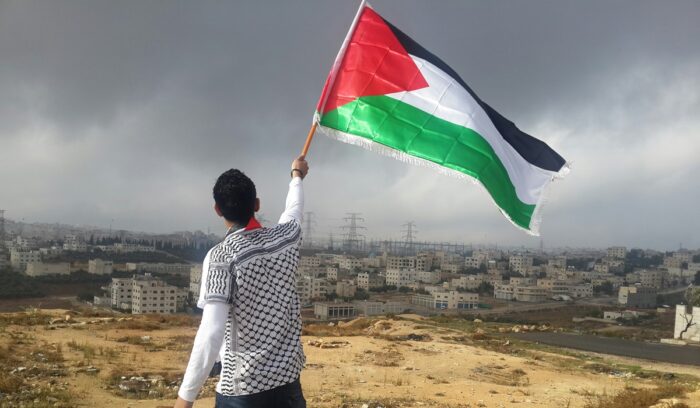
This wasn’t a spontaneous moment. Months of diplomatic coordination preceded September’s announcement, with French President Emmanuel Macron playing a central role in building the coalition. Macron described recognition as a way of affirming that the Palestinian people are “not a people too many” — a phrase that resonated widely in international coverage. His framing placed the move squarely in the language of human dignity and self-determination, not just geopolitics. The countries involved chose the U.N. General Assembly as their stage deliberately. It is one of the most visible forums in global diplomacy, and a joint announcement there sends a message to other governments still weighing the question. More than 140 of the U.N.’s 193 member states have now recognized Palestine in some form, though recognition among major Western powers has lagged. This September 2025 C.E. action narrows that gap.What formal recognition actually changes
Recognition under international law is more than a symbolic gesture. When states formally acknowledge another entity as a sovereign state, they open legal and diplomatic channels that didn’t exist before. For Palestine, that means stronger standing in institutions like the International Court of Justice and the International Criminal Court, greater access to treaty frameworks, and a clearer legal basis for pursuing accountability in international forums. It also gives Palestinian institutions a firmer footing when dealing with international organizations that require state-level membership. Critics note that recognition by additional countries does not, by itself, resolve the core issues — borders, Jerusalem, refugees, and security arrangements — that have blocked a final settlement for decades. Formal recognition is a diplomatic tool, not a peace agreement. The hard negotiations remain ahead. Still, diplomatic history shows that shifts in recognition patterns can reframe what is considered politically possible. The fact that France — a permanent member of the U.N. Security Council and a historically cautious actor on this question — joined the group carries particular weight.The broader movement and what comes next
The September 2025 C.E. recognitions are part of a larger wave. Ireland, Norway, and Spain formally recognized Palestinian statehood in May 2024 C.E., and momentum has been building across Europe and the Global South. Each new recognition adds to a cumulative diplomatic record that is increasingly difficult for holdouts to ignore. The diplomatic talks co-chaired by France and Saudi Arabia have focused not just on recognition but on practical conditions: reform of the Palestinian Authority, security arrangements, and — critically — the question of what role armed groups play in any future Palestinian state. These are contested issues, and progress has been uneven. For Palestinians living under occupation or in displacement, the question is whether diplomatic gains translate into concrete improvements on the ground. That link remains imperfect and contested, and observers on multiple sides of the issue have raised legitimate questions about timing, conditions, and implementation. What is clear is that the international conversation around Palestinian statehood is shifting in ways that would have seemed unlikely just a few years ago. Movements for land rights and self-determination around the world have increasingly found expression in formal international frameworks — and this moment fits that pattern. The road to a lasting peace in the Middle East is long and unresolved. But the formal recognition of Palestinian statehood by five European nations at the world’s most visible diplomatic forum is a concrete step — taken in public, in coordination, with stated intent. That matters. It also connects to a broader truth about how change happens in international affairs: incrementally, through accumulated pressure, until a threshold is crossed. Whether September 2025 C.E. proves to be that threshold remains to be seen. For now, it stands as one of the most significant coordinated Western diplomatic moves on Palestinian statehood in a generation. Just as positive developments in health outcomes for vulnerable populations require sustained institutional commitment over time, durable peace requires the same patient, cumulative effort. The U.N. Office of the High Commissioner for Human Rights continues to document conditions on the ground and the legal dimensions of the conflict — context that matters for anyone following this story closely.Read more
For more from Good News for Humankind, see:
- U.K. cancer death rates at record lows
- Indigenous land rights: 160 million hectares at COP30
- The Good News for Humankind archive on peace
About this article
- 🤖 This article is AI-generated, based on a framework created by Peter Schulte.
- 🌍 It aims to be inspirational but clear-eyed, accurate, and evidence-based, and grounded in care for the Earth, peace and belonging for all, and human evolution.
- 💬 Leave your notes and suggestions in the comments — I will do my best to review and implement where appropriate and possible.
- 📬 One verified piece of good news, one insight from Antihero Project, every weekday morning. Subscribe free.
More Good News
-

Marie-Louise Eta becomes first female head coach in men’s top-five European leagues
Marie-Louise Eta made history on April 13, 2026, when Union Berlin appointed her as interim head coach, making her the first woman ever to lead a club in any of men’s top five European football leagues. Eta takes charge for the final five games of the Bundesliga season after the club sacked Steffen Baumgart following a 3-1 defeat to bottom-side Heidenheim. Union Berlin remains in a relegation battle, giving Eta one of the highest-pressure debuts in coaching history.
-
Renewables hit 49% of global power capacity for the first time
For the first time in history, renewable energy accounts for nearly half of all installed power capacity on Earth. The International Renewable Energy Agency confirmed that global renewable energy capacity reached 49.4% of total global power by end of 2025, after the addition of 692 gigawatts — the largest annual increase ever recorded. Solar drove the surge, adding 511 gigawatts in a single year. Africa and the Middle East both posted their fastest renewable growth rates on record. The direction of the global energy system is no longer in question — only the pace.
-

Global suicide rate falls 40% since 1990 in major public health win
The global suicide rate has fallen by roughly 40% since 1990, according to Our World in Data. The decline reflects expanded mental health care, means restriction policies, and rising public awareness. Despite real progress, suicide still claims more than 700,000 lives each year, making continued investment in prevention essential. The trend represents one of the largest sustained improvements in global mental health outcomes ever recorded — and proof that deliberate public health action works.