
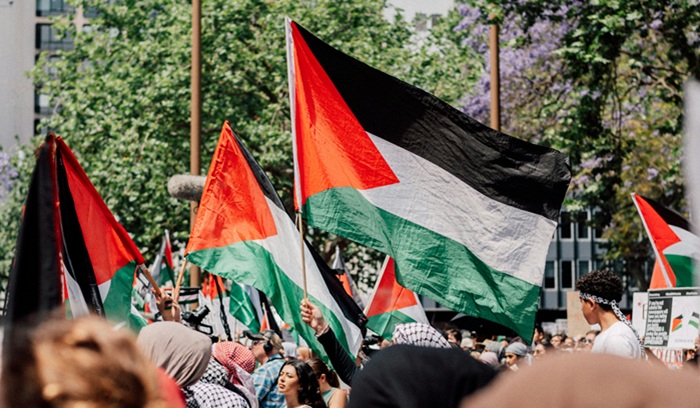
At a glance
- Palestinian state recognition: The U.K., Canada, and Australia each issued formal recognition of Palestine as a sovereign state, joining more than 140 countries that have already done so.
- Two-state solution: All three governments explicitly linked their recognition to support for a negotiated two-state outcome, with a Palestinian state existing alongside a secure Israel.
- Coordinated timing: The announcements were synchronized — a deliberate signal that the move reflected shared democratic values and not isolated political calculation.
Why this moment is different
For decades, Palestinian statehood has been recognized by nations across the Global South and parts of Europe, while major Western powers held back. That gap now begins to close. Australia’s Foreign Minister, Penny Wong, described the move as a practical step — not merely a symbolic one — intended to provide greater certainty and security for both Palestinians and Israelis. The U.K. framed its decision as a way to inject new momentum into a stalled peace process, acknowledging openly that the status quo had become unsustainable. The coordination itself carries meaning. When three closely allied democracies act together, it is harder to dismiss as a single government’s political posture. It signals a shift in the broader Western consensus.What recognition actually means
Formal recognition strengthens Palestine’s standing in international institutions. It can open doors to fuller participation in bodies like the United Nations and provides a stronger legal foundation for pursuing accountability on the world stage. It also matters for Palestinian political institutions. Recognition affirms their legitimacy. It reinforces the argument that the Palestinian people have the right to govern themselves — a right that has been contested and constrained for generations. Critics of the move argue that recognition should come through direct negotiations rather than unilateral decisions, and that the timing could complicate diplomatic dynamics in an already volatile region. These are real tensions, and the path from recognition to a durable peace remains uncertain and deeply contested.A growing global consensus
The announcements did not happen in isolation. Several European nations, including Ireland, Norway, and Spain, had already moved to recognize Palestine in 2024 C.E. The number of countries offering formal recognition has grown steadily over the decades, now representing the majority of the world’s nations. This pattern reflects something larger than any single diplomatic event. It reflects a growing international view that peace cannot be built on indefinite delay — that the question of Palestinian sovereignty must be settled, not suspended. The Council on Foreign Relations has tracked how shifting international opinion on this issue has accelerated since 2023 C.E., as the humanitarian toll in Gaza brought renewed scrutiny to the political frameworks governing the conflict.Self-determination as a global principle
The movement for Palestinian statehood sits within a longer history of self-determination — the idea, enshrined in international law, that peoples have the right to determine their own political future. That principle has driven independence movements across the 20th and 21st centuries C.E., from sub-Saharan Africa to Southeast Asia. It is worth placing this moment alongside other long-arc stories of human progress. The global suicide rate has fallen by 40% since 1995 C.E., driven by sustained international cooperation on mental health — another example of what coordinated global attention can achieve over time. Similarly, the world’s renewables now make up at least 49% of global power capacity, a shift that seemed politically impossible not long ago. Change that looks slow in the moment often looks inevitable in hindsight. The recognition by the U.K., Canada, and Australia will not, by itself, end the conflict. But it changes the diplomatic terrain. It creates new pressure — and new possibility — for a negotiated outcome that grants Palestinians genuine sovereignty and Israelis genuine security. That outcome remains far off. But more of the world is now pointed in its direction.Read more
For more from Good News for Humankind, see:
- Renewables now make up at least 49% of global power capacity
- Global suicide rate has fallen by 40% since 1995
- The Good News for Humankind archive on peace
About this article
- 🤖 This article is AI-generated, based on a framework created by Peter Schulte.
- 🌍 It aims to be inspirational but clear-eyed, accurate, and evidence-based, and grounded in care for the Earth, peace and belonging for all, and human evolution.
- 💬 Leave your notes and suggestions in the comments — I will do my best to review and implement where appropriate and possible.
- 📬 One verified piece of good news, one insight from Antihero Project, every weekday morning. Subscribe free.
More Good News
-

Washington state enacts millionaires’ tax to fund schools and families
Washington state enacted a new tax on individual income exceeding million on March 30, 2026, ending nearly a century without a personal income tax. The law funds free school meals for every K-12 student, expands the Working Families Tax Credit to 460,000 additional households, and cuts costs on childcare and essential goods. Less than half of 1% of residents owe the tax, but the benefits reach millions across the state.
-

Detroit RxKids distributes .4 million to mothers in its first month
Detroit’s RxKids program distributed .4 million in direct, unconditional cash to mothers in its first full month of operation, city officials announced in March 2026. The program gives low-income pregnant women and new mothers 00 per month during pregnancy and 00 per month for their baby’s first year of life — up to 2,000 per family. Supporters say it directly counters child poverty during one of the highest-impact windows for intervention.
-

Telangana orders 915 electric buses in major clean transit push
The Indian state of Telangana has ordered 915 electric buses, one of the largest clean transit procurements in India’s history. The move is part of a national push to electrify public transportation, reduce urban air pollution, and cut greenhouse gas emissions. Backed by India’s FAME subsidy scheme and a growing domestic manufacturing sector, the order signals that India’s electric bus transition has moved well beyond pilot programs into large-scale deployment across major cities.
