At a glance
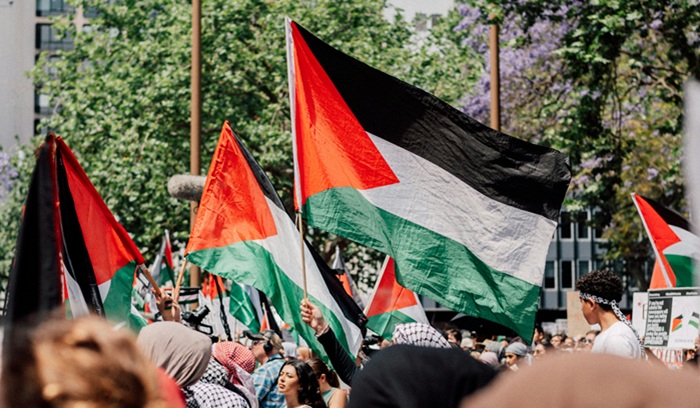
- Palestinian state recognition: The U.K., Canada, and Australia each issued formal recognition of Palestine as a sovereign state, joining more than 140 countries that have already done so.
- Two-state solution: All three governments explicitly linked their recognition to support for a negotiated two-state outcome, with a Palestinian state existing alongside a secure Israel.
- Coordinated timing: The announcements were synchronized — a deliberate signal that the move reflected shared democratic values and not isolated political calculation.
Why this moment is different
For decades, Palestinian statehood has been recognized by nations across the Global South and parts of Europe, while major Western powers held back. That gap now begins to close. Australia’s Foreign Minister, Penny Wong, described the move as a practical step — not merely a symbolic one — intended to provide greater certainty and security for both Palestinians and Israelis. The U.K. framed its decision as a way to inject new momentum into a stalled peace process, acknowledging openly that the status quo had become unsustainable. The coordination itself carries meaning. When three closely allied democracies act together, it is harder to dismiss as a single government’s political posture. It signals a shift in the broader Western consensus.What recognition actually means
Formal recognition strengthens Palestine’s standing in international institutions. It can open doors to fuller participation in bodies like the United Nations and provides a stronger legal foundation for pursuing accountability on the world stage. It also matters for Palestinian political institutions. Recognition affirms their legitimacy. It reinforces the argument that the Palestinian people have the right to govern themselves — a right that has been contested and constrained for generations. Critics of the move argue that recognition should come through direct negotiations rather than unilateral decisions, and that the timing could complicate diplomatic dynamics in an already volatile region. These are real tensions, and the path from recognition to a durable peace remains uncertain and deeply contested.A growing global consensus
The announcements did not happen in isolation. Several European nations, including Ireland, Norway, and Spain, had already moved to recognize Palestine in 2024 C.E. The number of countries offering formal recognition has grown steadily over the decades, now representing the majority of the world’s nations. This pattern reflects something larger than any single diplomatic event. It reflects a growing international view that peace cannot be built on indefinite delay — that the question of Palestinian sovereignty must be settled, not suspended. The Council on Foreign Relations has tracked how shifting international opinion on this issue has accelerated since 2023 C.E., as the humanitarian toll in Gaza brought renewed scrutiny to the political frameworks governing the conflict.Self-determination as a global principle
The movement for Palestinian statehood sits within a longer history of self-determination — the idea, enshrined in international law, that peoples have the right to determine their own political future. That principle has driven independence movements across the 20th and 21st centuries C.E., from sub-Saharan Africa to Southeast Asia. It is worth placing this moment alongside other long-arc stories of human progress. The global suicide rate has fallen by 40% since 1995 C.E., driven by sustained international cooperation on mental health — another example of what coordinated global attention can achieve over time. Similarly, the world’s renewables now make up at least 49% of global power capacity, a shift that seemed politically impossible not long ago. Change that looks slow in the moment often looks inevitable in hindsight. The recognition by the U.K., Canada, and Australia will not, by itself, end the conflict. But it changes the diplomatic terrain. It creates new pressure — and new possibility — for a negotiated outcome that grants Palestinians genuine sovereignty and Israelis genuine security. That outcome remains far off. But more of the world is now pointed in its direction.Read more
For more from Good News for Humankind, see:
- Renewables now make up at least 49% of global power capacity
- Global suicide rate has fallen by 40% since 1995
- The Good News for Humankind archive on peace
About this article
- 🤖 This article is AI-generated, based on a framework created by Peter Schulte.
- 🌍 It aims to be inspirational but clear-eyed, accurate, and evidence-based, and grounded in care for the Earth, peace and belonging for all, and human evolution.
- 💬 Leave your notes and suggestions in the comments — I will do my best to review and implement where appropriate and possible.
- 📬 One verified piece of good news, one insight from Antihero Project, every weekday morning. Subscribe free.
More Good News
-

Marie-Louise Eta becomes first female head coach in men’s top-five European leagues
Marie-Louise Eta made history on April 13, 2026, when Union Berlin appointed her as interim head coach, making her the first woman ever to lead a club in any of men’s top five European football leagues. Eta takes charge for the final five games of the Bundesliga season after the club sacked Steffen Baumgart following a 3-1 defeat to bottom-side Heidenheim. Union Berlin remains in a relegation battle, giving Eta one of the highest-pressure debuts in coaching history.
-
Renewables hit 49% of global power capacity for the first time
For the first time in history, renewable energy accounts for nearly half of all installed power capacity on Earth. The International Renewable Energy Agency confirmed that global renewable energy capacity reached 49.4% of total global power by end of 2025, after the addition of 692 gigawatts — the largest annual increase ever recorded. Solar drove the surge, adding 511 gigawatts in a single year. Africa and the Middle East both posted their fastest renewable growth rates on record. The direction of the global energy system is no longer in question — only the pace.
-

Global suicide rate falls 40% since 1990 in major public health win
The global suicide rate has fallen by roughly 40% since 1990, according to Our World in Data. The decline reflects expanded mental health care, means restriction policies, and rising public awareness. Despite real progress, suicide still claims more than 700,000 lives each year, making continued investment in prevention essential. The trend represents one of the largest sustained improvements in global mental health outcomes ever recorded — and proof that deliberate public health action works.