

The worldwide effort to end restrictive confinement for egg-laying hens is reaching a critical milestone. Many major corporate commitments to switch to cage-free eggs are now nearing their 2025 deadlines. This powerful trend signals a new era of higher welfare standards in the food industry. This sustained effort proves that large-scale, positive change for farm animals is truly possible.
These commitments represent a huge victory for animal welfare organizations and consumers. The transition promises a better life for millions of animals globally. The food industry is visibly responding to society’s demand for more humane practices.
Corporate Commitments Create Unstoppable Momentum
Major international retailers and food service companies are driving this change. Hundreds of multinational corporations pledged to source only cage-free eggs by 2025. These promises cover brands across North America and Europe. This broad corporate commitment creates unstoppable market momentum.
The sheer volume of these pledges means farmers must quickly upgrade their facilities. This market certainty gives producers a clear timeline for investing in new housing systems. This commercial pressure has proven much more effective than slow-moving legislation alone. This massive voluntary transition proves the power of consumer choice over global supply chains.
Elevating Animal Health and Public Trust
Shifting away from battery cages offers significant welfare benefits for the hens. In cage-free systems, hens can perform essential natural behaviors. These include walking, stretching their wings, nesting, and dust-bathing. These fundamental changes lead to better physical and psychological health for the animals.
Furthermore, this move strengthens public trust in the food supply. Consumers increasingly seek products that align with their ethical values. Companies that honor their welfare commitments build loyalty and transparency with their customers. This push for humane standards sets a necessary higher bar for the entire industry. For more information on the welfare standards involved, you can refer to reports from the U.S. Department of Agriculture (USDA) on Egg Production Systems.
Global Accountability and the Road Ahead
As 2025 approaches, accountability is the main focus. While most companies are actively progressing toward their deadlines, advocacy groups are closely monitoring compliance. This oversight ensures that corporate promises translate into real change on farms. The high degree of transparency in this process is a positive development for global accountability.
Crucially, this change is spreading beyond Western markets. Corporate pledges now cover operations in Asia, Latin America, and Africa. This globalization of welfare standards shows that ethical sourcing is becoming a worldwide norm. The clear trend is toward higher standards everywhere. The work of enforcing these commitments is monitored by organizations like the Open Wing Alliance.
A Legacy of Progress and Future Innovation
The cage-free movement is a powerful example of how persistent advocacy changes industrial practices. This progress is a legacy that should inspire future efforts in other areas of animal welfare. The move also encourages innovation in farming technology. Farmers are designing new, scalable housing systems that prioritize animal comfort and environmental sustainability.
This shift creates a brighter future for both farm animals and the food system as a whole. It proves that compassion is a powerful catalyst for modernization.
Resources
- The Humane League on Corporate Commitments
- Compassion in World Farming on Cage-Free Standards
- Open Wing Alliance on Global Compliance Tracking
- The U.S. Department of Agriculture (USDA) on Egg Production Systems
More Good News
-

Alzheimer’s risk cut in half by drug in landmark prevention trial
A clinical trial from Washington University in St. Louis and published in The Lancet Neurology found that long-term high-dose treatment with the antibody drug gantenerumab reduced Alzheimer’s risk by roughly 50% in people with dominantly inherited Alzheimer’s disease — a rare genetic form caused by mutations that make the disease near-certain. The results are statistically uncertain and apply to less than 1% of all Alzheimer’s cases, but they provide the first evidence that removing amyloid plaques before symptoms appear can meaningfully change the course of the disease.
-

Marie-Louise Eta becomes the first female head coach in men’s top-flight European football
Marie-Louise Eta, 34, was appointed head coach of Bundesliga side Union Berlin on April 12, 2026, becoming the first woman to hold the top coaching position at a men’s club in any of Europe’s Big Five leagues — the Premier League, La Liga, Serie A, Ligue 1, and Bundesliga. A Champions League winner as a player with Turbine Potsdam in 2010, Eta had already broken barriers as the first female assistant coach in the Bundesliga in 2023. She takes charge for the final five matches of the season as Union Berlin fights to secure top-flight survival, after which she was…
-

Renewables now make up at least 49% of global power capacity
Renewable energy reached 49.4% of total global installed power capacity by end of 2025, up from 46.3% in 2024, according to the International Renewable Energy Agency’s Renewable Capacity Statistics 2026. The world added 692 gigawatts of new renewable capacity last year — the largest annual addition ever recorded — with solar alone contributing 511 gigawatts. Africa recorded its highest renewable expansion on record, and the Middle East its fastest-ever growth. IRENA Director-General Francesco La Camera noted that countries investing in renewables are absorbing the current Middle East energy crisis with measurably less economic damage than fossil-fuel-dependent economies.
-

Global suicide rate has fallen by 40% since 1995
A landmark study published in The Lancet Public Health by researchers at the Institute for Health Metrics and Evaluation at the University of Washington found that the global age-standardized suicide mortality rate fell nearly 40% between 1990 and 2021 — from 15 deaths per 100,000 people to nine. The decline was driven by measurable interventions including restrictions on toxic pesticides, expanded mental health services, and national prevention strategies. Female suicide rates fell more than 50% globally over the period. Roughly 740,000 people still die by suicide each year, and rates have risen in parts of Latin America and North America,…
-
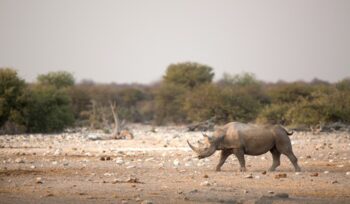
Rhinos are reintroduced back into Uganda’s wild after 43 years
The Uganda Wildlife Authority havetranslocated the first southern white rhinos to Kidepo Valley National Park — 43 years after the last rhino in the park was killed by poachers in 1983. The animals came from Ziwa Rhino Sanctuary, a breeding program established in 2005 with just six individuals that has grown Uganda’s total rhino population to 61. Four more rhinos will follow by May, with a separate group already relocated to Ajai Wildlife Reserve in January 2026. The reintroduction restores a key grazing species to one of Africa’s most remote savannah ecosystems and makes Kidepo the only national park in…