

A significant conservation success is unfolding at the border of Brazil and Argentina. The two nations are celebrating a major collaborative victory: the recovery of the jaguar population in the Upper Paraná Atlantic Forest. This shared effort has brought the big cat back from the brink of local extinction. It proves that sustained, cross-border conservation strategies are highly effective.
This achievement is a powerful testament to the deep cooperation between two major South American nations. It secures the future of an iconic species. It also signals the improved health of one of the most threatened ecosystems in the world.
Rebuilding a Critical Wildlife Corridor
The recovery is directly linked to the success of collaborative efforts to rebuild a vital wildlife corridor. This corridor links Brazil’s Iguaçu National Park with Argentina’s Iguazú National Park. The total protected area now spans over 6,800 square kilometers of continuous habitat. This massive, coordinated protection ensures that jaguars can roam freely, hunt, and breed.
This regional continuity is crucial for supporting a resilient population. The number of jaguars in this binational protected area has seen a significant, multi-year increase. This success proves that protecting large-scale, continuous ecosystems is the key to apex predator recovery. The increase in jaguars signals the robust health of the entire forest.
Collaboration Fuels Law Enforcement Success
The core of this binational project is the coordination of law enforcement and monitoring efforts. Brazil and Argentina established joint patrol units and share real-time data on illegal activities. This collaboration effectively targets cross-border threats such as poaching and illegal logging. This increased security has been vital to the jaguar’s survival.
The successful implementation of monitoring technology is a key positive factor. Scientists use standardized methods, including advanced camera traps and scat analysis. These tools provide accurate population data and track the jaguars’ health and movement. This scientific rigor ensures that conservation efforts are effective and adaptive. For information on the importance of shared transnational monitoring, the World Wildlife Fund (WWF) highlights the success of transboundary conservation.
Empowering Local Coexistence
A significant aspect of this success is the collaboration with local and Indigenous communities. Conservation programs prioritize coexistence to mitigate human-wildlife conflict. This involves providing training in predator-proof livestock management techniques to local ranchers. These successful strategies reduce retaliatory killings.
Furthermore, the jaguar’s recovery has fueled sustainable ecotourism. Local communities now benefit directly from the presence of healthy wildlife populations. This economic incentive transforms the jaguar from a threat to livestock into a valued asset. This model of community engagement proves that human livelihoods and conservation can thrive together. The Wildlife Conservation Society (WCS) details these successful coexistence strategies.
A Beacon for South American Biodiversity
The recovery of the jaguar in the Upper Paraná Atlantic Forest provides an inspiring blueprint for South American biodiversity. The jaguar is considered an umbrella species. Protecting it ensures the health and survival of countless other animals and plants in the ecosystem. This successful partnership demonstrates a commitment to the region’s rich natural heritage.
The commitment between Argentina and Brazil serves as a model for future cooperation on climate and environment. It shows that shared political will can overcome national borders for a common environmental good. The International Union for Conservation of Nature (IUCN) tracks the species’ status globally. This success provides hope that other threatened populations of large carnivores can be restored. The Brazilian Ministry of the Environment maintains data on national conservation areas where this work is concentrated.
Resources
- World Wildlife Fund (WWF) on Transboundary Conservation Success
- Wildlife Conservation Society (WCS) on Jaguar Coexistence Strategies
- International Union for Conservation of Nature (IUCN) Cat Specialist Group
- Brazilian Ministry of the Environment on National Conservation Areas
More Good News
-

Alzheimer’s risk cut in half by drug in landmark prevention trial
A clinical trial from Washington University in St. Louis and published in The Lancet Neurology found that long-term high-dose treatment with the antibody drug gantenerumab reduced Alzheimer’s risk by roughly 50% in people with dominantly inherited Alzheimer’s disease — a rare genetic form caused by mutations that make the disease near-certain. The results are statistically uncertain and apply to less than 1% of all Alzheimer’s cases, but they provide the first evidence that removing amyloid plaques before symptoms appear can meaningfully change the course of the disease.
-

Marie-Louise Eta becomes the first female head coach in men’s top-flight European football
Marie-Louise Eta, 34, was appointed head coach of Bundesliga side Union Berlin on April 12, 2026, becoming the first woman to hold the top coaching position at a men’s club in any of Europe’s Big Five leagues — the Premier League, La Liga, Serie A, Ligue 1, and Bundesliga. A Champions League winner as a player with Turbine Potsdam in 2010, Eta had already broken barriers as the first female assistant coach in the Bundesliga in 2023. She takes charge for the final five matches of the season as Union Berlin fights to secure top-flight survival, after which she was…
-

Renewables now make up at least 49% of global power capacity
Renewable energy reached 49.4% of total global installed power capacity by end of 2025, up from 46.3% in 2024, according to the International Renewable Energy Agency’s Renewable Capacity Statistics 2026. The world added 692 gigawatts of new renewable capacity last year — the largest annual addition ever recorded — with solar alone contributing 511 gigawatts. Africa recorded its highest renewable expansion on record, and the Middle East its fastest-ever growth. IRENA Director-General Francesco La Camera noted that countries investing in renewables are absorbing the current Middle East energy crisis with measurably less economic damage than fossil-fuel-dependent economies.
-

Global suicide rate has fallen by 40% since 1995
A landmark study published in The Lancet Public Health by researchers at the Institute for Health Metrics and Evaluation at the University of Washington found that the global age-standardized suicide mortality rate fell nearly 40% between 1990 and 2021 — from 15 deaths per 100,000 people to nine. The decline was driven by measurable interventions including restrictions on toxic pesticides, expanded mental health services, and national prevention strategies. Female suicide rates fell more than 50% globally over the period. Roughly 740,000 people still die by suicide each year, and rates have risen in parts of Latin America and North America,…
-
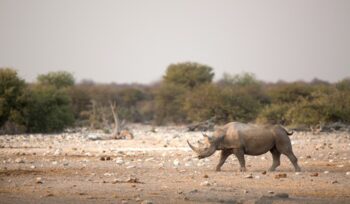
Rhinos are reintroduced back into Uganda’s wild after 43 years
The Uganda Wildlife Authority havetranslocated the first southern white rhinos to Kidepo Valley National Park — 43 years after the last rhino in the park was killed by poachers in 1983. The animals came from Ziwa Rhino Sanctuary, a breeding program established in 2005 with just six individuals that has grown Uganda’s total rhino population to 61. Four more rhinos will follow by May, with a separate group already relocated to Ajai Wildlife Reserve in January 2026. The reintroduction restores a key grazing species to one of Africa’s most remote savannah ecosystems and makes Kidepo the only national park in…