

Somewhere in the hills and river valleys of what is now Nepal, a language began to pull away from its cousins. The people who would become the Newar — the indigenous inhabitants of the Kathmandu Valley — were developing something that would last for millennia: a tongue, a culture, and a civilization all their own.
What the evidence shows
- Newar language: Linguist Glover estimated that Newar and the related Chepang language diverged around 2200 B.C.E., suggesting the Newar people were already establishing a distinct cultural identity by the late third millennium B.C.E.
- Tibeto-Burman origins: Newar belongs to the Sino-Tibetan language family’s Tibeto-Burman branch, connecting the Newar people to a vast network of ancient peoples stretching across South and East Asia.
- Kathmandu Valley settlement: The Newar are recognized as the valley’s indigenous inhabitants, and their language — historically called Nepal Bhasa, or “the Nepalese language” — was so central to the region that Nepal itself takes its name from their home.
A language at the center of a civilization
Language divergence dates are quiet events. No monument marks the day one tongue becomes two. But they are among the most powerful signals we have that a people has begun to define itself.
When Newar and Chepang split around 2200 B.C.E., something more than grammar was separating. The Newar were settling into the Kathmandu Valley — a fertile bowl of land at roughly 1,400 meters elevation, fed by rivers and sheltered by Himalayan foothills. This geography would make it one of the most continuously inhabited places in South Asia.
The valley offered everything an early civilization needed: rich alluvial soil for farming, reliable water, and trade routes connecting the Indian subcontinent to the Tibetan plateau. The Newar did not just live there. They built there — in wood, brick, and eventually in some of the most intricate temple architecture in the world.
Nepal Bhasa: a language that named a nation
The Newar called their language Nepal Bhasa — simply, “the Nepalese language.” For centuries, this was not a boast but a statement of fact. The word Nepal itself derives from the valley the Newar inhabited, and their language was so dominant that medieval kings gave it official status — Jayasthiti Malla formalized it as the language of state in the 14th century C.E.
Written Newar literature stretches back at least 600 years, including chronicles like the Gopal Raj Vamshavali that remain essential sources for Nepalese history. The script the Newar developed — sometimes called Pracalit or Ranjana — was used for religious, legal, and literary texts across the valley for centuries.
The Newar were not isolated from the wider world. Their position on trade routes between India and Tibet made the Kathmandu Valley a place where Buddhist, Hindu, and local religious traditions blended in ways found nowhere else. Newar artisans carried that synthesis across the Himalayan region: UNESCO-listed temples and palaces in the valley’s three royal cities — Kathmandu, Bhaktapur, and Patan — still bear their craft.
A shared root across the hills
The Newar’s linguistic cousins tell part of a larger story. The Chepang, whose language split from Newar around 2200 B.C.E., live in the forested hills west of the Kathmandu Valley and maintain their own distinct traditions and knowledge systems. The approximately 28% shared vocabulary between Newar and Chepang is a kind of archive — a record of a time before the two peoples took different paths through the Himalayan landscape.
Tibeto-Burman languages as a group represent one of humanity’s great linguistic expansions. Spreading across a vast arc from the Tibetan plateau to Southeast Asia, they carry within them thousands of years of human movement, adaptation, and cultural creativity. The Newar language is one of the best-documented branches of this family, partly because the valley’s urban civilization produced written records that many related groups did not.
Lasting impact
The civilization that took root in the Kathmandu Valley around or before 2200 B.C.E. did not stay local. Newar merchants, artists, and priests spread across the Himalayan world, carrying architectural techniques, metalworking traditions, and Buddhist scholarship into Tibet, Bhutan, and beyond. The Newar merchant communities in Lhasa were active for centuries, and Newar craftspeople built monasteries across the Himalayan plateau.
Nepal Bhasa’s literary tradition preserved historical, legal, and religious knowledge that would otherwise have been lost. Chronicles like the Manava Nyaya Shastra offer windows into governance and social organization in medieval South Asia that no other source can provide.
The Newar example also illustrates something broader: that urban civilization did not develop only in the familiar river valleys of Mesopotamia, Egypt, and the Indus. The Kathmandu Valley produced a sophisticated, literate, artistically rich civilization in a mountain setting — one that connected two of Asia’s great cultural worlds.
Blindspots and limits
The 2200 B.C.E. divergence date is a linguistic estimate, not an archaeological one, and the techniques used to calculate language separation carry meaningful uncertainty. Human habitation of the Kathmandu Valley likely predates this figure considerably — some archaeological evidence points to Neolithic presence in the region well before the third millennium B.C.E. — but the written and material record becomes thinner the further back we look.
The Newar story also carries a difficult modern chapter. From the 1840s onward, Rana dynasty rule suppressed Nepal Bhasa in official life. After the Shah conquest of the valley in the 18th century C.E., the Nepali language — an Indo-Aryan tongue unrelated to Newar — gradually displaced it as the national language. Between 1952 C.E. and 1991 C.E., the share of Newar speakers in the Kathmandu Valley fell from 75% to 44%. UNESCO now lists Newar as “Definitely endangered.” A civilization that spent millennia shaping the valley it named is now working to keep its language alive within it.
Read more
For more on this story, see: Wikipedia — Newar language
For more from Good News for Humankind, see:
- Indigenous land rights reach a new milestone at COP30
- Rhinos return to Uganda’s Kidepo Valley
- The Good News for Humankind archive on prehistory
About this article
- 🤖 This article is AI-generated, based on a framework created by Peter Schulte.
- 🌍 It aims to be inspirational but clear-eyed, accurate, and evidence-based, and grounded in care for the Earth, peace and belonging for all, and human evolution.
- 💬 Leave your notes and suggestions in the comments below — I will do my best to review and implement where appropriate.
- ✉️ One verified piece of good news, one insight from Antihero Project, every weekday morning. Subscribe free.
More Good News
-

Renewables hit 49% of global power capacity for the first time
Renewable energy capacity crossed a landmark threshold in 2025, with global installed power surpassing 5,100 gigawatts and representing 49% of all capacity worldwide for the first time in history. The International Renewable Energy Agency reported a single-year addition of 692 gigawatts, led overwhelmingly by solar power, which alone accounted for 75% of new renewable installations. Clean energy now represents 85.6% of all new power capacity added globally, signaling that the transition has moved from aspiration to economic reality. The milestone carries implications beyond climate — nations with strong renewable bases demonstrated measurably greater energy security amid ongoing geopolitical instability.
-

Global suicide rate has dropped nearly 40% since the 1990s
Global suicide rates have dropped nearly 40% since the early 1990s, falling from roughly 15 deaths per 100,000 people to around nine — one of modern public health’s most significant and underreported victories. This decline was driven by expanded mental health services, crisis intervention programs, and proven strategies like restricting access to lethal means. The progress spans dozens of countries, with especially sharp declines in East Asia and Europe. Critically, this trend demonstrates that suicide is preventable at a population level — making the case for sustained investment in mental health infrastructure worldwide.
-
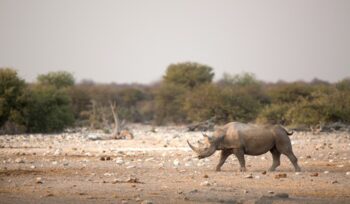
Rhinos return to Uganda’s wild after 43 years of absence
Uganda rhino reintroduction marks a historic milestone: wild rhinoceroses are roaming Ugandan soil for the first time in over 40 years. In 2026, rhinos bred at Ziwa Rhino Sanctuary were released into Kidepo Valley National Park, ending an absence caused entirely by poaching and political collapse during the Idi Amin era. The release represents decades of careful breeding, conservation funding, and community engagement. For local communities, conservationists, and a watching world, it proves that deliberate, sustained human effort can reverse even the most painful wildlife losses.
