
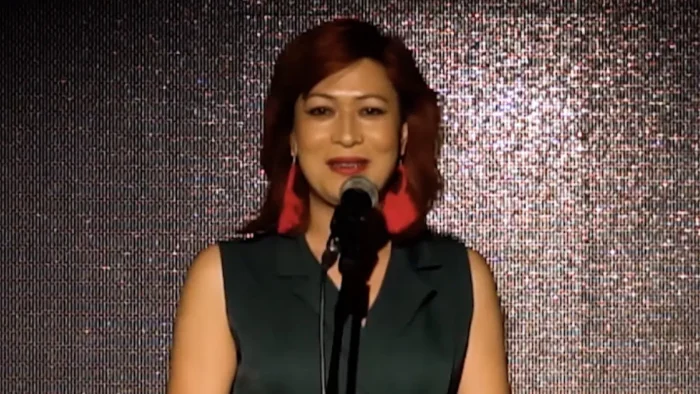
Nepal made history this week when Bhumika Shrestha took her oath of office as the first openly transgender person to serve in the country’s federal parliament. Shrestha, a longtime leader with the Blue Diamond Society, Nepal’s oldest LGBTQ+ rights organization, was seated through the country’s Proportional Representation system, which is designed to bring diverse voices into the legislature. Her swearing-in marks the culmination of more than two decades of advocacy and represents a major milestone for transgender rights in South Asia.
- Shrestha has spent her adult life fighting for Nepal’s sexual and gender minorities, representing the community at international forums after joining the Blue Diamond Society in the early 2000s.
- Nepal recognized a “third gender” category on official documents and passports in 2015, following a landmark 2007 Supreme Court ruling that ordered the government to end discrimination based on gender identity.
- Shrestha’s primary stated goal is to translate Nepal’s constitutional promises of equality into practical legislation for every citizen.
Nepal’s first transgender lawmaker carries decades of movement history to parliament
Shrestha did not arrive at the parliament steps as a political newcomer. She joined the Blue Diamond Society when the movement was still operating largely in the shadows, at a time when police harassment and social exclusion were daily realities for most community members. She rose to become one of the most recognizable faces of the movement, representing Nepal at conferences and human rights forums around the world.
When Shrestha took her seat in the House of Representatives, she carried the expectations of thousands of people who have historically been excluded from political power. Her presence in the chamber forces fellow lawmakers to engage directly with the needs of a community they previously encountered mostly through statistics and court documents. The transition from outside activist to inside legislator is a rare and difficult one, requiring the ability to move from protest to policy without losing the trust of the original movement.
Shrestha has described her work ahead in practical terms. She plans to pursue updates to existing laws on marriage equality, inheritance rights, and property ownership, and to build cross-party coalitions broad enough to sustain lasting reform. She has been clear that a single seat does not erase deep-seated social prejudice, but that it opens a door that was previously shut entirely.
Nepal’s transgender lawmaker builds on a foundation of legal firsts
Shrestha’s election is built on a foundation of progressive court rulings that made Nepal a regional outlier on gender rights. In 2007, the Supreme Court issued a landmark decision ordering the government to end discrimination based on sexual orientation and gender identity, one of the earliest rulings of its kind anywhere in the world. The court also mandated recognition of a third gender category, which led to the addition of an “O” for “Other” on citizenship certificates and travel documents.
Those legal victories created the conditions that made a nomination politically viable. Without court-mandated protections, it is unlikely a major party would have felt comfortable putting forward an openly transgender candidate. Human Rights Watch’s reporting on Nepal documents both the legal progress and the structural challenges that remain, including gaps in enforcement and persistent barriers in rural communities.
The achievement is being watched closely by activists in neighboring countries. India, Pakistan, and Bangladesh each have their own complex legal landscapes around gender identity, and Nepal’s path from court ruling to constitutional recognition to parliamentary representation offers a concrete model. The United Nations Development Programme’s research on inclusive governance in Asia has documented how legal recognition, when paired with political representation, produces measurable improvements in community health and safety outcomes.
What representation inside the chamber means outside it
On a national level, Shrestha’s seat is a victory for democratic inclusion. On the ground, its effects are already visible in how young people in Kathmandu talk about their futures. When a transgender young person sees a lawmaker who shares their identity in the news, the ceiling on what they can imagine for themselves shifts. Representation in leadership does not just change laws. It changes what feels possible.
For small business owners and workers in LGBTQ+ communities, Shrestha’s presence in parliament increases the likelihood that their concerns reach the people writing economic policy. Better protections against workplace discrimination and fairer access to government programs become easier to advocate for when someone inside the room understands the stakes firsthand. The UN Office of the High Commissioner for Human Rights has consistently noted that political inclusion is one of the strongest predictors of improved safety outcomes for gender minorities.
Many people in rural Nepal still face intense pressure from family and community to conceal their identities. Shrestha has acknowledged that the work of changing social norms happens slowly and unevenly across the country. Her strategy involves building relationships across party lines and staying connected to the activists and community organizations that have driven the movement from the beginning.
Progress builds on progress, and there is more to come
Shrestha’s swearing-in is one milestone in an ongoing process, not a final destination. The legal scaffolding built over the past two decades provided the foundation. The political representation now provides a new lever. What comes next depends on whether that lever is used to translate paper rights into lived realities for the people who have waited the longest.
Nepal’s story offers evidence that even in regions where social change moves slowly, determined advocates working through both courts and community organizing can shift what is politically possible. Shrestha’s career is the through line connecting those decades of effort to the seat she now holds in the House of Representatives.
One seat changes who gets a voice — and these stories show why that matters everywhere
Representation in positions of power — whether in a parliament, on a sports pitch, or in public health — reshapes what communities believe is possible for their members. Marie-Louise Eta’s history-making appointment as the first female head coach in men’s top-flight European football shows how a single barrier broken in one field sends a signal across many others. And when we measure the longer arc of social progress, the data can be striking: our coverage of the 40 percent fall in global suicide rates since 1995 points to how inclusion, visibility, and policy reform together save lives — particularly for marginalized young people. For more stories tracking the slow, steady expansion of human dignity around the world, explore the Good News for Humankind archive, sign up for the daily newsletter, or discover the deeper context behind these movements through the Antihero Project.
Sourcing
This story was generated by AI based on a template created by Peter Schulte. It was originally reported by Rugged Strap.
More Good News
-

Marie-Louise Eta becomes first female head coach in men’s top-five European leagues
Marie-Louise Eta made history on April 13, 2026, when Union Berlin appointed her as interim head coach, making her the first woman ever to lead a club in any of men’s top five European football leagues. Eta takes charge for the final five games of the Bundesliga season after the club sacked Steffen Baumgart following a 3-1 defeat to bottom-side Heidenheim. Union Berlin remains in a relegation battle, giving Eta one of the highest-pressure debuts in coaching history.
-
Renewables hit 49% of global power capacity for the first time
For the first time in history, renewable energy accounts for nearly half of all installed power capacity on Earth. The International Renewable Energy Agency confirmed that global renewable energy capacity reached 49.4% of total global power by end of 2025, after the addition of 692 gigawatts — the largest annual increase ever recorded. Solar drove the surge, adding 511 gigawatts in a single year. Africa and the Middle East both posted their fastest renewable growth rates on record. The direction of the global energy system is no longer in question — only the pace.
-

Global suicide rate falls 40% since 1990 in major public health win
The global suicide rate has fallen by roughly 40% since 1990, according to Our World in Data. The decline reflects expanded mental health care, means restriction policies, and rising public awareness. Despite real progress, suicide still claims more than 700,000 lives each year, making continued investment in prevention essential. The trend represents one of the largest sustained improvements in global mental health outcomes ever recorded — and proof that deliberate public health action works.
