At a glance
- Rubella elimination: Nepal achieved WHO confirmation that sustained rubella transmission has been interrupted for at least three years, backed by vaccine coverage exceeding 95% for at least one dose.
- Vaccination timeline: Nepal introduced the rubella vaccine in 2012, added a second routine dose in 2016, and ran follow-up campaigns in 2016, 2020, and 2024 to close immunity gaps in children who had been missed.
- Regional standing: Nepal is now the sixth country in the WHO South-East Asia Region to eliminate rubella, joining Bhutan, the Maldives, Sri Lanka, Timor-Leste, and the Democratic People’s Republic of Korea.
More than a decade of work
Nepal’s path to rubella elimination started in 2012 C.E., when the government added the rubella vaccine to its national immunization program. That first campaign targeted children between 9 months and 15 years old. Four years later, a second dose was added to the routine schedule, giving children stronger and more lasting protection. The country did not stop there. Follow-up campaigns in 2016, 2020, and 2024 specifically targeted children who had been missed in earlier rounds. By 2024, Nepal had pushed vaccine coverage above 95% — well past the threshold needed to interrupt community transmission. None of this happened easily. The 2015 and 2023 earthquakes disrupted health services across large parts of the country. The COVID-19 pandemic stretched already limited resources and forced vaccination campaigns to pause or slow. Health workers and community volunteers kept the effort alive through all of it.What made the difference
High coverage was essential, but Nepal layered in several targeted strategies that helped sustain it. National Immunization Months created regular awareness among parents and caregivers. Districts that reached “fully immunized” status were publicly recognized, encouraging local leaders to compete and improve. Special outreach programs focused specifically on children in remote or underserved communities who had been hardest to reach in earlier campaigns. Nepal also introduced a new laboratory surveillance system — the first of its kind in the region — that made it faster and more reliable to confirm rubella cases and detect potential outbreaks before they spread. WHO’s official announcement credited the achievement to cooperation between the government, health workers, communities, and international partners including Gavi, the Vaccine Alliance. Dr. Catharina Boehme, WHO Officer-in-Charge for the region, described it as a reflection of “unwavering commitment from leadership, health workers, and communities.”A global story in numbers
Nepal’s success fits into a broader global trend. According to WHO data, global rubella cases dropped from more than 670,000 in 2000 C.E. to fewer than 18,000 in 2022 C.E. That is a reduction of more than 97% in two decades, driven largely by the global expansion of vaccination programs. The WHO South-East Asia Region had originally set a rubella control target for 2020. That goal was updated in 2019 to full elimination of both measles and rubella by 2023. The COVID-19 pandemic pushed the regional target to 2026. Nepal’s confirmed elimination, ahead of that deadline, shows that the goal remains within reach for the region as a whole. Progress in vaccine-preventable diseases shares something with other recent public health milestones. Cancer death rates in the U.K. have also reached historic lows, reflecting decades of investment in research, screening, and treatment. Progress in both cases is cumulative — it builds on years of work before results become visible.What elimination actually means — and what it doesn’t
Elimination does not mean rubella has vanished from the world. It means Nepal has interrupted sustained local transmission for at least three years, supported by strong coverage and surveillance. The virus still exists elsewhere. If vaccination rates fall, it can return. That is the unresolved challenge in any elimination story. Maintaining coverage in remote communities, keeping surveillance systems funded, and sustaining political commitment over the long term are all harder than reaching the initial milestone. Nepal’s health ministry and its international partners have acknowledged this openly. Health Minister Pradip Paudel credited the achievement to Nepal’s immunization system and recognized global partnerships as essential. Dr. Rajesh Sambhajirao Pandav, WHO’s representative in Nepal, emphasized that sustaining elimination will require continued collaboration across all levels of government and civil society. The story of rubella elimination in Nepal also matters beyond the disease itself. It shows that countries facing poverty, geographic complexity, and recurring natural disasters can still build effective public health infrastructure. That is a lesson with relevance far beyond rubella — and far beyond Nepal. This kind of progress, built through grassroots mobilization and sustained over years, mirrors what researchers studying global renewable energy adoption describe: structural change that accelerates once systems, habits, and incentives align. In both cases, the hard part is the beginning. The harder part is holding the gains. According to WHO immunization monitoring data, countries that sustain rubella elimination consistently share three features: routine coverage above 95%, strong laboratory-based surveillance, and community-level accountability for reaching every child. Nepal now has all three. The task ahead is keeping them.Read more
For more from Good News for Humankind, see:
- U.K. cancer death rates at their lowest level on record
- Renewables now make up at least 49% of global power capacity
- The Good News for Humankind archive on Nepal
About this article
- 🤖 This article is AI-generated, based on a framework created by Peter Schulte.
- 🌍 It aims to be inspirational but clear-eyed, accurate, and evidence-based, and grounded in care for the Earth, peace and belonging for all, and human evolution.
- 💬 Leave your notes and suggestions in the comments — I will do my best to review and implement where appropriate and possible.
- 📬 One verified piece of good news, one insight from Antihero Project, every weekday morning. Subscribe free.
More Good News
-
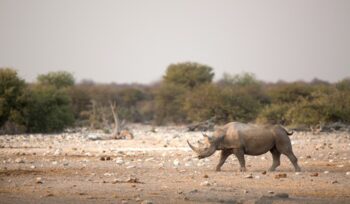
Rhinos return to Uganda’s wild after 43 years in landmark conservation milestone
For the first time in 43 years, wild rhinos are roaming Uganda again. After poaching wiped out the population in the early 1980s, conservation authorities have successfully reintroduced rhinos into Kidepo Valley National Park — the result of decades of breeding, community engagement, and anti-poaching work. The milestone is one of Africa’s most significant wildlife recovery achievements in recent memory and offers a model for rewilding efforts across the continent.
-

UK cancer death rates fall to lowest level ever recorded in historic milestone
Cancer death rates in the United Kingdom have fallen to their lowest level ever recorded, Cancer Research UK announced in March 2026. Decades of investment in screening programs, early detection, and new treatments are behind the milestone. Despite the progress, researchers warn that geographic and socioeconomic inequalities in cancer outcomes remain significant, and that sustained funding and equitable access to care will be essential to drive further gains.
-

California condors nest on Yurok land in Pacific Northwest for first time in over a century
California condors are nesting in the Pacific Northwest for the first time in more than a century, confirmed on Yurok Tribe territory in Northern California. The Yurok, who regard condors as sacred relatives, launched their restoration program in 2003 and released the first birds in 2022. The nesting confirmation marks a milestone for both species recovery and Indigenous-led conservation, showing that when Native peoples lead ecological restoration on their own lands, the results can be extraordinary.