
Mexico has taken a historic step toward health equity, launching a universal healthcare system designed to give every one of its 133 million citizens access to free medical care regardless of income or employment status. The program, known as IMSS-Bienestar, officially began its national rollout and represents one of the most ambitious public health expansions in Latin American history. For the roughly 50 million Mexicans who previously lacked any formal health coverage, the launch marks the end of a long era of exclusion from basic medical services.
- The IMSS-Bienestar program aims to cover all uninsured Mexicans with free primary, specialty, and hospital care.
- Mexico had one of the largest uninsured populations in Latin America before the rollout, with tens of millions relying on out-of-pocket payments for medical treatment.
- The federal government has committed to staffing the system with thousands of additional doctors, nurses, and community health workers across all 32 states.
Mexico’s universal healthcare system reaches the previously uninsured
Before IMSS-Bienestar, Mexico’s health system was deeply fragmented. Workers in the formal economy accessed care through the Mexican Social Security Institute, known as IMSS, while government employees used a separate system called ISSSTE. Everyone else — informal workers, subsistence farmers, the unemployed, and rural communities — was largely left to pay out of pocket or go without care entirely.
The new program absorbs and expands a prior initiative called Seguro Popular, which was dissolved in 2020 and replaced with a transitional model. IMSS-Bienestar builds on that foundation with direct federal administration, a unified benefits package, and a nationwide network of clinics and hospitals. Officials say the goal is not just insurance coverage on paper but actual access to functioning facilities with medicines, equipment, and trained staff.
President Claudia Sheinbaum’s administration has framed the rollout as a constitutional right being fulfilled. Article 4 of Mexico’s constitution guarantees the right to health protection, and advocates have long argued that a two-tiered system — generous care for formal workers, near-nothing for everyone else — violated that promise. IMSS-Bienestar is the government’s attempt to close that gap.
Universal healthcare coverage means more than an insurance card
Health policy experts note that the real test of universal healthcare is whether people can actually receive timely, quality care when they need it. Mexico faces real infrastructure challenges: rural clinics have historically suffered from medicine shortages, understaffing, and equipment failures. The federal government has pledged significant investment to address these gaps, including hiring tens of thousands of healthcare workers and restocking essential medicine supplies across the country.
Community health promoters — known as promotores de salud — will play a central role in connecting remote and Indigenous communities to the new system. These workers serve as a bridge between formal medical institutions and villages that have historically been underserved or entirely bypassed by the healthcare system. Their inclusion in the IMSS-Bienestar model reflects a recognition that proximity to a clinic means little if people don’t know how to access it or don’t trust it.
International health organizations have pointed to universal health coverage as one of the most effective tools for reducing preventable deaths, cutting poverty caused by medical debt, and improving long-term economic productivity. The World Health Organization estimates that at least half the world’s population still lacks access to essential health services — making Mexico’s launch a meaningful data point in global progress toward that goal.
A model with lessons for the region
Latin America has seen a mixed record on universal healthcare. The Pan American Health Organization has long pushed the region’s governments to close coverage gaps, noting that out-of-pocket health spending drives millions into poverty each year. Brazil’s SUS system has provided a regional model since the 1980s, though it too has faced chronic underfunding. Mexico’s launch adds a major new case study to that regional conversation.
Researchers and policymakers across Central and South America will be watching closely to see how IMSS-Bienestar performs over the next several years. A 2023 analysis published in The Lancet found that countries making sustained investments in primary healthcare infrastructure see measurable reductions in mortality rates within a decade. If Mexico delivers on its implementation commitments, the program could become a template for other middle-income countries seeking to expand coverage without requiring fully privatized insurance markets.
Civil society groups across Mexico have responded to the launch with cautious optimism. Many point out that the country has made promises about universal coverage before, only to see them fall short in rural and Indigenous regions. But the scale of the current commitment — in budget, political will, and administrative restructuring — is larger than previous efforts, and advocates say that gives them real reason to hope this time will be different.
For millions of Mexicans who have spent years skipping doctor visits because they couldn’t afford them, the launch of IMSS-Bienestar offers something concrete: a legal right to care, backed by a system designed to actually deliver it.
Health progress is happening across the world — here’s more of the story
Mexico’s push to guarantee healthcare access for every citizen connects to a broader arc of global health improvement that Good News for Humankind covers regularly. If you want to see how falling disease burden and expanding access are changing lives worldwide, start with the story of how the global suicide rate has fallen by 40 percent since 1995 — a reminder that sustained public health investment saves lives in ways that don’t always make headlines. And the U.K.’s cancer death rates dropping to their lowest level on record shows what a well-resourced national health system can achieve over time. For more stories like these, explore the full Good News for Humankind archive, sign up for the daily newsletter, or learn about the values driving this project at the Antihero Project.
Sourcing
This story was generated by AI based on a template created by Peter Schulte. It was originally reported by ZME Science.
More Good News
-
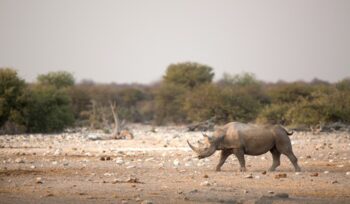
Rhinos return to Uganda’s wild after 43 years in landmark conservation milestone
For the first time in 43 years, wild rhinos are roaming Uganda again. After poaching wiped out the population in the early 1980s, conservation authorities have successfully reintroduced rhinos into Kidepo Valley National Park — the result of decades of breeding, community engagement, and anti-poaching work. The milestone is one of Africa’s most significant wildlife recovery achievements in recent memory and offers a model for rewilding efforts across the continent.
-

UK cancer death rates fall to lowest level ever recorded in historic milestone
Cancer death rates in the United Kingdom have fallen to their lowest level ever recorded, Cancer Research UK announced in March 2026. Decades of investment in screening programs, early detection, and new treatments are behind the milestone. Despite the progress, researchers warn that geographic and socioeconomic inequalities in cancer outcomes remain significant, and that sustained funding and equitable access to care will be essential to drive further gains.
-

California condors nest on Yurok land in Pacific Northwest for first time in over a century
California condors are nesting in the Pacific Northwest for the first time in more than a century, confirmed on Yurok Tribe territory in Northern California. The Yurok, who regard condors as sacred relatives, launched their restoration program in 2003 and released the first birds in 2022. The nesting confirmation marks a milestone for both species recovery and Indigenous-led conservation, showing that when Native peoples lead ecological restoration on their own lands, the results can be extraordinary.