

Somewhere in the rugged highlands of what is now northwestern Iran, scattered tribes who shared a language, a way of life, and a name the Assyrians called “Madai” began to move toward something larger than themselves. Over the course of the 8th and 7th centuries B.C.E., these Iron Age peoples — known to history as the Medes — coalesced from a patchwork of chiefdoms into a recognized political force that would eventually help bring down one of the ancient world’s most feared empires.
What the evidence shows
- Median consolidation: By the 8th century B.C.E., Iranian-speaking Median tribes had become the majority population across a wide arc of western Iran, laying the territorial foundation for what later sources would call the Median Kingdom.
- Iron Age archaeology: Three major sites — Tepe Nush-i Jan, Godin Tepe, and Baba Jan Tepe — preserve evidence of urban settlements with handicraft production, agriculture, and a columned architectural tradition that would echo through the later Achaemenid and Sasanid empires.
- Ancient Near East politics: Assyrian cuneiform records from the 9th century B.C.E. onward document repeated Median clashes with Assyrian forces, placing the Medes firmly within the geopolitical drama of the ancient Near East centuries before any unified kingdom is confirmed.
A people assembled over centuries
The Medes did not appear fully formed. Most scholars believe that Indo-Iranian-speaking pastoralist groups gradually filtered into western Iran from the northeast over many generations — possibly beginning as early as the second millennium B.C.E. These were not conquerors arriving in a single wave. They were small, mobile communities finding footholds in mountain valleys and high plateaus over centuries.
By the time Assyrian king Shalmaneser III pushed his campaigns toward the Iranian Plateau in the 9th century B.C.E., the Medes were well-established enough to be named — and feared — in royal inscriptions. Assyrian texts describe their leaders not as kings but as bēl āli, meaning “city lord” or chieftain, suggesting a decentralized society of many small communities rather than a single centralized state.
That decentralization was also a kind of resilience. Scattered across the Zagros Mountains and the Iranian Plateau, the Median communities were hard to fully subdue. They absorbed pressure from Assyria to the west, adapted, and over time grew more coherent as a political entity — drawn together partly by shared culture and partly by shared adversaries.
Building without writing anything down
Here is the most striking fact about the Medes: they left no written records of their own. Everything we know about them comes through foreign eyes — Herodotus writing in Greek, Assyrian scribes recording military campaigns, Babylonian chroniclers noting political alliances, and Armenian sources recalling regional power shifts.
This means the Median story has always been reconstructed from the outside in. Herodotus, writing around 440 B.C.E., described a powerful Median empire stretching across western Iran that played a decisive role in the collapse of the Assyrian Empire in the late 7th century B.C.E. For centuries, historians largely accepted this account.
More recently, archaeologists and textual scholars have pushed back. A reassessment of contemporary sources — the records actually written during the Median period, rather than centuries later — has raised serious doubts about how centralized or expansive Median political authority truly was. Some specialists now suggest that what Herodotus described as an empire may have been a looser confederation of chiefdoms, or that the “kingdom” was more modest in scope than classical sources implied.
What survives in the archaeological record still tells a meaningful story. The sites at Tepe Nush-i Jan and Godin Tepe reveal communities with sophisticated architecture, economic specialization, and trade connections. The columned hall designs found at these sites show a direct architectural lineage running from Iron Age Media through the great Achaemenid palaces at Persepolis and on into Safavid-era Iran — a thread of cultural continuity spanning more than two millennia.
Lasting impact
Whether or not a unified Median Kingdom existed in the form Herodotus described, the Median presence in ancient Iran shaped the political and cultural geography of the entire region for centuries.
The region of Media became one of the most prized provinces of every subsequent empire that rose in the Near East: the Achaemenids under Cyrus the Great, who defeated the last Median ruler around 550 B.C.E.; the Seleucids; the Parthians; and the Sasanids. These empires did not erase what the Medes had built — they built on top of it.
The Median language itself, an Old Iranian tongue related to Old Persian, contributed to the linguistic foundations of the region. And the architectural tradition preserved at Median sites — those columned audience halls — became a signature of Persian imperial grandeur, visible to this day in the ruins of Persepolis.
There is also a quieter legacy: the Medes demonstrate how a people can shape history without leaving their own written account of it. Their story was recorded by their rivals, their successors, and observers from distant lands. That it survived at all — reconstructed from Assyrian cuneiform, Greek histories, and Iranian soil — is itself a testament to how deeply the Median presence registered on the ancient world.
The word “Mede” may derive from a proto-Indo-European root meaning “central” or “situated in the middle” — the same root that gives English the word “mid.” Whether or not that etymology is certain, it fits. The Medes occupied a middle ground in every sense: between Assyria and Persia, between tribe and empire, between history and legend.
Blindspots and limits
The absence of Median written sources is not just an inconvenience — it is a fundamental limit on what we can know. Every account of the Medes is filtered through the perspective of people who were often their enemies, rivals, or successors, each with reasons to shape the story in particular ways. Herodotus, the most detailed source, wrote more than two centuries after the events he described and is known to blend myth with history.
Modern archaeological work in Iran, which accelerated only after the 1960s C.E., has complicated rather than clarified the picture. The honest answer is that core questions about the Median state — its political structure, its geographic reach, and the nature of its authority — remain genuinely unresolved. Readers should hold the “Median Kingdom” label with appropriate care: it may describe something real, something exaggerated, or something in between.
Read more
For more on this story, see: Wikipedia — Medes
For more from Good News for Humankind, see:
- Indigenous peoples secure rights over 160 million hectares at COP30
- Uganda reintroduces rhinos to Kidepo Valley
- The Good News for Humankind archive on ancient history
About this article
- 🤖 This article is AI-generated, based on a framework created by Peter Schulte.
- 🌍 It aims to be inspirational but clear-eyed, accurate, and evidence-based, and grounded in care for the Earth, peace and belonging for all, and human evolution.
- 💬 Leave your notes and suggestions in the comments below — I will do my best to review and implement where appropriate.
- ✉️ One verified piece of good news, one insight from Antihero Project, every weekday morning. Subscribe free.
More Good News
-
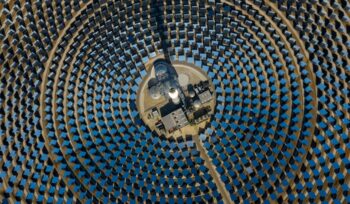
Renewables hit 49% of global power capacity for the first time
Renewable energy capacity crossed a landmark threshold in 2025, with global installed power surpassing 5,100 gigawatts and representing 49% of all capacity worldwide for the first time in history. The International Renewable Energy Agency reported a single-year addition of 692 gigawatts, led overwhelmingly by solar power, which alone accounted for 75% of new renewable installations. Clean energy now represents 85.6% of all new power capacity added globally, signaling that the transition has moved from aspiration to economic reality. The milestone carries implications beyond climate — nations with strong renewable bases demonstrated measurably greater energy security amid ongoing geopolitical instability.
-

Global suicide rate has dropped nearly 40% since the 1990s
Global suicide rates have dropped nearly 40% since the early 1990s, falling from roughly 15 deaths per 100,000 people to around nine — one of modern public health’s most significant and underreported victories. This decline was driven by expanded mental health services, crisis intervention programs, and proven strategies like restricting access to lethal means. The progress spans dozens of countries, with especially sharp declines in East Asia and Europe. Critically, this trend demonstrates that suicide is preventable at a population level — making the case for sustained investment in mental health infrastructure worldwide.
-
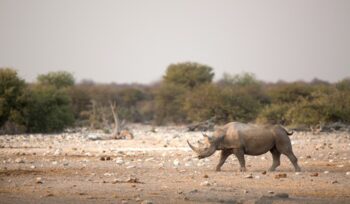
Rhinos return to Uganda’s wild after 43 years of absence
Uganda rhino reintroduction marks a historic milestone: wild rhinoceroses are roaming Ugandan soil for the first time in over 40 years. In 2026, rhinos bred at Ziwa Rhino Sanctuary were released into Kidepo Valley National Park, ending an absence caused entirely by poaching and political collapse during the Idi Amin era. The release represents decades of careful breeding, conservation funding, and community engagement. For local communities, conservationists, and a watching world, it proves that deliberate, sustained human effort can reverse even the most painful wildlife losses.
