At a glance
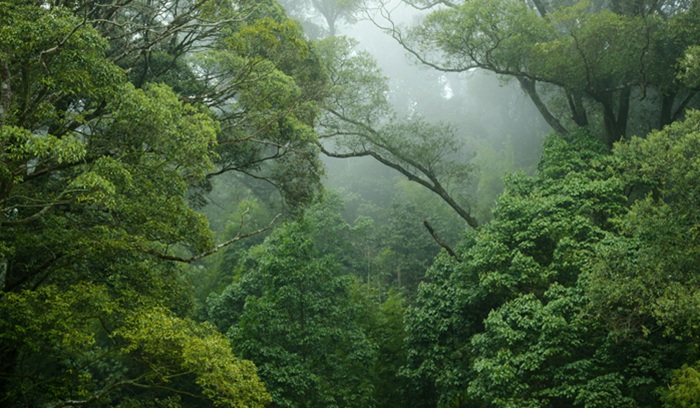
- Mayan forest: The Maya Forest spans southern Mexico, northern Guatemala, and western Belize — one of the largest continuous tropical forests remaining in the Americas, home to ancient cities like Tikal and Calakmul.
- Biocultural corridor: The new corridor integrates ecological protection with Indigenous cultural heritage, giving environmental and Indigenous representatives formal roles in governance of the protected zone.
- Deforestation threat: Illegal logging, land encroachment, and large-scale infrastructure projects have eroded forest cover in recent decades, making the agreement urgent.
Why this forest matters
The Maya Forest is not just a patch of trees. It is one of the most biologically rich regions in the Western Hemisphere, and it holds the archaeological legacy of a civilization that flourished for more than 3,000 years. The forest stretches across three countries and provides habitat for more than 200 species of mammals, 500 species of birds, and hundreds of reptile and amphibian species. The jaguar — a symbol of Mayan cosmology and now a threatened species — depends on the unbroken corridors of forest that this agreement aims to preserve. So do tapirs, spider monkeys, and the resplendent quetzal. Beyond wildlife, the forest is home to Maya descendants and other Indigenous communities whose land stewardship has helped keep the ecosystem intact for generations. Research consistently shows that Indigenous-managed lands protect biodiversity more effectively than many government-designated reserves. The corridor’s governance structure acknowledges this directly by placing Indigenous representatives in formal oversight roles.What the three countries agreed to do
Mexican President Claudia Sheinbaum, Guatemalan President Bernardo Arévalo, and Belizean Prime Minister Johnny Briceño each described the agreement as historic. The word is not an overstatement. The corridor covers roughly 14 million acres — an area larger than Costa Rica. Under the agreement, the three governments pledged to strengthen enforcement against illegal logging and land encroachment, reject development projects that cannot demonstrate environmental compatibility, and fund sustainable economic alternatives for communities inside the corridor. Eco-tourism, sustainable agriculture, and forest stewardship programs are among the approaches on the table. The three nations also agreed that any future infrastructure project within the corridor must pass rigorous environmental review. That commitment matters because Mexico’s Maya Train — a controversial high-speed rail line running through southern Mexico — has already drawn criticism from environmental groups and some Maya communities for the forest clearing it required. The corridor agreement represents, at minimum, a political commitment to prevent similar decisions from proceeding without scrutiny.The biocultural dimension
Conservation agreements often focus on species and hectares. This one goes further by explicitly linking ecological protection to cultural preservation. The Maya Forest is not wilderness in the colonial sense — it never was. It is a landscape shaped over millennia by human communities whose agricultural knowledge, forestry practices, and spiritual relationships with the land contributed directly to its biodiversity. The corridor’s formal recognition of that history is a meaningful departure from older conservation models that treated Indigenous communities as obstacles rather than partners. Governance structures will include Indigenous and community representatives alongside government officials and environmental scientists. The Nature Conservancy, which has worked in the Maya Forest for decades, noted that community buy-in is among the most reliable predictors of long-term conservation success.Real challenges remain
The agreement is a beginning, not an outcome. Drug trafficking organizations operate in parts of the Maya Forest, using remote forest corridors for movement and land laundering. Illegal logging has not stopped. And the political will of three governments — each facing its own domestic pressures — will need to hold across multiple election cycles for the corridor to reach its potential. The Maya Train debate also remains unresolved. Critics argue that the infrastructure already built has done lasting damage to ecosystems and Maya heritage sites, and that a new agreement cannot undo that. Proponents counter that managed tourism along the rail line could fund conservation if revenue is directed appropriately. WWF’s Maya Forest program has called for transparent monitoring of corridor commitments, with independent verification rather than self-reporting by governments. Still, the scale and ambition of what was announced in Calakmul on August 15, 2025 C.E. is real. Three nations with different political systems, different pressures, and a complicated shared history agreed — in public, together — to protect a forest that belongs to all of them and to no one. That matters.A model for regional conservation
International conservation agreements rarely move at the speed the climate requires. This one moved. The Great Mayan Jungle Biocultural Corridor joins a small but growing list of transboundary protected areas where neighboring countries have chosen cooperation over competition. Reuters reported that the announcement drew immediate praise from conservation organizations across Latin America, with several calling it the most significant forest protection commitment in the region in years. Regional observers noted that the biocultural framing — protection of both nature and culture as inseparable — could offer a template for other Indigenous-occupied landscapes under pressure. The Maya Forest survived the collapse of the Classic Maya civilization. It survived colonization. It survived the chainsaw era of the 20th century, barely. Whether it survives the 21st century depends on agreements like this one being kept.Read more
For more from Good News for Humankind, see:
- Indigenous land rights and 160 million hectares at COP30
- Alzheimer’s risk cut in half in landmark trial
- The Good News for Humankind archive on conservation
About this article
- 🤖 This article is AI-generated, based on a framework created by Peter Schulte.
- 🌍 It aims to be inspirational but clear-eyed, accurate, and evidence-based, and grounded in care for the Earth, peace and belonging for all, and human evolution.
- 💬 Leave your notes and suggestions in the comments — I will do my best to review and implement where appropriate and possible.
- 📬 One verified piece of good news, one insight from Antihero Project, every weekday morning. Subscribe free.
More Good News
-
Canada commits .8 billion to protect 30% of its lands and waters by 2030
Canada has announced a .8 billion investment to protect 30% of its lands and waters by 2030, one of the largest conservation commitments in the country’s history. Prime Minister Mark Carney unveiled the funding to meet international biodiversity targets, with Indigenous communities playing a central role in stewarding conserved lands. The announcement positions Canada as a global leader in nature protection at a moment when biodiversity loss is accelerating worldwide.
-
132 nations add 40 migratory species to UN protection list in historic summit
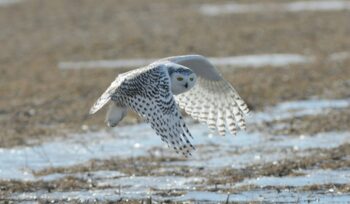
One hundred thirty-two nations extended international legal protection to 40 new migratory species at the UN Convention on the Conservation of Migratory Species COP15 summit in Campo Grande, Brazil, on March 29, 2026. The newly protected animals include the snowy owl, giant otter, striped hyena, and great hammerhead shark. A new UN report released at the summit found that 49% of populations already covered by the treaty are in decline, raising the stakes for implementation between now and the next conference in 2029.
-
For the first time, human-caused extinction rate falls below 0.001%
In this speculative 2090 C.E. vision, scientists confirm the human-caused extinction rate has fallen below 0.001% per year — a 100-fold reduction from its worst peak, driven by rewilding, Indigenous stewardship, and the global clean energy transition.