
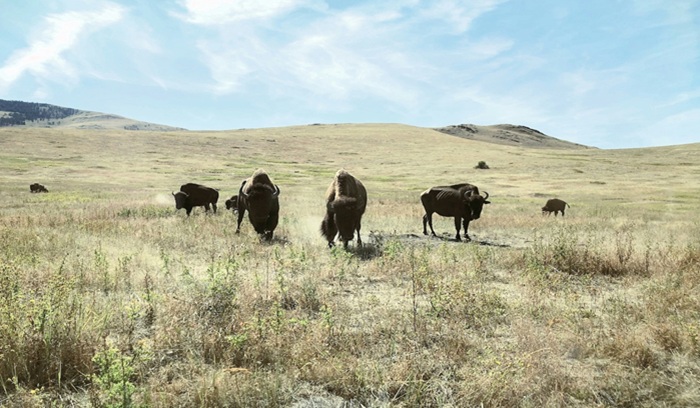
A massive rewilding effort in Montana has achieved a significant milestone for wildlife conservation. The American Prairie Reserve has successfully removed over 100 miles of derelict fencing across the Great Plains. This project, driven by volunteers and conservationists, is restoring the natural landscape to its original, open state. It is a powerful example of how removing human infrastructure can directly benefit biodiversity.
The removal of these fences is critical for the free movement of wildlife. For decades, abandoned barbed wire has posed a deadly hazard to animals and fragmented their habitats. This initiative reconnects vast stretches of prairie, allowing nature to function as it should.
Unlocking Ancient Migration Corridors
The primary positive impact of this project is the restoration of ancient migration corridors. Species like pronghorn antelope, elk, and deer rely on the ability to move freely across the landscape to find food and mates. Pronghorn, in particular, are known to struggle with fences, often crawling under them rather than jumping, which leads to injury or death.
By clearing these barriers, the project ensures that these animals can follow their instinctual paths without obstruction. This increased connectivity is vital for genetic diversity and population health. It allows herds to adapt to changing weather patterns and food availability. The National Wildlife Federation highlights the critical importance of wildlife corridors for species survival.
A Victory for Safety and Aesthetics
Beyond the biological benefits, removing derelict fencing improves the safety and aesthetics of the landscape. Old, rusting wire is a danger not only to wildlife but also to livestock and humans who use the land for recreation. Clearing this debris removes a significant liability and restores the visual beauty of the open plains.
The project also involves the modification of necessary fences to be “wildlife-friendly.” This means installing smooth bottom wires that allow animals to pass under safely. This pragmatic approach balances the needs of working ranches with the needs of wild species. It demonstrates that agriculture and conservation can coexist.
The Power of Volunteer Stewardship
This achievement is a testament to the power of volunteer stewardship. Hundreds of individuals have donated their time and labor to physically roll up and remove tons of wire. This hands-on involvement fosters a deep connection between the public and the land.
It empowers citizens to be active participants in ecological restoration. The physical effort required to remove miles of fencing is immense, making this milestone a true labor of love. This collective action builds a community of conservationists dedicated to the long-term health of the prairie. The American Prairie Reserve provides details on how volunteers drive these restoration efforts.
A Model for Landscape-Scale Conservation
The fence removal project is part of a larger vision to create the largest nature reserve in the contiguous United States. It serves as a model for landscape-scale conservation that can be replicated in other regions. By focusing on connectivity, the project addresses one of the biggest threats to wildlife in the modern world: habitat fragmentation.
This success proves that restoration doesn’t always require planting new things; sometimes it means taking old things away. It is a hopeful reminder that we can undo past damages to our environment. The World Wildlife Fund (WWF) supports similar connectivity initiatives globally. Furthermore, the Center for Large Landscape Conservation offers science and policy guidance on connecting habitats.
Resources
- National Wildlife Federation on Wildlife Corridors
- American Prairie Reserve on Fence Removal Projects
- World Wildlife Fund (WWF) on Global Connectivity
- Center for Large Landscape Conservation on Connectivity Science
More Good News
-

Alzheimer’s risk cut in half by drug in landmark prevention trial
A clinical trial from Washington University in St. Louis and published in The Lancet Neurology found that long-term high-dose treatment with the antibody drug gantenerumab reduced Alzheimer’s risk by roughly 50% in people with dominantly inherited Alzheimer’s disease — a rare genetic form caused by mutations that make the disease near-certain. The results are statistically uncertain and apply to less than 1% of all Alzheimer’s cases, but they provide the first evidence that removing amyloid plaques before symptoms appear can meaningfully change the course of the disease.
-

Marie-Louise Eta becomes the first female head coach in men’s top-flight European football
Marie-Louise Eta, 34, was appointed head coach of Bundesliga side Union Berlin on April 12, 2026, becoming the first woman to hold the top coaching position at a men’s club in any of Europe’s Big Five leagues — the Premier League, La Liga, Serie A, Ligue 1, and Bundesliga. A Champions League winner as a player with Turbine Potsdam in 2010, Eta had already broken barriers as the first female assistant coach in the Bundesliga in 2023. She takes charge for the final five matches of the season as Union Berlin fights to secure top-flight survival, after which she was…
-
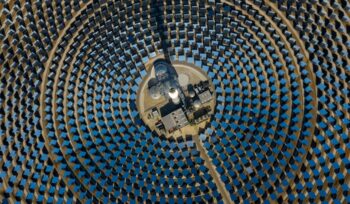
Renewables now make up at least 49% of global power capacity
Renewable energy reached 49.4% of total global installed power capacity by end of 2025, up from 46.3% in 2024, according to the International Renewable Energy Agency’s Renewable Capacity Statistics 2026. The world added 692 gigawatts of new renewable capacity last year — the largest annual addition ever recorded — with solar alone contributing 511 gigawatts. Africa recorded its highest renewable expansion on record, and the Middle East its fastest-ever growth. IRENA Director-General Francesco La Camera noted that countries investing in renewables are absorbing the current Middle East energy crisis with measurably less economic damage than fossil-fuel-dependent economies.
-

Global suicide rate has fallen by 40% since 1995
A landmark study published in The Lancet Public Health by researchers at the Institute for Health Metrics and Evaluation at the University of Washington found that the global age-standardized suicide mortality rate fell nearly 40% between 1990 and 2021 — from 15 deaths per 100,000 people to nine. The decline was driven by measurable interventions including restrictions on toxic pesticides, expanded mental health services, and national prevention strategies. Female suicide rates fell more than 50% globally over the period. Roughly 740,000 people still die by suicide each year, and rates have risen in parts of Latin America and North America,…
-
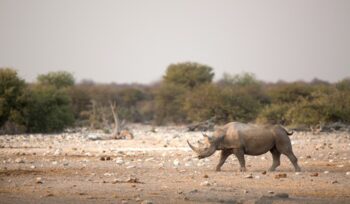
Rhinos are reintroduced back into Uganda’s wild after 43 years
The Uganda Wildlife Authority havetranslocated the first southern white rhinos to Kidepo Valley National Park — 43 years after the last rhino in the park was killed by poachers in 1983. The animals came from Ziwa Rhino Sanctuary, a breeding program established in 2005 with just six individuals that has grown Uganda’s total rhino population to 61. Four more rhinos will follow by May, with a separate group already relocated to Ajai Wildlife Reserve in January 2026. The reintroduction restores a key grazing species to one of Africa’s most remote savannah ecosystems and makes Kidepo the only national park in…
