

Kenya’s Eldoret High Court has delivered a groundbreaking decision affirming the dignity and rights of transgender people. The case was brought by activist Shieys Chepkosgei, who was arrested in 2019 on charges of “impersonation” despite holding identity documents consistent with her gender. While in custody, she was subjected to humiliating and invasive medical procedures intended to “verify” her gender.
In its ruling, the court declared these practices unconstitutional, violating her rights to dignity, privacy, and freedom from degrading treatment. It awarded her one million Kenyan shillings (around $7,700) in damages and, most significantly, directed Parliament to draft a Transgender Protection Rights Act or amend existing laws to explicitly safeguard transgender Kenyans (LGBTQ Nation).
Why the Case Matters
Until now, transgender Kenyans have lived without any formal legal protections. This absence left many vulnerable to police harassment, denial of healthcare, and barriers to employment, housing, and education. The court’s ruling directly addresses that gap by mandating national legislation that recognizes gender identity and protects against discrimination.
Advocates say the decision sets a historic precedent, not only in Kenya but across Africa. As Mamba Online reports, this is the first judicial directive on the continent to require a transgender rights law. For many LGBTQ+ activists, the ruling represents a shift from invisibility and criminalization toward recognition and dignity.
A Step Toward Equality
The ruling comes in a country where homosexuality remains criminalized and LGBTQ+ people face significant risks of violence and discrimination. Yet by instructing Parliament to act, the High Court has created an opening for systemic change. If lawmakers follow through, Kenya could join the growing number of countries that enshrine protections for transgender citizens in law.
Organizations like Jinsiangu stress that strong, inclusive legislation would help guarantee access to basic rights and reduce widespread stigma. While challenges remain, the court’s ruling shows that progress is possible even in difficult environments.
Looking Ahead
Kenya’s government now has the responsibility to translate the court’s directive into tangible law. This will require courage, advocacy, and coalition-building, but it also offers an opportunity for Kenya to demonstrate leadership on human rights in the region. As Human Dignity Trust notes, international law increasingly recognizes gender identity as a protected category, and Kenya’s ruling could inspire similar progress elsewhere.
For now, activists are celebrating the decision as both a legal and symbolic victory. It affirms that transgender Kenyans exist, that their rights matter, and that the constitution can serve as a shield against discrimination. It is a hopeful step toward a future where all people in Kenya can live openly, safely, and with dignity.
More Good News
-

Alzheimer’s risk cut in half by drug in landmark prevention trial
A clinical trial from Washington University in St. Louis and published in The Lancet Neurology found that long-term high-dose treatment with the antibody drug gantenerumab reduced Alzheimer’s risk by roughly 50% in people with dominantly inherited Alzheimer’s disease — a rare genetic form caused by mutations that make the disease near-certain. The results are statistically uncertain and apply to less than 1% of all Alzheimer’s cases, but they provide the first evidence that removing amyloid plaques before symptoms appear can meaningfully change the course of the disease.
-

Marie-Louise Eta becomes the first female head coach in men’s top-flight European football
Marie-Louise Eta, 34, was appointed head coach of Bundesliga side Union Berlin on April 12, 2026, becoming the first woman to hold the top coaching position at a men’s club in any of Europe’s Big Five leagues — the Premier League, La Liga, Serie A, Ligue 1, and Bundesliga. A Champions League winner as a player with Turbine Potsdam in 2010, Eta had already broken barriers as the first female assistant coach in the Bundesliga in 2023. She takes charge for the final five matches of the season as Union Berlin fights to secure top-flight survival, after which she was…
-

Renewables now make up at least 49% of global power capacity
Renewable energy reached 49.4% of total global installed power capacity by end of 2025, up from 46.3% in 2024, according to the International Renewable Energy Agency’s Renewable Capacity Statistics 2026. The world added 692 gigawatts of new renewable capacity last year — the largest annual addition ever recorded — with solar alone contributing 511 gigawatts. Africa recorded its highest renewable expansion on record, and the Middle East its fastest-ever growth. IRENA Director-General Francesco La Camera noted that countries investing in renewables are absorbing the current Middle East energy crisis with measurably less economic damage than fossil-fuel-dependent economies.
-

Global suicide rate has fallen by 40% since 1995
A landmark study published in The Lancet Public Health by researchers at the Institute for Health Metrics and Evaluation at the University of Washington found that the global age-standardized suicide mortality rate fell nearly 40% between 1990 and 2021 — from 15 deaths per 100,000 people to nine. The decline was driven by measurable interventions including restrictions on toxic pesticides, expanded mental health services, and national prevention strategies. Female suicide rates fell more than 50% globally over the period. Roughly 740,000 people still die by suicide each year, and rates have risen in parts of Latin America and North America,…
-
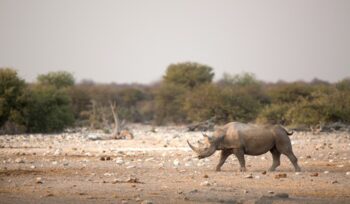
Rhinos are reintroduced back into Uganda’s wild after 43 years
The Uganda Wildlife Authority havetranslocated the first southern white rhinos to Kidepo Valley National Park — 43 years after the last rhino in the park was killed by poachers in 1983. The animals came from Ziwa Rhino Sanctuary, a breeding program established in 2005 with just six individuals that has grown Uganda’s total rhino population to 61. Four more rhinos will follow by May, with a separate group already relocated to Ajai Wildlife Reserve in January 2026. The reintroduction restores a key grazing species to one of Africa’s most remote savannah ecosystems and makes Kidepo the only national park in…