
The World Health Organization (WHO) has validated Kenya as having eliminated human African trypanosomiasis (HAT), also known as sleeping sickness, as a public health problem. This milestone makes Kenya the tenth country worldwide to reach this level of success—and underscores the sustained, decades-long effort behind it, according to The Star Kenya.
A long fight comes to a milestone
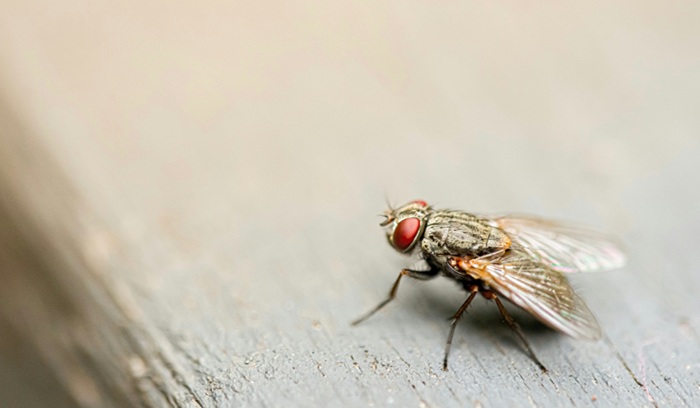
Sleeping sickness, caused by the parasite Trypanosoma brucei rhodesiense, is transmitted by tsetse flies and progresses rapidly—if untreated, it is usually fatal within weeks (WHO). Kenya’s trypanosomiasis battle stretches back to the early 20th century, with the last locally transmitted case reported in 2009, and the final two exported cases tied to the Maasai Mara reserve recorded in 2012, according to Kenya News Agency.
How Kenya achieved it
Kenya’s achievement reflects years of coordinated efforts:
- Enhanced surveillance and diagnostics: The country established 12 sentinel health facilities in six historically affected counties, equipping them with advanced diagnostic tools and training staff in sensitive tests for r-HAT (The Star).
- Vector and animal monitoring: Efforts to monitor and control tsetse fly populations and animal trypanosomiasis were scaled up, with support from the Kenya Tsetse and Trypanosomiasis Eradication Council (KENTTEC).
- Post-elimination preparedness: Kenya submitted its elimination dossier in 2023 and received WHO validation in June 2025. The country now implements a post-validation surveillance plan, supported by FIND, with WHO keeping a reserve of treatments from Bayer and Sanofi ready for quick response.
Recognition and shared success
At the celebration, Health Cabinet Secretary Aden Duale highlighted that this achievement demonstrates Kenya’s leadership, scientific rigor, and community-driven action (Kenya News Agency). WHO Director-General Dr Tedros Adhanom Ghebreyesus called it “another step toward making Africa free of neglected tropical diseases.”
This is Kenya’s second victory over neglected tropical diseases, following the eradication of Guinea worm disease in 2018. With Kenya’s success, a total of ten countries—including Benin, Chad, Côte d’Ivoire, Equatorial Guinea, Ghana, Guinea, Rwanda, Togo, and Uganda—have now eliminated HAT as a public health problem. Overall, 57 countries have achieved elimination of at least one neglected tropical disease, according to Down to Earth.
Keeping elimination going
While this is a remarkable achievement, it is not the end of the story. Experts stress that HAT elimination does not mean eradication—rare cases may still arise. That makes ongoing vigilance essential. Kenya plans to maintain robust surveillance, strengthen integrated disease control, and invest in rapid response through its National Public Health Institute (NPHI).
Why it matters
Sleeping sickness was once a devastating rural scourge, causing confusion, coma, and death. Its elimination bolsters health security, protects vulnerable communities, and enables renewed economic development. Kenya’s success showcases how sustained political will, science, and community engagement can crush even the deadliest diseases (The Star).
Globally, this milestone contributes to the WHO’s Roadmap for Neglected Tropical Diseases 2021–2030, which aims to eliminate at least one NTD in 100 countries by 2030. With less than five years to go, progress like Kenya’s will be crucial—especially as funding for NTD programs faces pressure.
More Good News
-

Alzheimer’s risk cut in half by drug in landmark prevention trial
A clinical trial from Washington University in St. Louis and published in The Lancet Neurology found that long-term high-dose treatment with the antibody drug gantenerumab reduced Alzheimer’s risk by roughly 50% in people with dominantly inherited Alzheimer’s disease — a rare genetic form caused by mutations that make the disease near-certain. The results are statistically uncertain and apply to less than 1% of all Alzheimer’s cases, but they provide the first evidence that removing amyloid plaques before symptoms appear can meaningfully change the course of the disease.
-

Marie-Louise Eta becomes the first female head coach in men’s top-flight European football
Marie-Louise Eta, 34, was appointed head coach of Bundesliga side Union Berlin on April 12, 2026, becoming the first woman to hold the top coaching position at a men’s club in any of Europe’s Big Five leagues — the Premier League, La Liga, Serie A, Ligue 1, and Bundesliga. A Champions League winner as a player with Turbine Potsdam in 2010, Eta had already broken barriers as the first female assistant coach in the Bundesliga in 2023. She takes charge for the final five matches of the season as Union Berlin fights to secure top-flight survival, after which she was…
-

Renewables now make up at least 49% of global power capacity
Renewable energy reached 49.4% of total global installed power capacity by end of 2025, up from 46.3% in 2024, according to the International Renewable Energy Agency’s Renewable Capacity Statistics 2026. The world added 692 gigawatts of new renewable capacity last year — the largest annual addition ever recorded — with solar alone contributing 511 gigawatts. Africa recorded its highest renewable expansion on record, and the Middle East its fastest-ever growth. IRENA Director-General Francesco La Camera noted that countries investing in renewables are absorbing the current Middle East energy crisis with measurably less economic damage than fossil-fuel-dependent economies.
-

Global suicide rate has fallen by 40% since 1995
A landmark study published in The Lancet Public Health by researchers at the Institute for Health Metrics and Evaluation at the University of Washington found that the global age-standardized suicide mortality rate fell nearly 40% between 1990 and 2021 — from 15 deaths per 100,000 people to nine. The decline was driven by measurable interventions including restrictions on toxic pesticides, expanded mental health services, and national prevention strategies. Female suicide rates fell more than 50% globally over the period. Roughly 740,000 people still die by suicide each year, and rates have risen in parts of Latin America and North America,…
-
Rhinos are reintroduced back into Uganda’s wild after 43 years
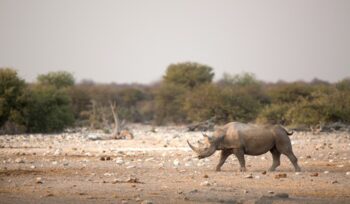
The Uganda Wildlife Authority havetranslocated the first southern white rhinos to Kidepo Valley National Park — 43 years after the last rhino in the park was killed by poachers in 1983. The animals came from Ziwa Rhino Sanctuary, a breeding program established in 2005 with just six individuals that has grown Uganda’s total rhino population to 61. Four more rhinos will follow by May, with a separate group already relocated to Ajai Wildlife Reserve in January 2026. The reintroduction restores a key grazing species to one of Africa’s most remote savannah ecosystems and makes Kidepo the only national park in…