Kansas is taking a significant step toward improving transparency and support for survivors of sexual assault. The state’s Bureau of Investigation (KBI) has launched a new, statewide electronic tracking system for sexual assault evidence kits, often called rape kits. This innovative system allows survivors to privately track the location and testing status of their own evidence kits in real time. This move is a major victory for accountability and compassion within the justice system.
The new technology addresses a long-standing issue that has caused anxiety for many survivors. Previously, victims often had no way of knowing where their kits were in the lengthy testing process. The ability to track the kits provides a greater sense of control and clarity during a difficult time. This initiative signals a clear commitment from state law enforcement to prioritize the needs and healing of survivors.
Empowering Survivors Through Transparency
The immediate positive impact of this system is the empowerment of survivors. Giving victims direct, up-to-date access to information about their evidence kit is a crucial step in restorative justice. This transparency reduces uncertainty and alleviates the distress of waiting months or years for answers. It acknowledges the survivor’s right to full information about the forensic evidence collected in their case.
The system works by assigning a unique tracking code to each kit when it is first collected at a hospital or clinic. This code allows the survivor to access a secure, online portal to view key status updates. These updates include when the kit is transferred to law enforcement, received by the KBI lab for testing, and when the analysis is completed. This mechanism ensures that victims are no longer left in the dark about critical evidence in their own cases. You can read more about the development of these systems in this Justice Department overview on tracking technology.
A Commitment to Accountability and Efficiency
This technological upgrade is a major victory for accountability across the criminal justice system. The tracking system creates an audit trail for every kit, from the hospital bedside to the forensic lab. This process ensures that evidence is handled efficiently and helps prevent the kind of backlogs that have historically plagued crime labs. By improving the efficiency of evidence processing, the system accelerates the timeline for investigations. This benefits both survivors seeking closure and prosecutors pursuing timely justice.
The implementation of this system demonstrates a strong commitment from the Kansas Bureau of Investigation (KBI) to modernizing forensic practices. This new level of accountability ensures that the evidence entrusted to the state is treated with the highest priority. It is a positive sign of collaboration between the medical community and law enforcement. This partnership helps streamline the initial reporting and collection process for sexual assault cases.
Advancing Justice and Healing
The launch of the tracking system is part of a broader, positive trend toward prioritizing the trauma-informed care of survivors. When a victim chooses to undergo a forensic exam, they are taking a courageous step in the pursuit of justice. Providing them with a secure tracking system honors that courage and commitment. It shifts the power dynamic. It gives the survivor, rather than the police or the lab, the control over the flow of information regarding their evidence.
This initiative sets a strong standard for other states. Many other states are currently working to implement similar laws, often due to pressure from victim advocacy groups. Kansas’s success provides a working model for effective implementation. It proves that technology can be leveraged to achieve meaningful social change and facilitate healing. The continuous effort to eliminate backlogs and enhance transparency is a source of hope for survivors across the nation. Organizations like the Rape, Abuse & Incest National Network (RAINN) have long advocated for these systemic changes.
Resources
- Kansas Bureau of Investigation (KBI) Official Website
- National Sexual Assault Hotline – RAINN
- National Institute of Justice (NIJ) on Evidence Management
- Kansas Coalition Against Sexual & Domestic Violence (KCSDV)
More Good News
-
Alzheimer’s risk cut in half by drug in landmark prevention trial
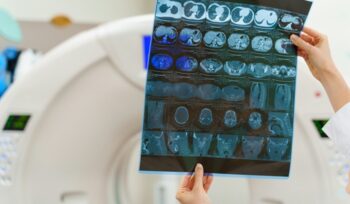
A clinical trial from Washington University in St. Louis and published in The Lancet Neurology found that long-term high-dose treatment with the antibody drug gantenerumab reduced Alzheimer’s risk by roughly 50% in people with dominantly inherited Alzheimer’s disease — a rare genetic form caused by mutations that make the disease near-certain. The results are statistically uncertain and apply to less than 1% of all Alzheimer’s cases, but they provide the first evidence that removing amyloid plaques before symptoms appear can meaningfully change the course of the disease.
-

Marie-Louise Eta becomes the first female head coach in men’s top-flight European football
Marie-Louise Eta, 34, was appointed head coach of Bundesliga side Union Berlin on April 12, 2026, becoming the first woman to hold the top coaching position at a men’s club in any of Europe’s Big Five leagues — the Premier League, La Liga, Serie A, Ligue 1, and Bundesliga. A Champions League winner as a player with Turbine Potsdam in 2010, Eta had already broken barriers as the first female assistant coach in the Bundesliga in 2023. She takes charge for the final five matches of the season as Union Berlin fights to secure top-flight survival, after which she was…
-

Renewables now make up at least 49% of global power capacity
Renewable energy reached 49.4% of total global installed power capacity by end of 2025, up from 46.3% in 2024, according to the International Renewable Energy Agency’s Renewable Capacity Statistics 2026. The world added 692 gigawatts of new renewable capacity last year — the largest annual addition ever recorded — with solar alone contributing 511 gigawatts. Africa recorded its highest renewable expansion on record, and the Middle East its fastest-ever growth. IRENA Director-General Francesco La Camera noted that countries investing in renewables are absorbing the current Middle East energy crisis with measurably less economic damage than fossil-fuel-dependent economies.