
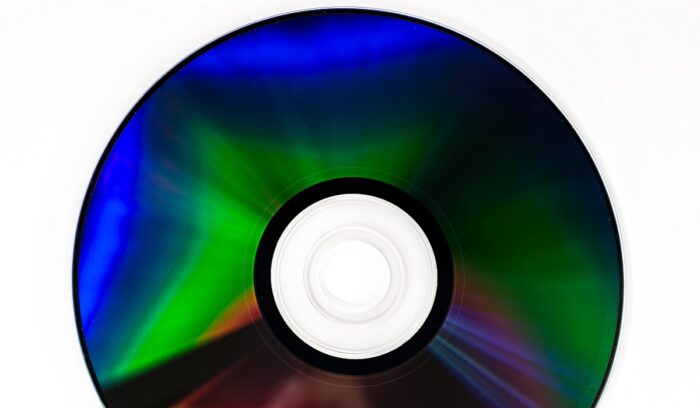
In 1966 C.E., an American inventor named James T. Russell filed a patent application for something the world had never quite seen before: a system that could record and read digital information using light on a photosensitive plate. It was a quiet, technical moment — no fanfare, no headlines. But the idea Russell set down on paper would eventually make its way, through decades of litigation, into the hands of Sony and Philips, and into the compact disc players that sat in living rooms around the world.
What the evidence shows
- Digital optical recording: Russell filed his patent application in 1966 C.E. and was granted a patent in 1970 C.E. for a system that stored digital data on a photosensitive plate read by light — the foundational concept behind optical disc technology.
- Patent licensing: After years of litigation, Sony and Philips licensed Russell’s patents in 1988 C.E., acknowledging the legal weight of his earlier work even as the CD’s design had evolved significantly beyond his original prototypes.
- Optical disc lineage: Scholars debate how directly Russell’s concepts influenced the CD’s final engineering — the CD reads from a reflective layer through a protective substrate, a design approach distinct from Russell’s photosensitive plate — but his priority in the field is recognized.
The problem Russell was trying to solve
By the mid-1960s C.E., audio recording meant physical contact: a needle dragging through a groove, wearing down both the stylus and the record with every play. Russell wanted to eliminate that friction entirely. His insight was that if you could encode information as patterns of light and dark — binary data — you could read it back without ever touching the surface.
It was a genuinely radical idea for 1966 C.E. Digital audio storage wasn’t on most engineers’ radar yet. The tools to make it commercially viable — compact lasers, fast processors, affordable disc manufacturing — were still years away. Russell had the concept before the infrastructure existed to realize it.
His patent described a binary recording system using a photosensitive medium and a light beam for playback. The underlying logic — encode data optically, read it non-destructively — is recognizably the ancestor of what Sony and Philips would eventually build into the compact disc standard published in 1980 C.E.
How the CD actually got built
Russell’s work was foundational in concept, but the CD’s engineering came from a different direction. Philips had been developing optical disc technology through its LaserDisc research, which used a laser to read a reflective disc rather than a photosensitive one. Sony, meanwhile, had been developing digital audio recording through Japan’s national broadcaster NHK, and by 1976 C.E. had publicly demonstrated a working optical digital audio disc.
In 1979 C.E., Sony and Philips formed a joint task force. Engineers Kees Schouhamer Immink and Toshitada Doi led the work that produced the Red Book CD-DA standard, published in 1980 C.E. The format that reached consumers in Japan in October 1982 C.E. was the result of thousands of technical decisions made by engineers on two continents — choices about error correction, encoding, disc diameter, and sampling rate that Russell’s 1966 C.E. patent didn’t address.
Still, when Sony and Philips chose to license Russell’s patents in 1988 C.E. rather than fight the litigation further, they confirmed that his claim on the basic concept had legal standing.
Lasting impact
The compact disc went on to reshape the global music industry. By 1991 C.E., it had outsold vinyl records and cassette tapes in the United States. By 2000 C.E., CDs accounted for more than 92% of the U.S. music market. Worldwide, over 200 billion CDs had been sold by 2007 C.E.
But the technology’s reach extended well beyond music. The CD-ROM brought optical data storage to personal computers at a moment when hard drives were expensive and limited. From there came CD-R, CD-RW, DVD, Blu-ray, and the entire lineage of optical data storage that underpins how the world has backed up, distributed, and archived digital information for decades.
Russell’s 1966 C.E. patent sits at the beginning of that lineage — not as the blueprint for any specific product, but as the first formal claim that digital data could be stored and retrieved using light.
Blindspots and limits
Russell worked in relative obscurity for years while better-funded corporate laboratories moved optical disc technology from concept to product. His patents were licensed only after litigation — a reminder that the gap between invention and recognition is often wide, and that independent inventors frequently see the value of their work captured by institutions with the resources to commercialize it.
It’s also worth acknowledging that the CD’s dominance came at a cost: the shift from vinyl to digital audio was accompanied by significant disruption in manufacturing, retail, and the economics of the music industry — disruptions that hit smaller distributors, independent labels, and artists at the margins of the commercial system hardest. The long-term effect on music economics remains contested. And even the CD’s own era proved temporary — within two decades of its peak, streaming platforms had begun displacing it as comprehensively as it had once displaced vinyl.
Read more
For more on this story, see: Wikipedia — Compact disc
For more from Good News for Humankind, see:
- ‘Radical’ solar technology breakthrough allows energy to be stored for up to 18 years
- Assyrian engineers build the world’s first sophisticated long-distance canal systems
- The Good News for Humankind archive on the modern age
About this article
- 🤖 This article is AI-generated, based on a framework created by Peter Schulte.
- 🌍 It aims to be inspirational but clear-eyed, accurate, and evidence-based, and grounded in care for the Earth, peace and belonging for all, and human evolution.
- 💬 Leave your notes and suggestions in the comments below — I will do my best to review and implement where appropriate.
- ✉️ One verified piece of good news, one insight from Antihero Project, every weekday morning. Subscribe free.


