
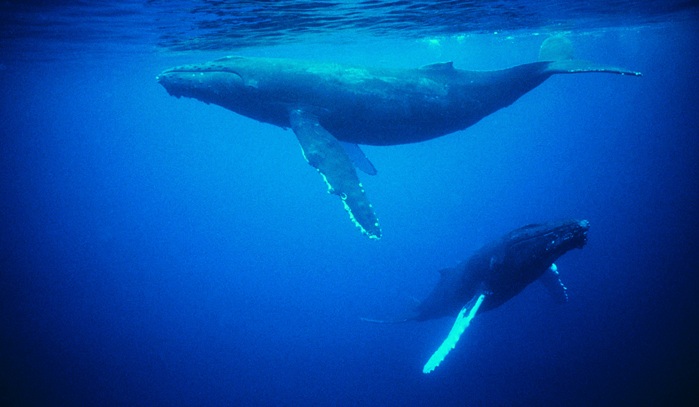
A landmark decision has paved the way for a new era of ocean conservation in the Atlantic. In a historic vote, delegates at the International Union for Conservation of Nature (IUCN) World Conservation Congress overwhelmingly approved the creation of the Macaronesia Sanctuary. This transnational Marine Protected Area (MPA) will span the waters of the Canary Islands, the Azores, Madeira, and Cape Verde. The approval, supported by 96.5% of voters, marks a decisive victory for international cooperation and biodiversity protection.
This ambitious initiative is the result of over four decades of advocacy and scientific research. It demonstrates a powerful, unified commitment to safeguarding one of the world’s most vital marine corridors. The sanctuary represents a shared aspiration between science, institutions, and society.
A Critical Refuge for Marine Life
The Macaronesia region is a biodiversity hotspot of global importance. It is home to 32 species of cetaceans, representing 84% of all whale and dolphin species found in the North Atlantic. The new sanctuary will serve as a critical corridor for these migrating marine mammals. Protecting this area ensures safe passage and feeding grounds for these iconic species.
The sanctuary aims to shield marine life from increasing human pressures. These threats include intense maritime traffic, underwater noise pollution, and industrial fishing. By establishing strict protections, the sanctuary will help restore the ecological balance of the region. This action directly supports the recovery of species that were once on the brink of extinction.
Uniting Nations for Ocean Health
The creation of the Macaronesia Sanctuary is a triumph of cross-border collaboration. It unites the governments of Spain, Portugal, and Cape Verde in a shared mission to protect their common ocean heritage. This transnational model of governance is a powerful example of how nations can work together to solve complex environmental challenges. It blends science, policy, and community engagement to ensure long-term success.
The initiative builds on a strong foundation of academic cooperation. Public universities across the Macaronesia region have signed a Marine Biodiversity Manifesto. This alliance promotes research and training to support conservation efforts. This scientific backing ensures that management decisions are based on the best available data.
A Model for Global Ocean Governance
With the backing of the IUCN, the Macaronesia Sanctuary is poised to become a global model for marine governance. It proves that large-scale, multi-national conservation projects are both politically feasible and scientifically sound. This success provides a blueprint for other regions seeking to protect shared marine resources. It reinforces the importance of international frameworks in achieving global biodiversity goals.
This historic vote moves the world closer to achieving the “30×30” target. This global goal aims to protect 30% of the planet’s oceans by 2030. The sanctuary’s establishment is a tangible step toward realizing this vision. It offers hope that with persistent advocacy and cooperation, we can secure a healthy future for our oceans. You can read more about the region’s biodiversity from the Loro Parque Fundación. The International Union for Conservation of Nature (IUCN) provides global context on marine protected areas. For details on the specific threats facing Atlantic cetaceans, the North Atlantic Marine Mammal Commission offers extensive research. Furthermore, the OSPAR Commission works to protect the marine environment of the North-East Atlantic.
Resources
- Loro Parque Fundación on Macaronesia Conservation
- International Union for Conservation of Nature (IUCN) on Marine Protected Areas
- North Atlantic Marine Mammal Commission (NAMMCO) on Cetacean Research
- OSPAR Commission on North-East Atlantic Protection
More Good News
-

Alzheimer’s risk cut in half by drug in landmark prevention trial
A clinical trial from Washington University in St. Louis and published in The Lancet Neurology found that long-term high-dose treatment with the antibody drug gantenerumab reduced Alzheimer’s risk by roughly 50% in people with dominantly inherited Alzheimer’s disease — a rare genetic form caused by mutations that make the disease near-certain. The results are statistically uncertain and apply to less than 1% of all Alzheimer’s cases, but they provide the first evidence that removing amyloid plaques before symptoms appear can meaningfully change the course of the disease.
-

Marie-Louise Eta becomes the first female head coach in men’s top-flight European football
Marie-Louise Eta, 34, was appointed head coach of Bundesliga side Union Berlin on April 12, 2026, becoming the first woman to hold the top coaching position at a men’s club in any of Europe’s Big Five leagues — the Premier League, La Liga, Serie A, Ligue 1, and Bundesliga. A Champions League winner as a player with Turbine Potsdam in 2010, Eta had already broken barriers as the first female assistant coach in the Bundesliga in 2023. She takes charge for the final five matches of the season as Union Berlin fights to secure top-flight survival, after which she was…
-
Renewables now make up at least 49% of global power capacity
Renewable energy reached 49.4% of total global installed power capacity by end of 2025, up from 46.3% in 2024, according to the International Renewable Energy Agency’s Renewable Capacity Statistics 2026. The world added 692 gigawatts of new renewable capacity last year — the largest annual addition ever recorded — with solar alone contributing 511 gigawatts. Africa recorded its highest renewable expansion on record, and the Middle East its fastest-ever growth. IRENA Director-General Francesco La Camera noted that countries investing in renewables are absorbing the current Middle East energy crisis with measurably less economic damage than fossil-fuel-dependent economies.
-

Global suicide rate has fallen by 40% since 1995
A landmark study published in The Lancet Public Health by researchers at the Institute for Health Metrics and Evaluation at the University of Washington found that the global age-standardized suicide mortality rate fell nearly 40% between 1990 and 2021 — from 15 deaths per 100,000 people to nine. The decline was driven by measurable interventions including restrictions on toxic pesticides, expanded mental health services, and national prevention strategies. Female suicide rates fell more than 50% globally over the period. Roughly 740,000 people still die by suicide each year, and rates have risen in parts of Latin America and North America,…
-
Rhinos are reintroduced back into Uganda’s wild after 43 years
The Uganda Wildlife Authority havetranslocated the first southern white rhinos to Kidepo Valley National Park — 43 years after the last rhino in the park was killed by poachers in 1983. The animals came from Ziwa Rhino Sanctuary, a breeding program established in 2005 with just six individuals that has grown Uganda’s total rhino population to 61. Four more rhinos will follow by May, with a separate group already relocated to Ajai Wildlife Reserve in January 2026. The reintroduction restores a key grazing species to one of Africa’s most remote savannah ecosystems and makes Kidepo the only national park in…