
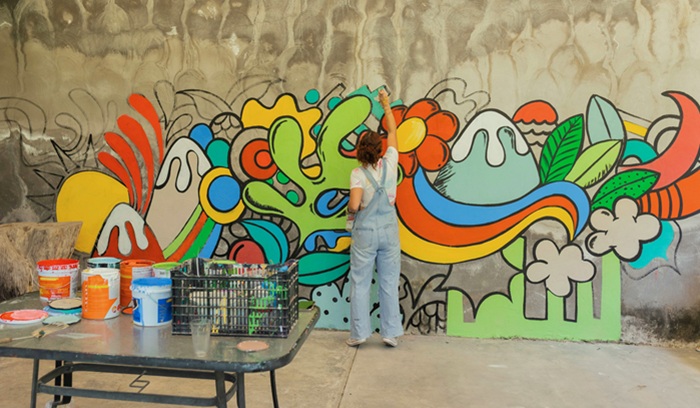
Ireland has cemented its commitment to the arts and culture sector with a historic decision. The government has made its basic income pilot program for artists a permanent, enshrined national policy. This move provides a stable, foundational income for creative workers across the country. It is a powerful affirmation that art and culture are essential public goods.
This initiative positions Ireland as a global leader in supporting creative labor. It recognizes that economic stability is vital for artistic innovation. The program is designed to foster a thriving, resilient cultural sector for generations.
Unlocking Artistic Freedom and Innovation
The core positive impact of the permanent basic income is the liberation of artistic time. By receiving a predictable, non-conditional income, artists can dedicate themselves fully to their creative practice. This removes the economic pressure that often forces creators into precarious side jobs. This stability allows for deeper, more ambitious projects that would otherwise be impossible.
The program supports a wide range of creative workers, including visual artists, writers, musicians, and performers. The certainty of income allows artists to take greater risks with their work. This investment is expected to lead to a flourishing of cultural output and innovation across all artistic disciplines. Research consistently shows that economic security directly enhances creative production.
A Model for Sustainable Cultural Policy
The decision to make the program permanent follows a highly successful pilot phase. Data from that phase demonstrated the clear benefits of economic stability. The pilot provided approximately 2,000 artists with a weekly payment for three years. This guaranteed income allowed recipients to focus intensely on their art.
This model serves as a practical, evidence-based blueprint for other countries. It proves that direct investment in the basic welfare of artists is highly effective. It ensures that cultural production remains a priority, even during periods of economic uncertainty. This innovative policy is a major step toward creating a truly sustainable cultural sector. You can find information about the pilot program and its results from the Arts Council of Ireland.
Strengthening National Identity and Economy
This basic income program is a strategic investment in Ireland’s national identity. Irish culture, driven by its vibrant artistic traditions, is a globally recognized asset. By sustaining its artists, the nation is reinforcing its unique cultural heritage on the world stage. This cultural strength translates into significant benefits for the tourism and creative industries.
The arts and culture sector already contributes significantly to the national economy. This basic income program enhances that contribution. It generates employment and strengthens regional creative clusters. The policy affirms that a healthy creative economy is essential for a modern, prosperous nation.
Promoting Global Dialogue and Equity
Ireland’s bold policy has sparked international dialogue about the economic rights of creative workers. Nations around the world are looking to Ireland’s model as they grapple with the financial precarity of the gig economy. This leadership encourages a global conversation about integrating social welfare with cultural production. The program stands as a powerful statement on social equity. It acknowledges that society benefits directly from the labor of its artists.
This policy ensures that the creative profession is accessible to people from diverse socioeconomic backgrounds. It removes financial barriers that often limited artistic careers to the wealthy. This will lead to a more representative and equitable cultural landscape in the coming decades. The program’s success offers hope for artists globally. The World Economic Forum (WEF) on the Creative Economy often highlights the economic benefits of sustained investment in cultural sectors. Furthermore, the Irish Ministry of Tourism, Culture, Arts, Gaeltacht, Sport and Media provides details on the legislative process. You can also explore the global context of basic income policies from the Basic Income Earth Network (BIEN).
Resources
- Arts Council of Ireland on Basic Income Pilot Programme Results
- World Economic Forum (WEF) on The Creative Economy
- Irish Ministry of Tourism, Culture, Arts, Gaeltacht, Sport and Media on Cultural Policy
- Basic Income Earth Network (BIEN) on Global Basic Income Research
More Good News
-
Alzheimer’s risk cut in half by drug in landmark prevention trial
A clinical trial from Washington University in St. Louis and published in The Lancet Neurology found that long-term high-dose treatment with the antibody drug gantenerumab reduced Alzheimer’s risk by roughly 50% in people with dominantly inherited Alzheimer’s disease — a rare genetic form caused by mutations that make the disease near-certain. The results are statistically uncertain and apply to less than 1% of all Alzheimer’s cases, but they provide the first evidence that removing amyloid plaques before symptoms appear can meaningfully change the course of the disease.
-

Marie-Louise Eta becomes the first female head coach in men’s top-flight European football
Marie-Louise Eta, 34, was appointed head coach of Bundesliga side Union Berlin on April 12, 2026, becoming the first woman to hold the top coaching position at a men’s club in any of Europe’s Big Five leagues — the Premier League, La Liga, Serie A, Ligue 1, and Bundesliga. A Champions League winner as a player with Turbine Potsdam in 2010, Eta had already broken barriers as the first female assistant coach in the Bundesliga in 2023. She takes charge for the final five matches of the season as Union Berlin fights to secure top-flight survival, after which she was…
-
Renewables now make up at least 49% of global power capacity
Renewable energy reached 49.4% of total global installed power capacity by end of 2025, up from 46.3% in 2024, according to the International Renewable Energy Agency’s Renewable Capacity Statistics 2026. The world added 692 gigawatts of new renewable capacity last year — the largest annual addition ever recorded — with solar alone contributing 511 gigawatts. Africa recorded its highest renewable expansion on record, and the Middle East its fastest-ever growth. IRENA Director-General Francesco La Camera noted that countries investing in renewables are absorbing the current Middle East energy crisis with measurably less economic damage than fossil-fuel-dependent economies.
-
Global suicide rate has fallen by 40% since 1995
A landmark study published in The Lancet Public Health by researchers at the Institute for Health Metrics and Evaluation at the University of Washington found that the global age-standardized suicide mortality rate fell nearly 40% between 1990 and 2021 — from 15 deaths per 100,000 people to nine. The decline was driven by measurable interventions including restrictions on toxic pesticides, expanded mental health services, and national prevention strategies. Female suicide rates fell more than 50% globally over the period. Roughly 740,000 people still die by suicide each year, and rates have risen in parts of Latin America and North America,…
-
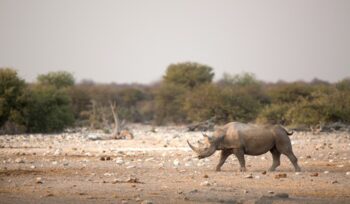
Rhinos are reintroduced back into Uganda’s wild after 43 years
The Uganda Wildlife Authority havetranslocated the first southern white rhinos to Kidepo Valley National Park — 43 years after the last rhino in the park was killed by poachers in 1983. The animals came from Ziwa Rhino Sanctuary, a breeding program established in 2005 with just six individuals that has grown Uganda’s total rhino population to 61. Four more rhinos will follow by May, with a separate group already relocated to Ajai Wildlife Reserve in January 2026. The reintroduction restores a key grazing species to one of Africa’s most remote savannah ecosystems and makes Kidepo the only national park in…