
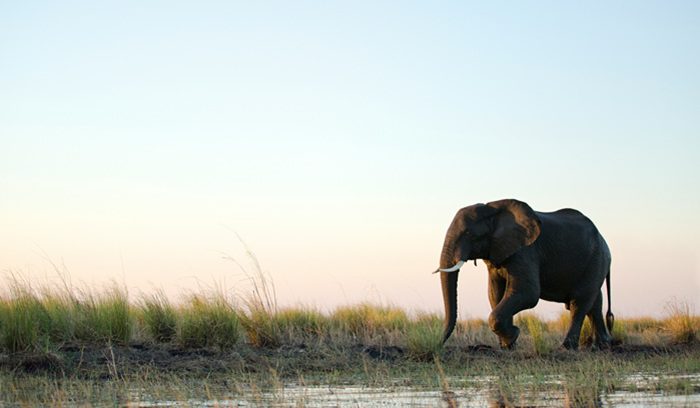
Indonesia has prohibited elephant riding at tourism venues across the country, ending a practice that animal welfare experts have long documented as physically and psychologically harmful to captive Asian elephants. The ban marks one of the most significant policy steps any Southeast Asian nation has taken to protect captive elephants — animals that have shared a fraught, centuries-long relationship with human civilization in the region.
At a glance
- Indonesia elephant riding ban: The Indonesian government has formally prohibited tourists from riding elephants at registered wildlife tourism facilities, including elephant camps associated with conservation centers.
- Asian elephant welfare: Captive Asian elephants used for riding typically undergo a brutal breaking process known as phajaan, which involves restraint, sleep deprivation, and pain to make them compliant — practices welfare groups say cause lasting trauma.
- Conservation overlap: Indonesia is home to the critically endangered Sumatran elephant, with fewer than 2,400 estimated to remain in the wild, according to the IUCN Red List. The ban does not resolve habitat loss, which remains the primary threat to wild populations.
Why elephant riding causes harm
The appeal of elephant riding to tourists is understandable — elephants are among the most intelligent, socially complex animals on Earth. But the infrastructure required to make a wild or semi-wild animal carry human passengers is almost never benign.
Research published by organizations including World Animal Protection has documented that elephants in tourist camps commonly show signs of chronic stress: repetitive swaying, abnormal aggression, and shortened lifespans. The wooden seats used for riding — called howdahs — can cause lasting spinal damage. Elephants were not built to carry weight on their backs.
Indonesia’s ban brings it into alignment with a growing international consensus. Thailand has seen dozens of camps voluntarily shift to observation-only models in recent years. The Elephant Voices Project, which studies elephant cognition and communication, has helped build the scientific case that these animals experience fear, grief, and social bonding in ways that make captive suffering particularly acute.
A region beginning to shift
Southeast Asia has historically been the epicenter of the captive elephant tourism industry. Elephants were used for generations in logging, religious ceremonies, and royal pageantry — their domestication is woven into the cultural fabric of countries like Thailand, Myanmar, Laos, and Indonesia. That history makes policy change both more meaningful and more complicated.
Indonesia’s Sumatran and Borneo elephant populations have declined sharply due to deforestation driven by palm oil expansion. Some elephant conservation centers in Sumatra have used managed elephant herds as an educational draw for ecotourists — and some of those facilities had offered riding. The new policy requires those sites to transition to welfare-positive visitor experiences: observation, feeding under supervision, and ranger-guided walks alongside — not on top of — elephants.
For the mahouts — the handlers who have worked with and cared for captive elephants, often for their entire lives — the transition carries economic stakes. TRAFFIC, the wildlife trade monitoring network, has noted that mahout communities in Indonesia are often among the most economically vulnerable in their regions. Any welfare reform that doesn’t account for livelihood transition risks leaving those communities behind, even as it improves conditions for the animals.
What the ban does — and doesn’t — do
The riding ban is a genuine advance. It removes a specific, well-documented source of animal suffering from Indonesia’s formal tourism economy. It signals to international visitors that welfare standards matter, and it gives conservation-minded operators a policy framework to point to when redesigning their offerings.
But it does not address the broader pressures on Indonesia’s wild elephant populations. Habitat fragmentation, human-elephant conflict at forest edges, and the illegal wildlife trade remain serious, largely unsolved problems. WWF’s Sumatran elephant program has documented that elephants increasingly come into conflict with farming communities as forests shrink — conflicts that sometimes end in the poisoning or killing of wild animals.
The ban also applies to registered facilities. Enforcement across a sprawling archipelago of more than 17,000 islands, with informal tourist operations in many areas, will require ongoing attention.
Still, what Indonesia has done matters. Policy sets the floor. It shapes norms. And the norm that elephants are not rides — that they are sentient beings deserving of protection — is one worth establishing clearly, even imperfectly, even now.
Read more
For more on this story, see: Good News for Humankind
For more from Good News for Humankind, see:
- Alzheimer’s risk cut in half by drug in landmark prevention trial
- Ghana establishes marine protected area at Cape Three Points
- The Good News for Humankind archive on wildlife conservation
About this article
- 🤖 This article is AI-generated, based on a framework created by Peter Schulte.
- 🌍 It aims to be inspirational but clear-eyed, accurate, and evidence-based, and grounded in care for the Earth, peace and belonging for all, and human evolution.
- 💬 Leave your notes and suggestions in the comments below — I will do my best to review and implement where appropriate.
- ✉️ One verified piece of good news, one insight from Antihero Project, every weekday morning. Subscribe free.