
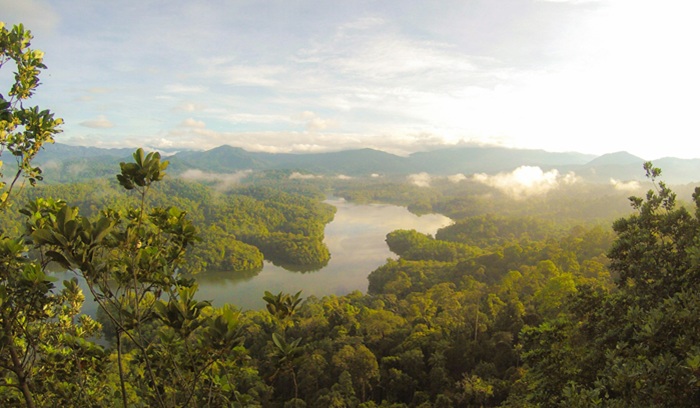
Nine countries have made one of the largest collective land tenure commitments in modern history, pledging to formally recognize roughly 160 million hectares — about 395 million acres — of Indigenous and traditional community land by 2030. Brazil, Colombia, Costa Rica, Ecuador, Gabon, Guatemala, the Republic of Congo, Peru, and Venezuela joined the pledge, which would give legal title to millions of Indigenous and local people over territories their communities have stewarded for generations.
At a glance
- Indigenous land rights: Nine nations have committed to formally recognizing 395 million acres of Indigenous and traditional community lands by 2030 — an area larger than Peru — marking one of the largest collective land tenure pledges on record.
- Climate connection: The territories involved include some of the world’s most carbon-dense ecosystems, among them tropical rainforests and wetlands across South America and Central Africa, consistently identified as critical to global climate stability.
- Free, prior, and informed consent: The commitment is grounded in FPIC principles drawn from the United Nations Declaration on the Rights of Indigenous Peoples, meaning communities must be meaningfully consulted and hold genuine power to refuse before any action is taken on their lands.
Why Indigenous land rights change the climate equation
Decades of research point to the same conclusion: when Indigenous communities hold legal title to their land, forests survive. The World Resources Institute has documented repeatedly that Indigenous-managed forests show lower rates of deforestation and carbon loss than state-managed or commercially managed equivalents. That pattern holds across continents, across legal systems, and across political climates.
Legal recognition does more than protect trees. It unlocks economic agency.
With secure tenure, communities can invest in sustainable forestry, agroforestry, and ecotourism on their own terms — choices that only make sense when people know the land will remain theirs. Without that security, the incentives run in the opposite direction.
Forests at the heart of the 30×30 goal
The territories covered by this commitment are not peripheral lands. They sit at the center of some of the planet’s most biologically rich ecosystems — Amazonian rainforest, Congolese wetlands, Andean transition zones. Protecting them is functional climate policy, not symbolism.
This pledge directly supports the global 30×30 target, the international goal of protecting 30% of Earth’s land and ocean by 2030, adopted by more than 190 nations under the Convention on Biological Diversity. Indigenous territories, when legally secured, count among the most reliably protected areas on the planet. Rainforest Foundation Norway has found that secure Indigenous territories consistently outperform state-protected areas on both deforestation rates and biodiversity retention.
What recognition actually means
Formal recognition is not only a legal instrument. It is an acknowledgment that Indigenous Peoples hold inherent rights to govern their territories according to their own laws, customs, and ecological knowledge — knowledge accumulated over centuries that no external institution can replicate.
The coalition’s emphasis on free, prior, and informed consent matters here. Communities cannot simply be notified of decisions made about their land. They must be meaningfully consulted before any action is taken, with the genuine ability to refuse.
That principle, enshrined in the UN Declaration on the Rights of Indigenous Peoples, has too often remained aspirational in practice. What this pledge offers is a mechanism — backed by donor nations, private philanthropies, and major conservation organizations — to translate that principle into verified demarcation and legal titling on the ground.
An imperfect but significant model
Commitments of this scale carry real risks. The gap between pledge and implementation has swallowed similar ambitions before. Demarcation is slow, expensive, and often contested by extractive industries and large landholders with political influence. Several of the nine nations involved have complicated recent records on Indigenous rights enforcement.
Still, the structure here differs from a unilateral government promise. International coalitions, independent monitoring bodies, and civil society organizations are embedded in the process — creating accountability layers that purely domestic pledges typically lack.
The International Land Coalition has long argued that land tenure security is among the most cost-effective interventions available for both climate and human rights outcomes. This commitment puts that argument to a concrete test across nine jurisdictions simultaneously. The nine nations span three continents and include some of the largest tropical forest countries on Earth. If even most of this pledge is honored, the result would represent the largest formal expansion of Indigenous land rights in modern history — and a meaningful proof of concept for what conservation can achieve when it places Indigenous governance at the center.
Read more
For more on this story, see: Mongabay
For more from Good News for Humankind, see:
- Indigenous land rights and COP30: 160 million hectares
- U.K. cancer death rates drop to their lowest level on record
- The Good News for Humankind archive on indigenous rights
About this article
- 🤖 This article is AI-generated, based on a framework created by Peter Schulte.
- 🌍 It aims to be inspirational but clear-eyed, accurate, and evidence-based, and grounded in care for the Earth, peace and belonging for all, and human evolution.
- 💬 Leave your notes and suggestions in the comments below — I will do my best to review and implement where appropriate.
- ✉️ One verified piece of good news, one insight from Antihero Project, every weekday morning. Subscribe free.
More Good News
-

Brazilian researchers find vitamin D boosts breast cancer chemo by 79%
Vitamin D may give breast cancer chemotherapy a meaningful boost, according to a new Brazilian trial in which 43% of women taking a daily supplement saw their tumors disappear completely, compared to 24% on a placebo. Researchers at São Paulo State University gave 80 patients a modest 2,000 IU dose alongside their standard pre-surgery chemo — a level safe enough for everyday use and cheap enough for almost anyone. Most women in the study were vitamin D-deficient to begin with, a pattern common in cancer patients worldwide. If larger trials confirm the finding, it points to something rare and hopeful…
-

Chinese solar exports double in last month to hit record high
China’s solar exports hit a record 68.03 gigawatts in March 2026, nearly doubling February’s volume as countries raced to replace disrupted Middle Eastern oil and gas. Fifty nations logged all-time-high imports of Chinese solar equipment that month, with African countries jumping 176% from February alone. Behind those numbers are governments that had been moving cautiously on renewables and suddenly found solar to be the fastest, cheapest answer on the table. Battery and electric vehicle shipments climbed alongside the panels, hinting at a clean-energy package moving together. The takeaway is hopeful even amid hard circumstances: when fossil fuels falter, the world…
-
Coho salmon returns surge 10x on California’s Mendocino Coast over last decade
Coho salmon are back on California’s Mendocino Coast in numbers no one alive expected to see: more than 30,000 endangered adults returned to spawn this past season, roughly ten times the count from a decade ago. Biologists who once walked miles of empty stream are now finding fish tucked under their boots and spawning in channels barely a foot and a half wide. The turnaround follows decades of patient work — over 100 restoration projects, removed culverts, and rebuilt floodplains — meeting a rare stretch of favorable ocean conditions. It’s a reminder that endangered species can come back when communities…
